
Isabelle: Q&A with writer of new Middle Child play
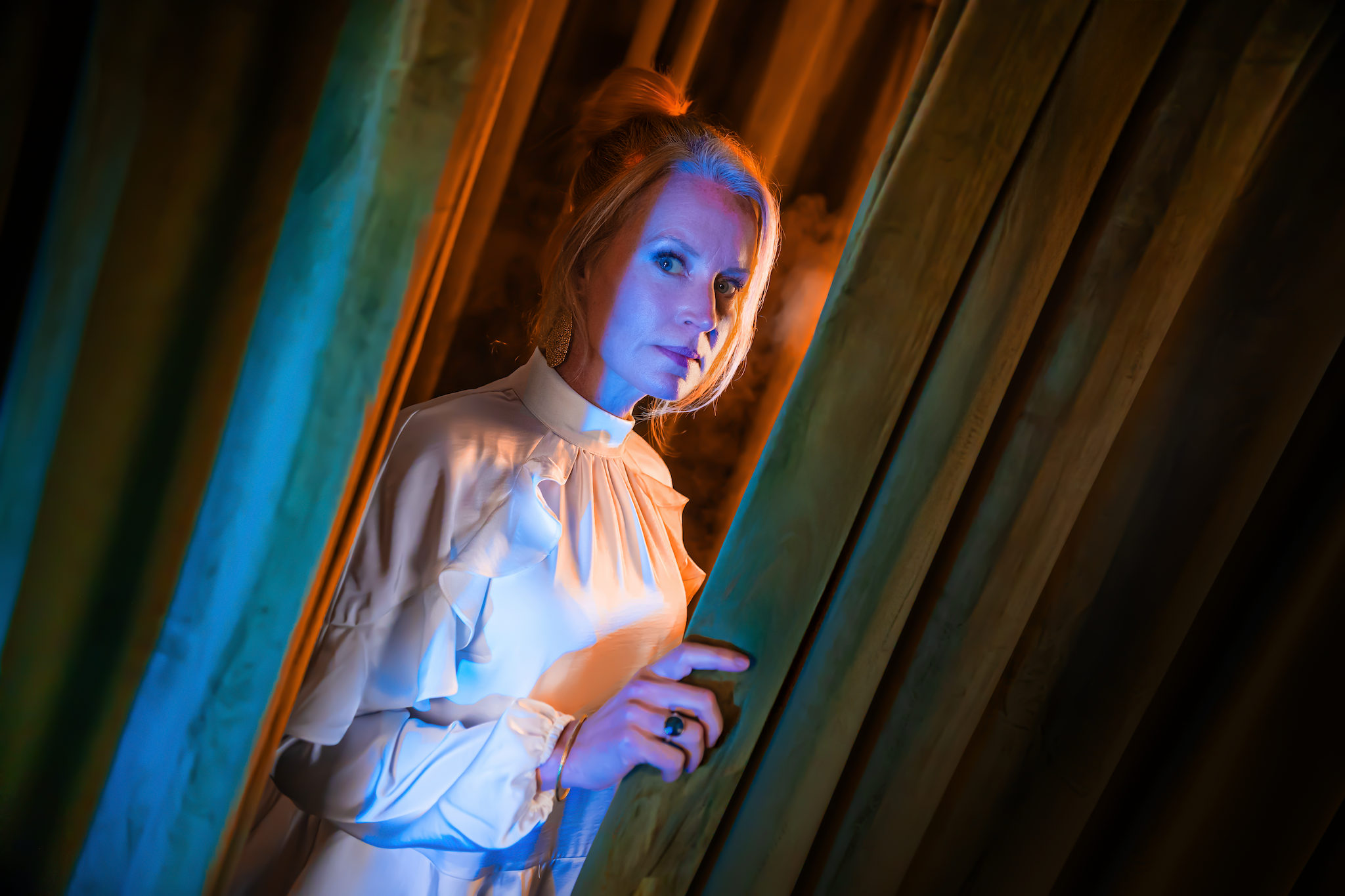
PRODUCTION: Isabelle. Image by Jessy Zschorn
Isabelle is a new play about the thorny issue of inheritance and the first show to open Middle Child’s new studio theatre at 69 Humber Street in Hull.
As the eponymous Isabelle invites her adult children home for the first time in ten years, old wounds reopen, alliances fail and an unexpected guest sets everything alight.
Writer Marc Graham reveals his inspiration for the play and insights into his process as the company reaches the midpoint of rehearsals.

HONOURED: Marc Graham
Q: When did you know that you wanted to write this story?
Truthfully, when I saw the commission. This is the story that came out but it’s definitely the result of seeing nearly every new adaption of Ibsen/Greek tragedy over the last five years. There’s something appealing about watching middle class dysfunction on stage.
Q: How did Middle Child come to commission you?
Through the inaugural Fresh Ink: Hull Playwriting Festival in 2024. I was commissioned to write a 30-minute piece, but wrote a full play mainly because I wasn’t sure if I’d have the opportunity to do so again.
We shared the first 30 minutes to two different audiences and they responded positively. I wasn’t sure what to do with it after the festival, but soon afterwards Middle Child opted to produce it in full and I received my very first full commission.
Q: Talk us through your process for writing Isabelle.
Early mornings were best for me. I’d listen to the music the family I’m writing would enjoy or be subjected to and I’d imagine myself saying the lines of each character to get them to feel like real people.
I believe I should have a good grasp on that considering I’ve been working on new plays as an actor for 15 years. However, this might be arrogance. I’ll find out soon!
Q: Isabelle was developed with Middle Child through a week of R&D at the National Theatre Studio. How did that help shape the final draft?
There were some big discoveries made in this week – things that helped the story unfold that I had overlooked. Having fresh eyes on the piece from the actors, our designer, our musical collaborator and the National Theatre team themselves were beneficial to the development of the play.
We discovered some important things about the language of the show itself too, such as in looking at the use of music and movement. It was a great opportunity to just experiment with some ideas we were less sure of before we get to rehearsals. It’s probably like sketching before painting.
Q: Have any other works of art, theatre or otherwise, inspired Isabelle?
Lots and I think they’re heavily littered throughout the play. Isabelle’s family is one that prides itself on knowledge, art, philosophy and culture; a family that has a quote for any everyday situation.
Works of art include Liberty Leading the People by Eugene Delacroix and Clytemnestra by John Collier. In theatre the work of Simon Stone, Robert Icke, Thomas Ostermeier, Lucy Prebble and Greek tragedy, such as the stories of Clytemnestra, Medea, Agamemnon. In cinema, the first Dogme 95 film Festen and the body of work of the indomitable Isabelle Huppert, whose name I borrowed, The Edukators and Nina Hoss. And, of course, evening walks around the Avenues in Hull.
Q: What does theatre offer, for engaging with such complex ideas, that other art forms cannot?
It’s inescapable. It’s directly in front of you. That conversation is happening with you, not around you.
Q: This is your first full-length stage play as a writer, but you’re also an experienced actor. How does it feel to be on the other side of the script with Isabelle?
It feels great. It’s freeing. If I want lightning to strike, I can write that and the team must find a way to make it happen. Or at least entertain the idea. It’s also terrifying. I’ve worked with some great writers; what right do I have to write something myself?
Q: Isabelle is about how millennials will become the richest generation overnight. In 2017 you performed in All We Ever Wanted Was Everything, another Middle Child show about this generation. In what ways do the two plays speak to each other?
Our 2017 show caught our generation in the ‘we won’t have it as good as our parents’ generation’ stage. That was largely concentrated around getting on the housing ladder and Netflix. Now we have houses and dodgy sticks. Things seem to be happening later for us. It may be harder but still happening.
Now we're in the ‘over half of you will become the richest generation of all time’ stage, which was unimaginable ten years ago. We’re hitting 40 and still not drifting politically to the right. In 20 years, a lot of us will become millionaires through inherited property. If we hadn’t ended the world with an asteroid in 2017, Isabelle could have been the fourth act of All We Ever Wanted Was Everything.
Q: This is also the first production to be staged in Middle Child’s new theatre. How does that feel?
I’m honoured. There's a beautiful full circle feeling. From starting the company with eight others in 2011, to having our own venue, to having my first play opening that venue. What excites me more is now Hull has a new home for new writing and I cannot wait to see what it becomes.
Q: What do you hope audiences take away from seeing the show?
I hope it sparks a dining table revolution. As a Hullensian, I don’t think a story like this has been seen on our stages. Let’s be honest, the majority of theatre audiences certainly fall into a middle-class bracket, as theatre prices people out.
This is a story that directly confronts our audiences and theatre should confront: it should provoke and it should leave us with something vital to go back into the world with. That’s my aim, so I guess come see if I’ve achieved it.
Isabelle runs from May 15-31 at Middle Child, 69 Humbert Street, Hull. Tickets are £12-19 and available from middlechildtheatre.co.uk/isabelle