
Violent times: Burial ground dig unearths brutal secrets of city’s past
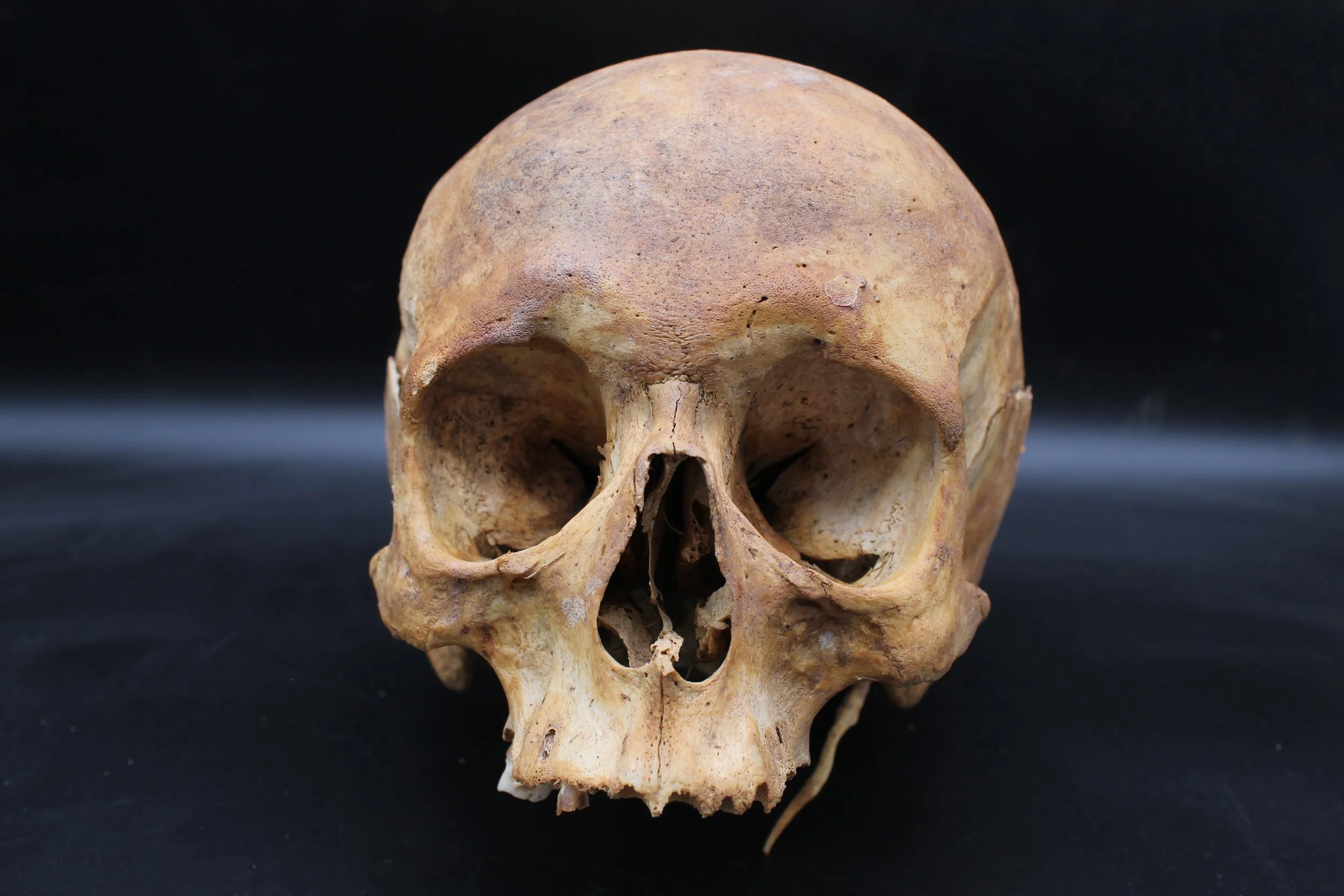
GRIM FIND: A female skull with fractured nose

Now & Then, a column by Angus Young
The excavation of Trinity Burial Ground
As the long-awaited completion of the Castle Street upgrade hopefully draws near, discoveries from an archaeological dig next to the site continue to be revealed.
The excavation of the Trinity Burial Ground took place ahead of the main construction work starting on the A63 in the city centre.
It involved a 90-strong team from Oxford Archaeology peeling back layers of Hull’s history, from the burial ground itself to the footprints of two previously undocumented buildings to the east of Commercial Road which are believed to have been part of the medieval settlement of Wyke.
Although physical excavation work was completed a few years ago, off-site research of the many finds uncovered during the dig has continued since then.
The latest studies on items recovered from the burial ground paint a dark picture of life in late 18th and early 19th-century Hull.

Originally used by the parish church of Holy Trinity (Hull Minster), the burial ground was used between 1783 and 1861 after space immediately next to the church in the Old Town became limited.
With part of the site ultimately required for the new-look road, archaeologists sensitively excavated nearly 10,000 bodies which were subsequently re-buried within the grounds.
Their work uncovered a cross-section of Hull’s population at the time and represented the largest ever scientific excavation of a post-medieval burial ground in northern England.
Now details of the lives of some of those buried there are being pieced together.
The latest analysis has focused on evidence of injuries which point to high levels of violence among the local population.
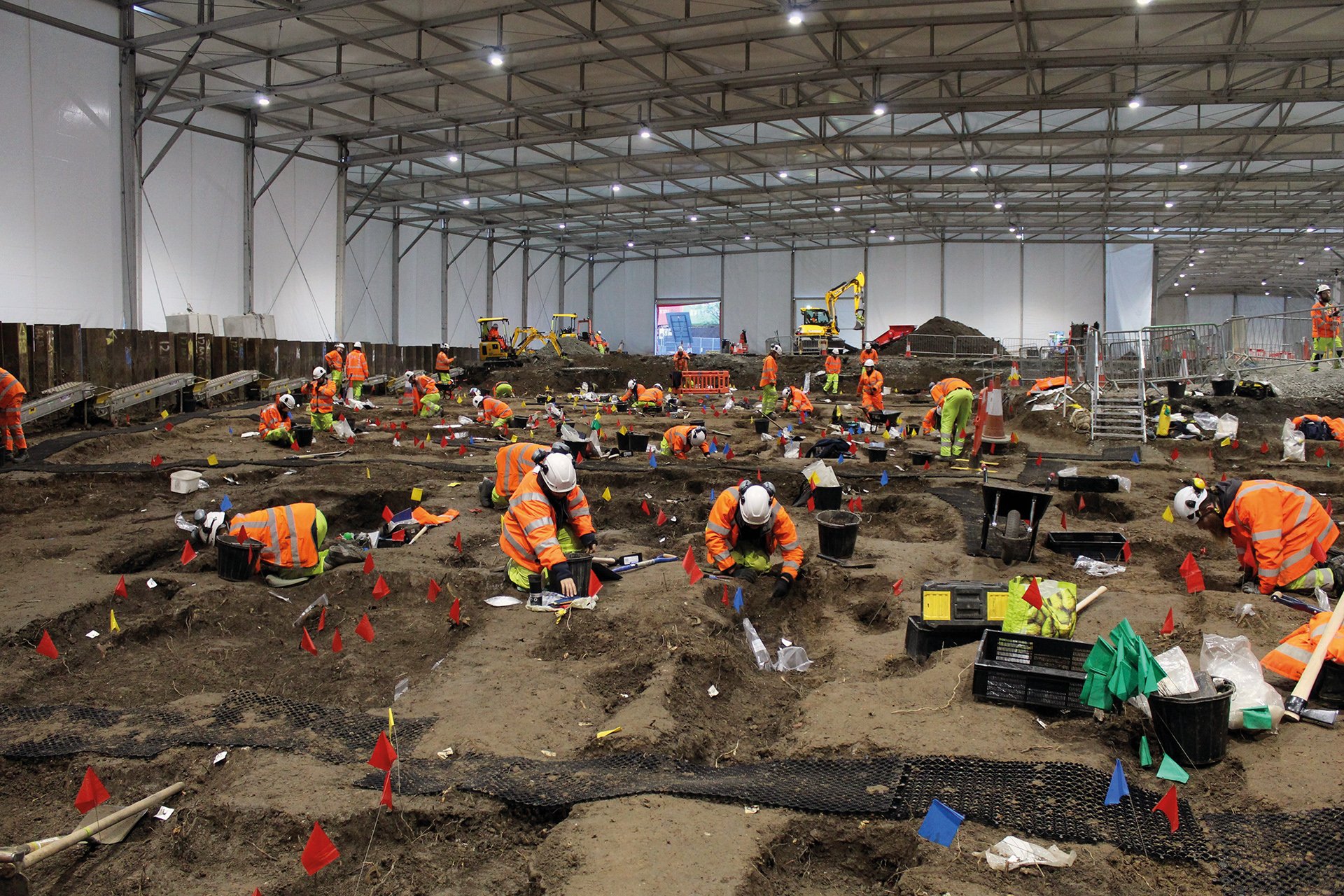
DELVING INTO THE PAST: Archaeologists excavating Trinity Burial Ground
A total of 31 skeletons from the cemetery had fracture injuries to the face, hands or ribs. Four of these skeletons were women.
One theory being put forward to explain them is the increasing contemporary popularity of boxing, especially among the working-class.
The injuries – which included several broken noses and multiple rib fractures – suggest either boxing or semi-organised street-brawling involving both men and women could have been more common in daily life than previously thought.
Alternatively, they could just reflect a far more violent time with women sadly on the receiving end of some of it.
We will never know if the four females had sustained their injuries because they actively participated in a rudimentary version of boxing or if they were injured in other circumstances, such as domestic violence.
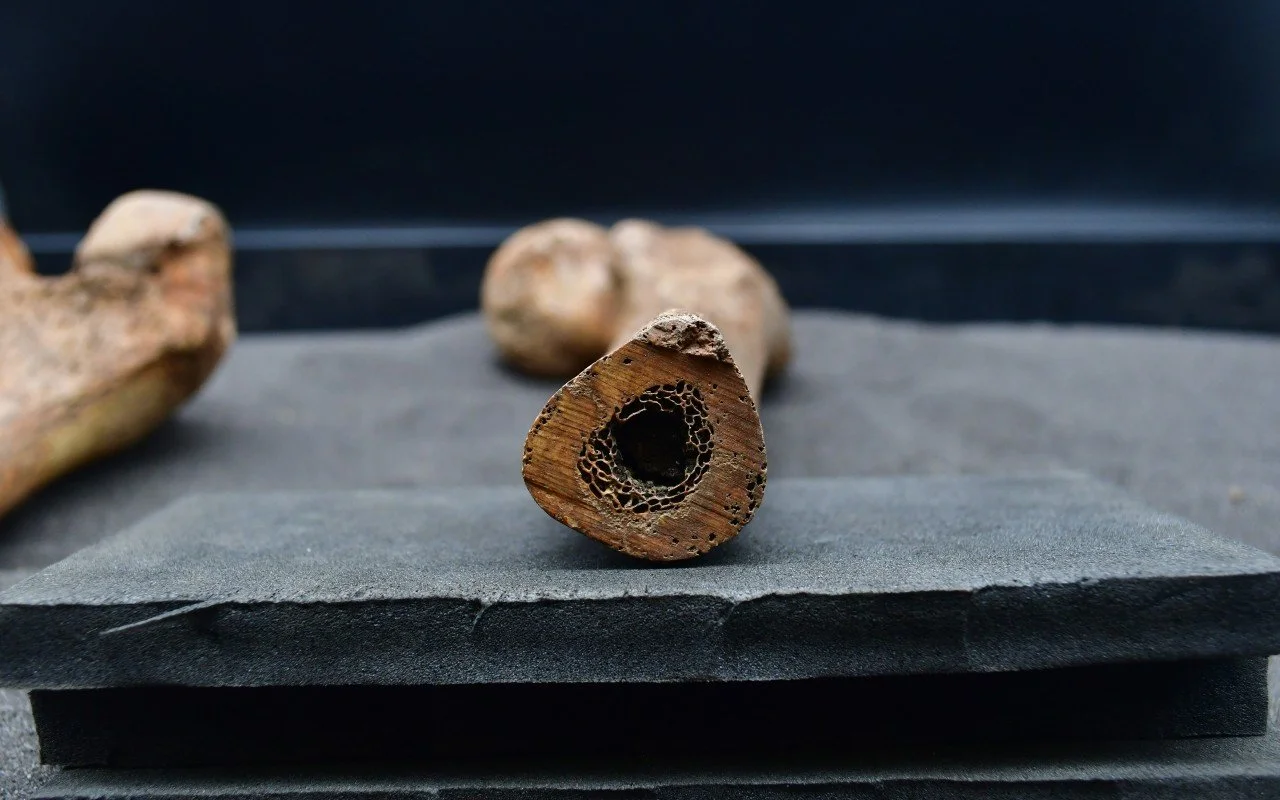
BASIC SURGERY: Sawn-off leg bones found in a coffin
Another common feature found in the skeletons was amputations.
A total of 13 amputations have been recorded, reflecting in their own slightly gruesome way that surgery was still in its infancy and operations were high-risk because antiseptic was not yet in use.
In most cases, surgical amputation would have only been carried out if there was no other option. Typically, it was usually the last hope of survival.
In one case, the archaeologists found a man whose right leg had been amputated. It’s likely he died on the operating table or shortly afterwards since the individual in question had been buried with his severed leg.
The fact his sawn-off limb was in the same coffin has provided a rare opportunity to examine the cause for the amputation and surgical decision-making of the era.
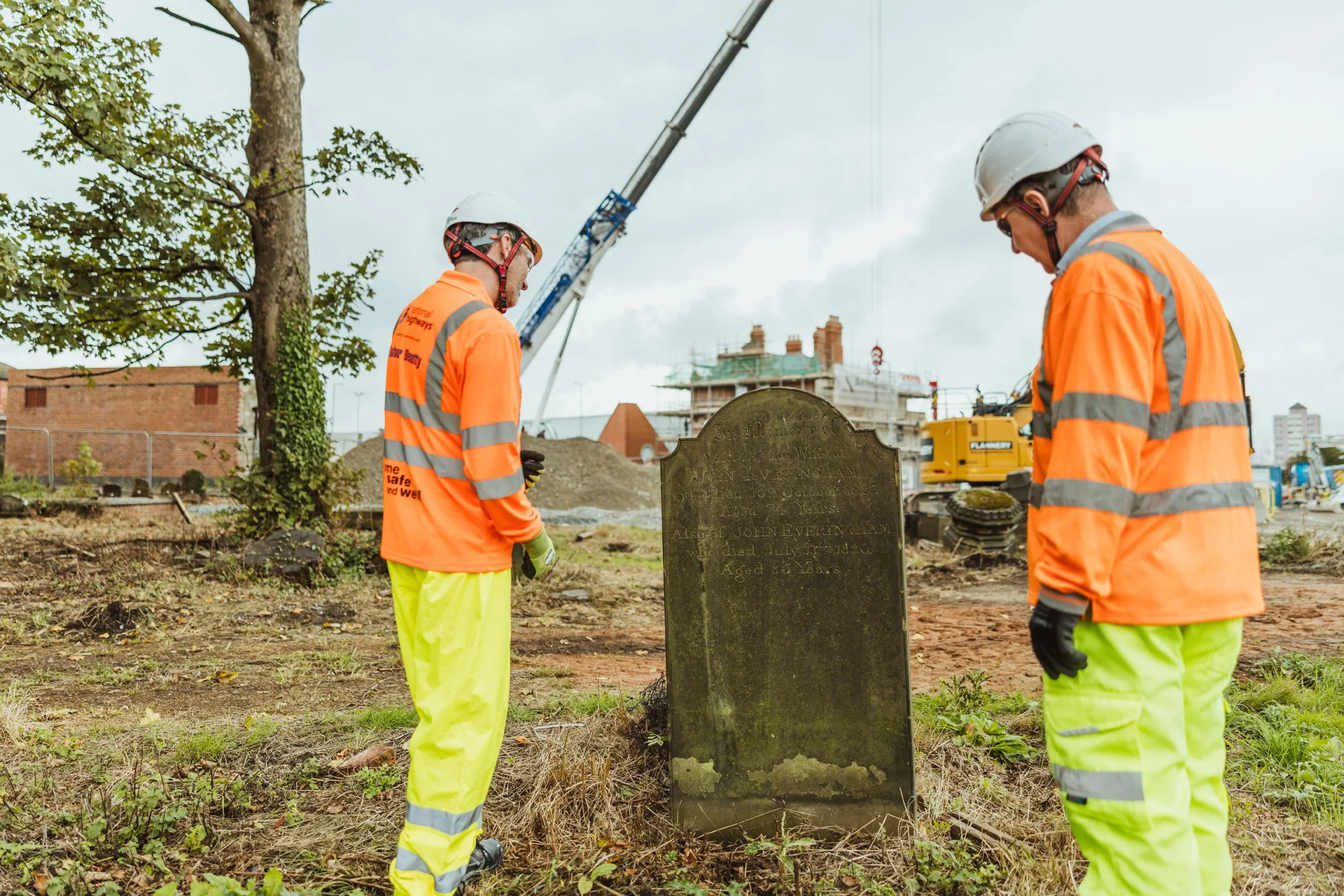
HALLOWED GROUND: Contractors Balfour Beatty were granted a special licence to excavate the site
The man had suffered a fracture to the lower leg and the tibia and fibula showed signs of a significant deep bone infection known as osteomyelitis.
Experts believe infection was already in the bloodstream. As a result, his body had been weakened by the trauma and the subsequent infection which, in turn, meant he was probably not resilient enough to survive the surgery.
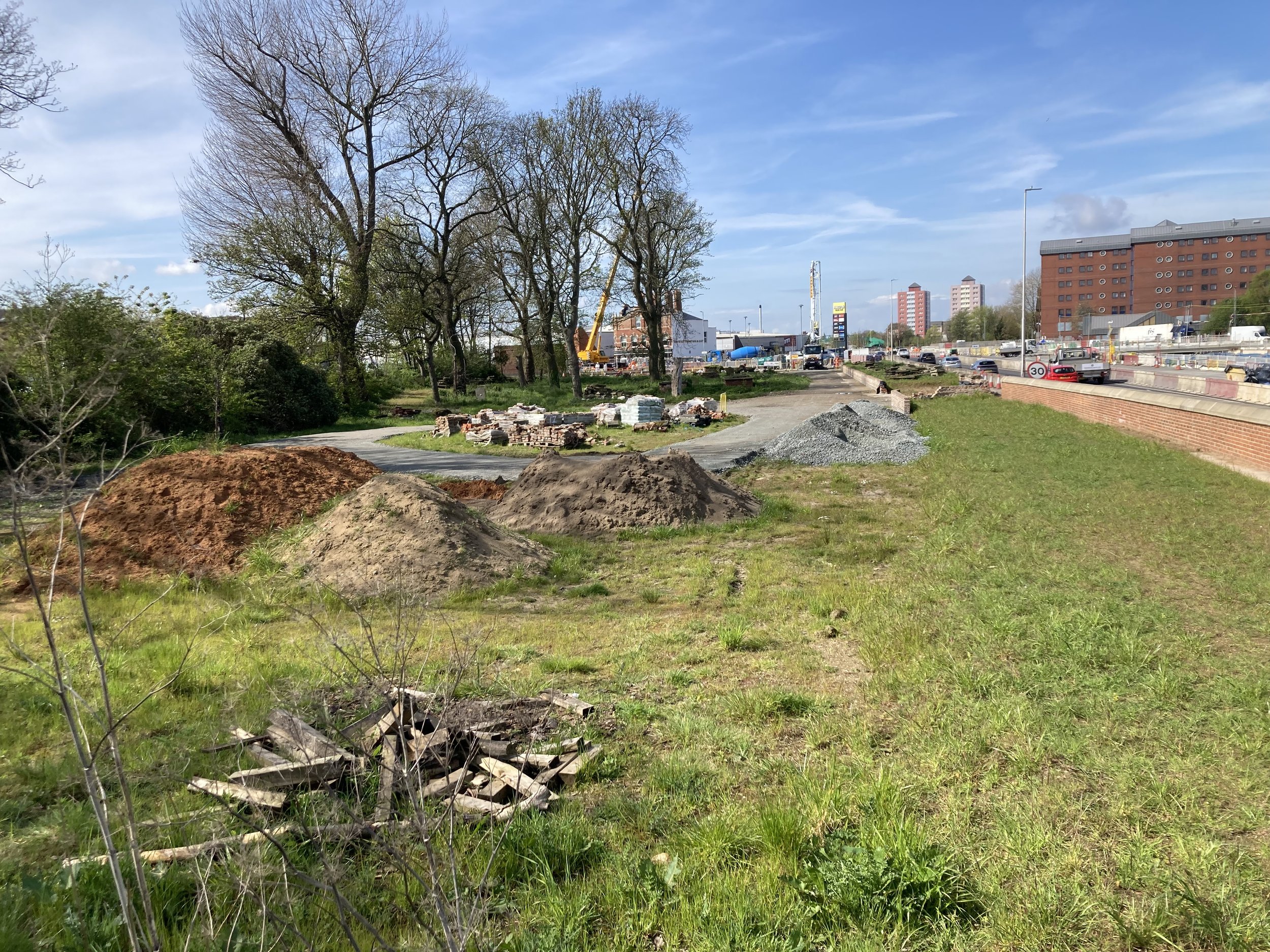
Speaking at a recent city council scrutiny committee, National Highways’ senior A63 project manager Fran Oliver said landscaping work at the burial ground was scheduled to take place over the coming months.
She said just over 60 new trees were due to be planted there alongside restored headstones and burial plots as well as new footpaths and information boards telling the history of the site.
As well as the bodies, personal items and coffins, archaeologists also discovered the footprints of various buildings including an 18th-century prison, a 19th-century timber yard and, most intriguing of all, a previously unrecorded limestone building which is thought to have been part of the 12th and 13th-century settlement of Wyke.
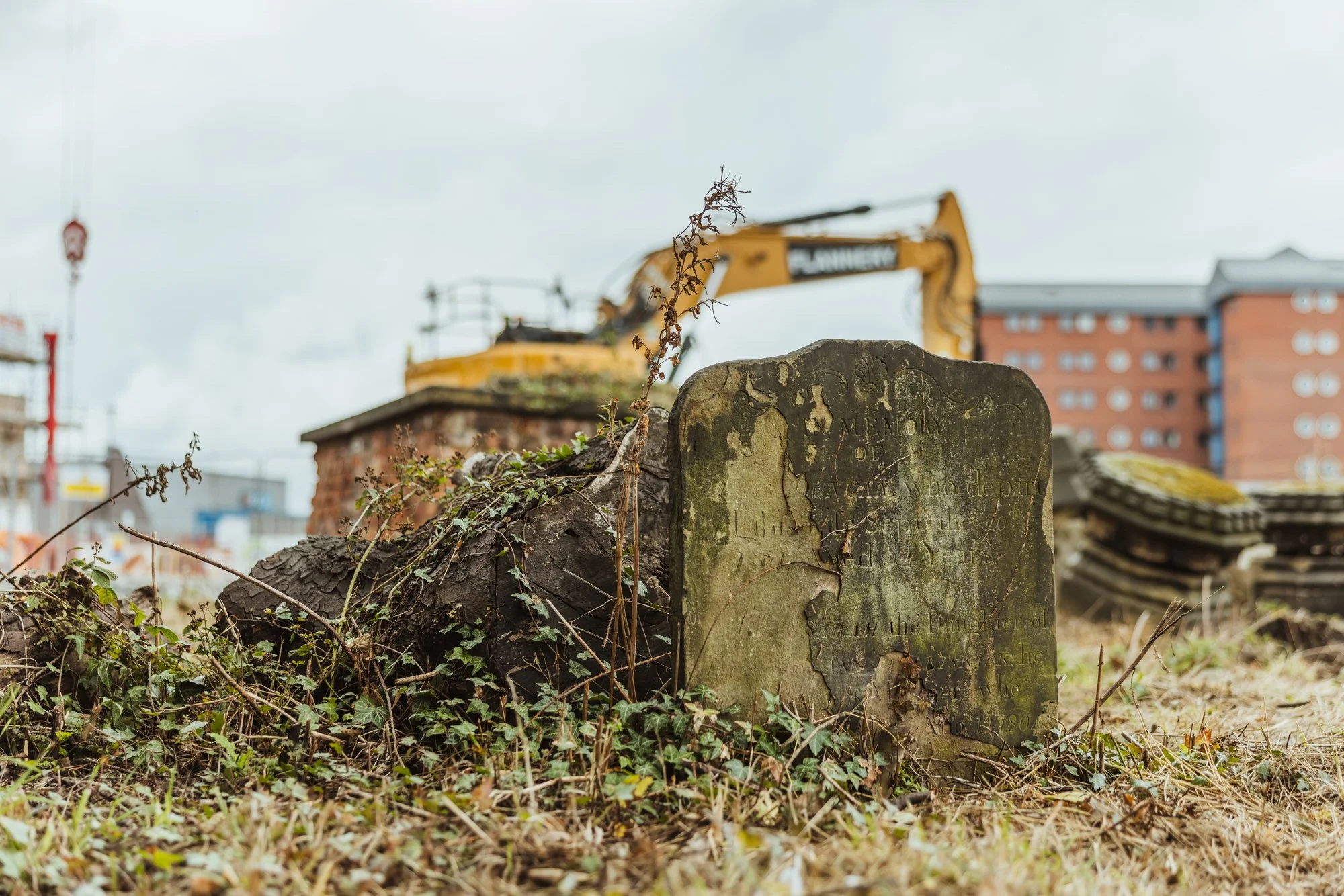
The investigations were carried out under a special licence issued by the Diocese of York to main contractors Balfour Beatty who, in turn, hired Oxford Archaeology to carry out the excavation.
With the human remains reburied and work on the main A63 project now in its final stages, attention is turning back to the burial ground.
A Balfour Beatty spokesperson said: “The Trinity Burial Ground redevelopment is going well.
“We have retained over 70 per cent of the area and are now working to complete the carefully-restored brick walls, with new landscaping, planting and pathways alongside returning a number of the original headstones which will be displayed to the public.
“The final layout and landscaping for the area will provide a welcoming public space for the local community.
“The burial ground will be open to the public on completion of the scheme in 2026.”
As archaeologists continue to catalogue their work, some of their finds at the site are currently on public display at Hull Minster and in the church’s Trinity Room cafe during normal opening hours.