
The Drypool Ghost: Haunting of the Citadel

LONG HISTORY: The Citadel, 1814

The Way it Was
In partnership with Hull History Centre
By Neil Chadwick, archivist and librarian at Hull History Centre
Over the last few years, staff at the History Centre have written about the reputed sightings of ghostly monks on Bransholme.
They’ve also written about the reputed haunting of Argyle Terrace on Argyle Street. So, with October being the month of Halloween, we thought we’d explore another reputed haunting, this time known to history as the ‘Drypool Ghost’, said to have haunted the Citadel in Drypool.
Originally a defensive structure built by Henry VIII on the east bank of the River Hull, the Citadel was adapted over 300 years before its demolition in 1863. Given its long history, it is not surprising that the Citadel has a ghost story.
Everything we know about the Drypool Ghost comes from a letter published in the Leeds Mercury in 1889. It was sent in by an individual who signed off as J.D. Bramley, a resident of Hull in the years after the end of the Napoleonic Wars. The author of the letter had previously lived in George Street but relocated with his family to Prospect-place, Drypool.
Shortly after moving to Prospect-place, the author recalled rumours that began to circulate amongst the regiment stationed there, that a ghost of a female was seen at a certain sentry post at midnight.
The ghost was said to have caused ‘terror among the soldiers, but also among the townsfolk of Hull’. Soldiers recalled seeing the girl at a sentry point. The sentry point became known to the soldiers as the ‘Devil’s Post’.
It was said that the female spirit appeared ‘after the change of guard at the sentry point at or shortly after midnight’. Some soldiers refused to go on duty, whilst on one occasion a soldier was found lying on the ground with such fright he was sent to the hospital.
With fear rife amongst the soldiers, the guard was doubled. A sergeant, described as a powerful, stout man, volunteered to go on duty one night. When the female appeared, the sentry on duty with the sergeant asked if he could see the ghost. The sentry placed his hand on the sergeant’s shoulder, and in his fright, the sergeant fell and had to be taken away.
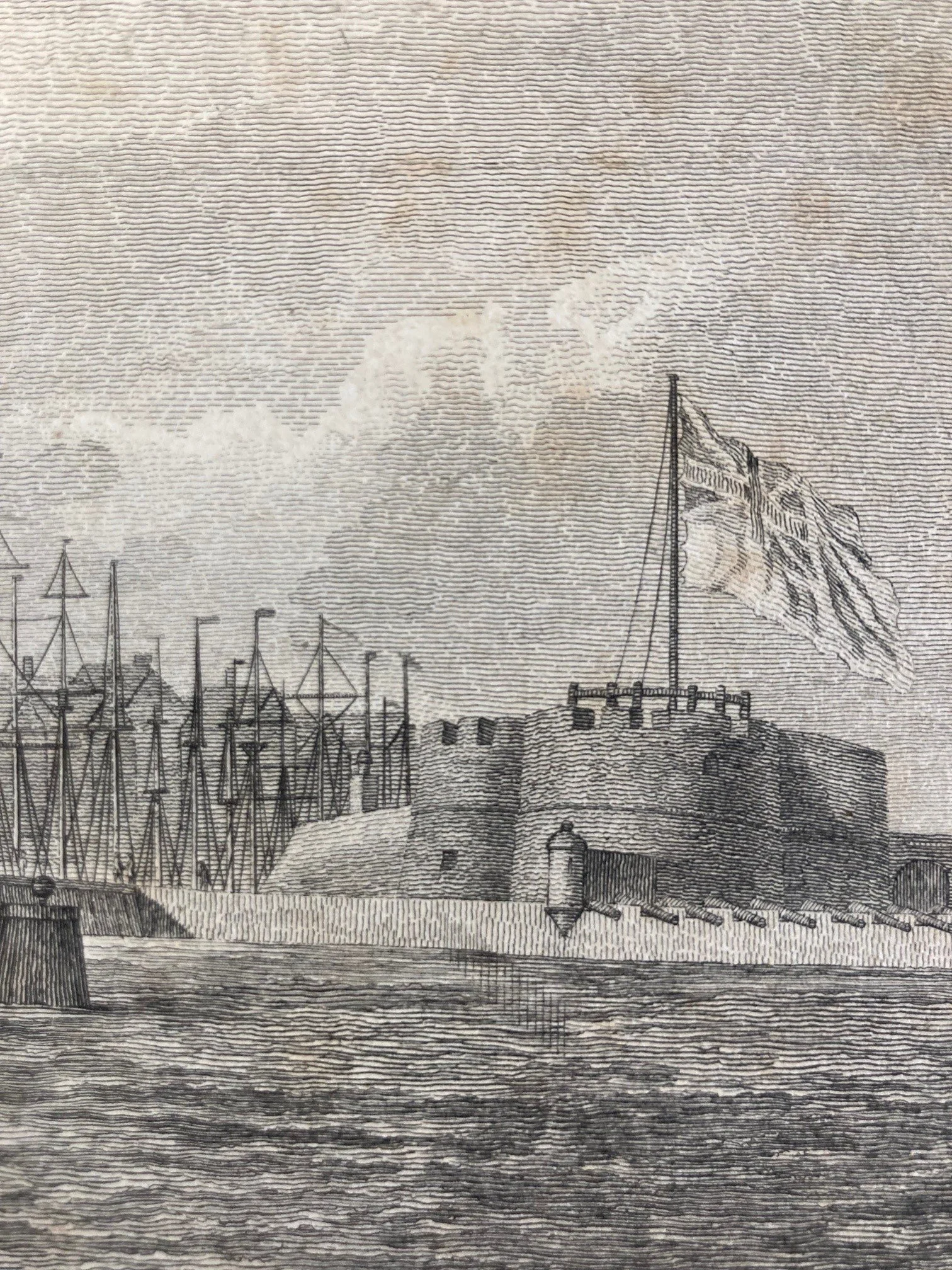
THE DEVIL’S POST: The Watchtower by the South Blockhouse of the Citadel
An investigation was launched. A group of six soldiers, together with the Chaplin, sought to ‘pray her down’. They also sought out the soldier who had been on guard with the sergeant as he appeared to know most about her.
Having congregated at the sentry point (the Devil’s Post), shortly after midnight the ghost of the female appeared from the far corner with a candle in her hand. In silence she passed the group. The Chaplin froze with fear and almost lost courage but was roused by his companions. Taking a book, presumably the bible, the Chaplin shouted, ‘In the name of the Father and of the Son and of the Holy Ghost, from whence art thou?’ The female beckoned him with her hand. The Chaplin and the soldiers followed her from the sentry post, past the first row of cavalry stables, around the corner to a secluded spot at the northeast corner of the Garrison. Here she stopped, pointed to the ground and then vanished.
Early the next morning, with spades and pickaxes, the group began to dig up the spot where the girl vanished. At about three feet down they came across the bones of an individual. The author of the letter was himself shown the location, but the bones had by then been removed. Soon the whole town was said to have known.
The soldier on guard with the sergeant was arrested and accused of murder. He confessed that several years before when his regiment formed the garrison, he met a girl and had a relationship with her. He and the girl would often meet at the sentry post. For whatever reason he murdered and buried her. Shortly after the discovery of the bones, the regiment stationed at the garrison had orders to march north, possibly to Durham or Newcastle. The soldier is said to have been executed after leaving Hull.
The Drypool Ghost has all the ingredients of a typical ghost story. A love story turned to murder – the victim’s ghost reputed to haunt the garrison. But how much of this is true? Let’s have a look.
The only account is that written in 1889 by the author who signs off as J.D. Bramley. Who was J.D. Bramley? Prospect-place in Drypool did exist. It was a short distance from the Citadel. A search of the directories for a family named Bramley living at Prospect-place has turned up nothing. This isn’t unusual as trade directories are not a comprehensive list of who was living where. People paid to be listed, usually those who provided a service or trade. The first detailed census wasn’t until 1841 which makes locating a family even more difficult. Also, not everyone had voting rights at that time, so locating occupants with the name Bramley is even more challenging.
If we take the route given by the author, we still don’t know for certain where the sentry point in question was. In 1814 there were stables in the southeastern corner of the Citadel, meaning the sentry point was perhaps on the southern wall, overlooking the Humber. The author says the remains were found in the northeastern corner, this would suggest the location was in fact the Castle, which at the time was the armoury or magazine. The armoury wasn’t far from the soldier’s barracks, perhaps not the best place to hide a body given the movement of men in the area.
A better location to bury a body would have been closer to the cavalry stables. This appears to be the quieter area of the Citadel. And horses can’t talk.
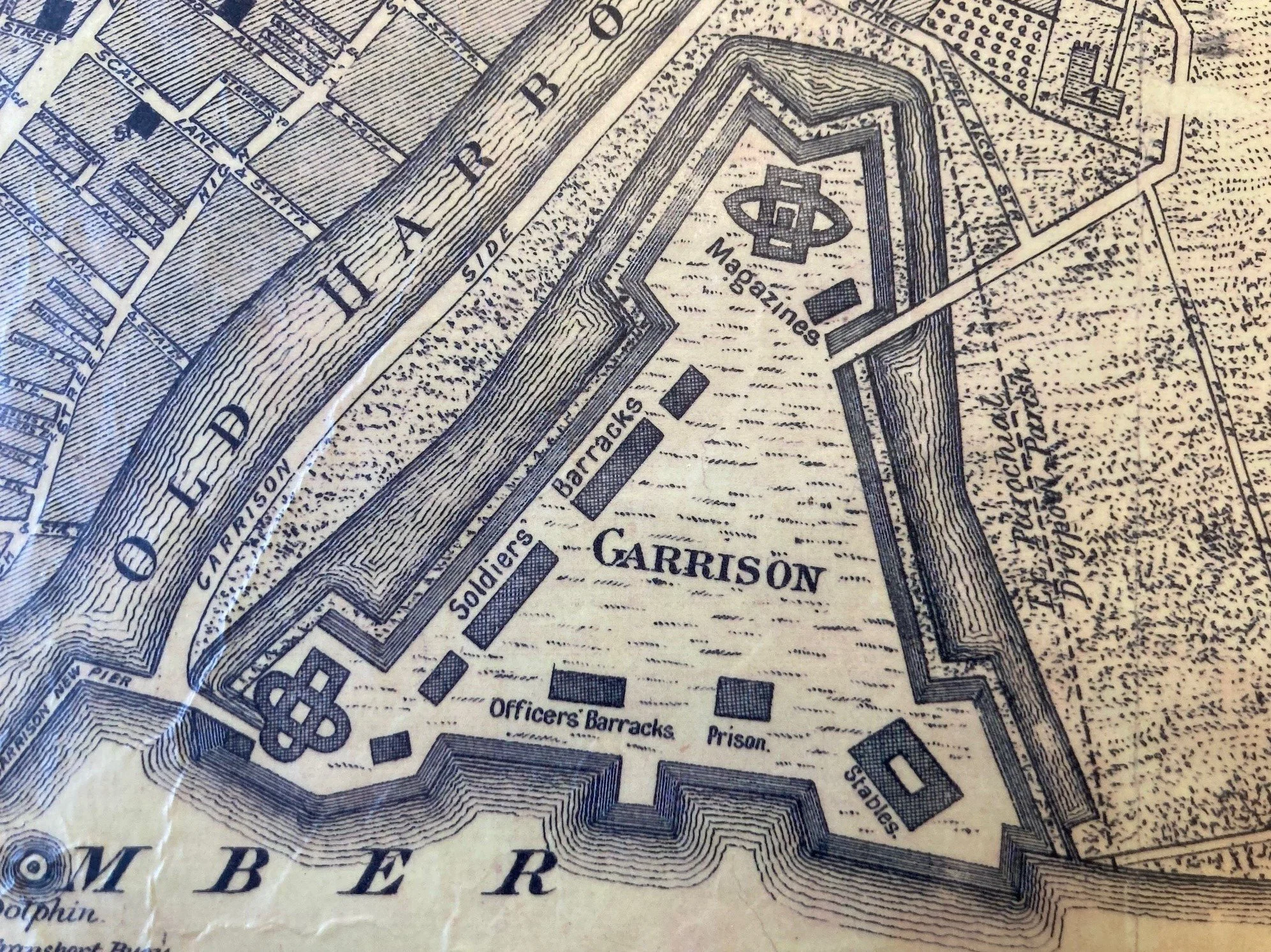
BIRD’S EYE VIEW: The Citadel, circa 1855
We do know the Citadel had a watchtower. Many may know it as the tower that once stood on the rocks or ‘Rockies’ in East Park. Could this have been the sentry point in question? A similar watchtower was on the southern side of the Citadel, overlooking the Humber. Could this be the location where the soldier and girl met? The truth is we don’t know for sure. And the Citadel must have had more than one sentry point.
The author, J.D. Bramley recalls he knew the sergeant very well and recites the words of the Chaplin when confronting the girl. Frustratingly he doesn’t recall the regiment stationed there, which would help corroborate his account, but also help in identifying the soldier who murdered the girl. We do know the 92nd Highlanders were stationed in Hull. Having returned from the continent, the 92nd Highlanders marched from Colchester to Hull, arriving in Hull on March 22, 1816 before leaving for Berwick on 22nd August. It had been said that the soldier who murdered the girl was from Glasgow. Could the regiment have been the 92nd Highlanders? Frustratingly, without the name of the soldier this line of enquiry goes cold.
We must however keep in mind that the author was writing some years later. The letter suggests this person was a youth, perhaps in their teens when recalling the haunting of the Citadel. If the incident did indeed occur during the authors teens, then at the time when the account was written, the author was at least in his sixties. It may be that the authors memory was somewhat clouded owing to age.
In terms of the girl, who was she? Presumably she was a local girl. Having checked the records, and to the best of our knowledge we have no record of a missing woman, nor do we have a report of a body been found within the Citadel. If the author is correct in that the whole town knew, why isn’t there anything to corroborate this, such as a report in the local newspapers.
The Drypool Ghost appears to be a short-lived story. Other than the account published in the Leeds Mercury, there is no other mention of the Drypool Ghost. Once the girl’s body was found the hauntings ceased. This may explain why the story fell out of consciousness.
Finally, could soldiers from the garrison simply have been playing a prank on young children and folk alike, making up the whole story? This isn’t out of the question. Could the author himself be a prankster, or at least telling a story that was regaled to him, and taking credit for it?
Stories are made up. Some for fun. Some to perhaps discourage children from wandering off too far. The Bogyman is a common one. Growing up on Bransholme there was the story of the White Lady who is said to haunt sections of the old Hull/Hornsea railway line looking for her child who managed to leave the family home and was killed by a train. This, together with the Bogyman were just one of many stories told to scare children, to deter them from playing along railway lines or wandering off too far.
Perhaps the story of the Drypool Ghost was fabricated to prevent curious young children from descending upon the Citadel, causing a nuisance to the soldiers stationed there.