
Clocking on: Guildhall Time Ball to return to skyline after year-long repairs
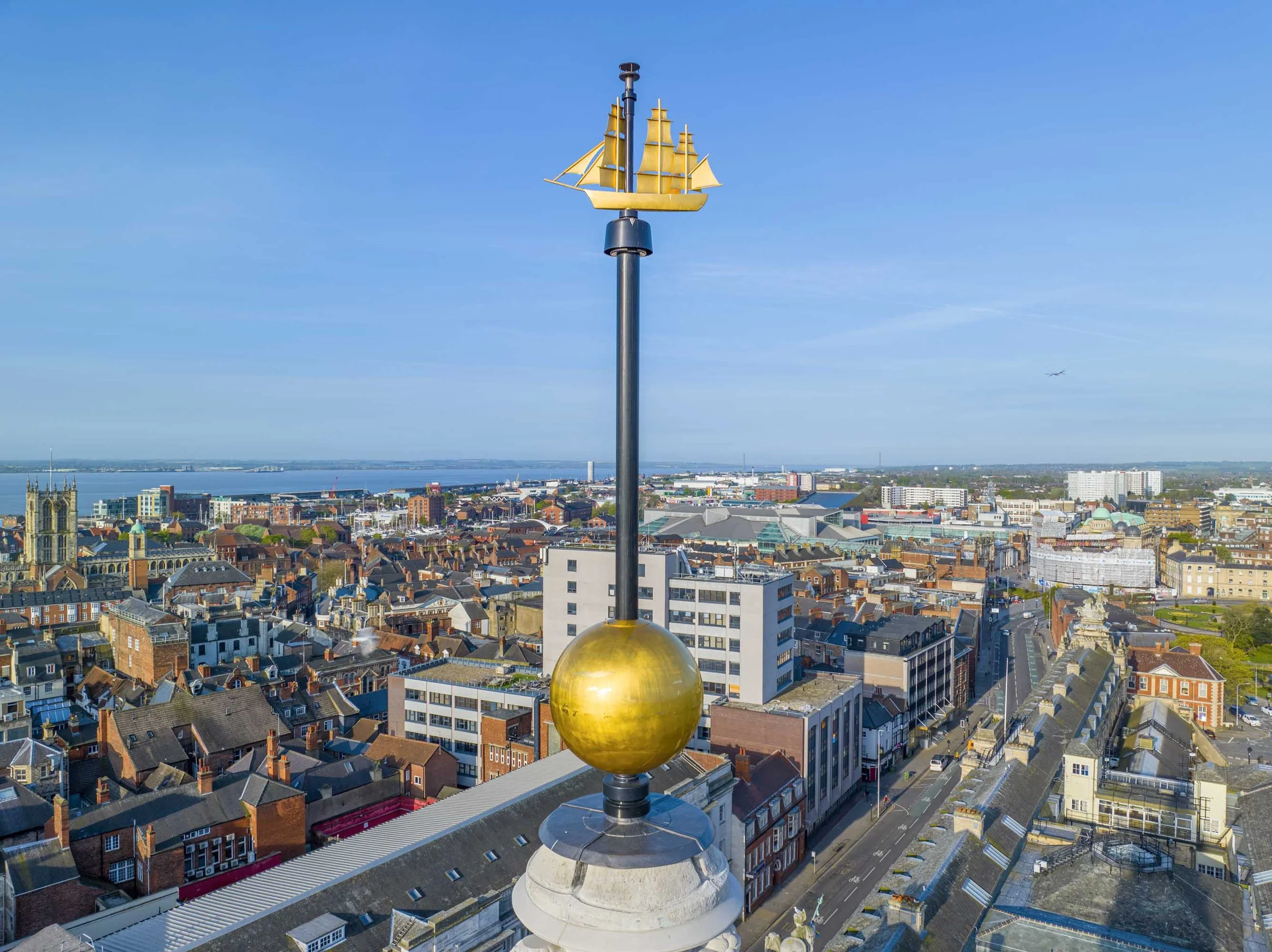
UNIQUE: The Guildhall Time Ball. Picture credit: Hull City Council
By Simon Bristow, Co-Editor
The historic Guildhall Time Ball is set to return to the city’s skyline more than a year after being taken down for repairs.
The Time Ball, originally used as a navigational aid for shipping, was removed on July 13 last year after breaking down.
It had been brought back into working order for the first time in 100 years in June 2023 after the city council secured a £281,000 grant from the Heritage Lottery Fund to restore it. It stopped working just weeks later after a mechanical fault but was fixed and working again until a further breakdown on March 27, 2025.
After being repaired, for a third time, by specialist contractor Smith of Derby the Time Ball will be returned to its unique vantage point above the Guildhall on Saturday, August 1. The contractor is covering the cost of the repair, which is described as an intermittent fault.
Lowgate outside the Guildhall is scheduled to close from 8am to 4pm on August 1 – to motorists and pedestrians – to allow this to happen safely, as a 48‑tonne crane and hoist will be used to install the Time Ball.
Although this takes place on the same day when thousands of people will attend Humber Street Sesh around the Fruit Market and marina, it is not expected to cause excessive disruption. Drypool Bridge and the east end of Alfred Gelder Street from Lowgate, which have been closed for bridge repairs and other work since May 27, are expected to open later this month.
However, residents and visitors are “advised to plan alternative routes during the road closure”.
Internal works will be undertaken the following week to connect the Time Ball to its new components.
Once these elements are in place, comprehensive testing will be carried out to verify performance, after which full commissioning will take place to ensure the Time Ball is fully operational and functioning as intended, Hull City Council said.
The Time Ball’s system is “highly complex” and relies on advanced magnetic technology to allow the ball to raise and lower.
The only one of its kind in the UK, the Time Ball is a completely bespoke design. Its unique components are specially manufactured overseas. New, upgraded parts have now been fitted and rigorously tested off‑site to ensure long‑term reliability and minimise the likelihood of future faults, the council said.
Councillor Mike Ross, leader of Hull City Council, said: “The Guildhall Time Ball is a much‑loved feature of our city’s skyline and an important symbol of Hull’s maritime heritage. I’m pleased that the essential repairs have been successfully completed and that the Time Ball will soon return to full operation.
“I’m also reassured that the costs of this work are being fully met by the contractor, ensuring there is no financial impact on the council or local taxpayers. We look forward to seeing the Time Ball back where it belongs, continuing its historic role for generations to come.”
Paul Litchfield, of Smith of Derby, said: “We are proud to have restored Hull’s Guildhall Time Ball, a truly unique and technically remarkable piece of engineering. Because of its bespoke design and complex levitation system, diagnosing and resolving the issue required detailed expertise and specially manufactured components.
“Our team has carried out extensive repairs and testing to ensure the Time Ball is reliable and resilient well into the future. We are delighted to return it to the people of Hull and to play our part in preserving this important piece of the city’s history.”
At 196ft (60m) above ground level, it is the highest Time Ball in the UK and one of the last remaining examples of its type in Britain.
Installed between April 1915 and November 1916, it had been out of use since its motor was removed in 1922.
The Time Ball was an essential aid to mariners on the rivers Hull and Humber, rising in the summer at 12.57pm each day until it dropped at precisely 1pm on a signal from Royal Observatory Greenwich. Sailors could then accurately set their chronometers, allowing them to determine their longitude at sea, and therefore their precise location. The Time Ball dropped at noon in winter.
The Time Ball is over one metre in diameter and is covered in 23.5 carat gold leaf. Beneath it, four Putti, which are Cherub-like creatures that do not have wings, hold up the Time Ball on a cup.
Its original instalment reflected Hull’s prominence as a major UK port with strong links to the fishing industry and worldwide trade. It was originally operated by the General Post Office who manually raised the Time Ball each day for a fee of £5 per year.