
Blast from the past: Historic cannon found during Queen’s Gardens refurbishment
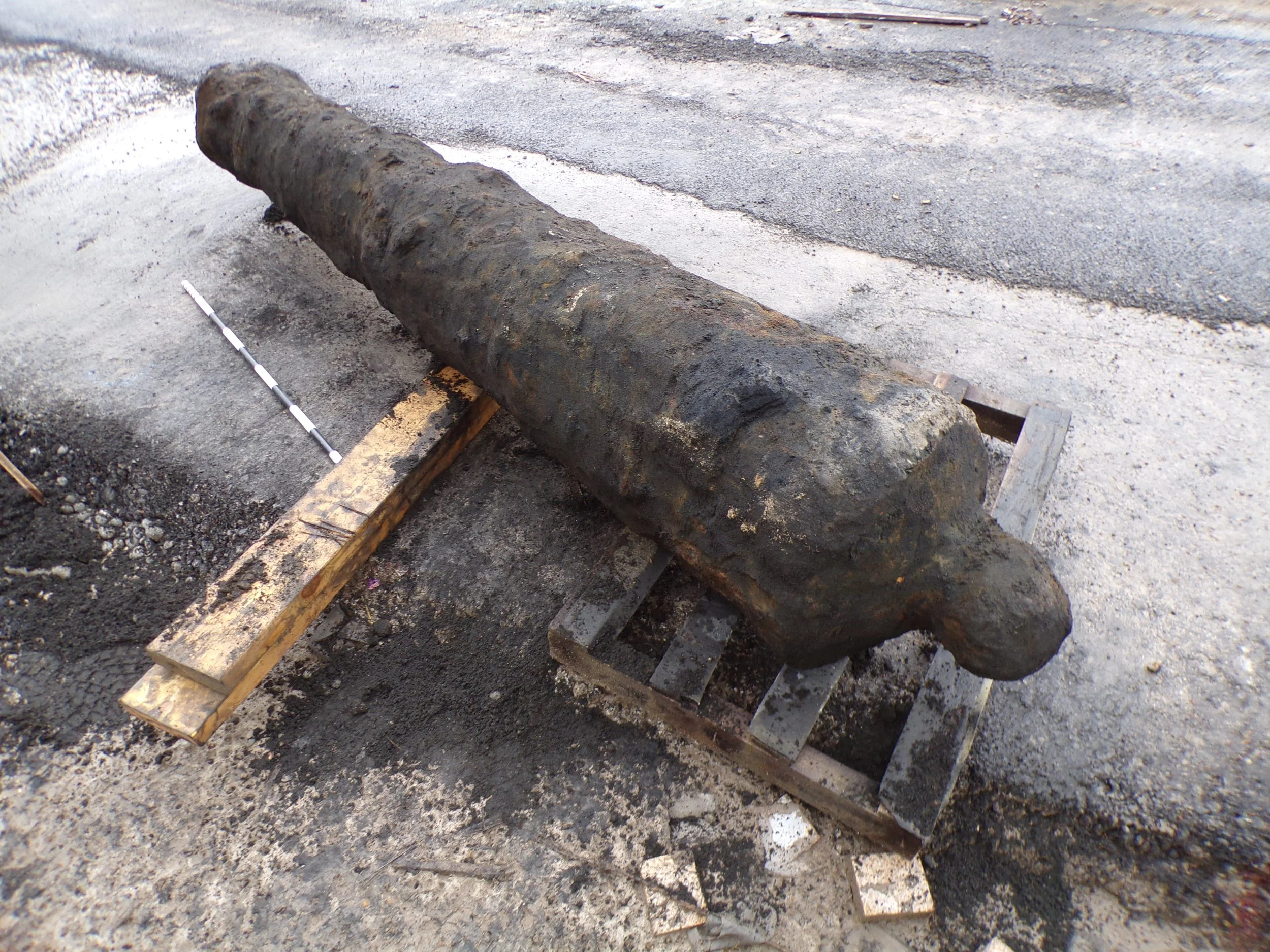
MILITARY HISTORY: The cannon after being recovered in Queen’s Gardens
By Simon Bristow, Co-Editor
A cast iron cannon that may be 200 to 300 years old has been uncovered during the redevelopment of Queen’s Gardens.
The find was made on Friday, February 13, during excavation for an attenuation tank, when local contractors CR Reynolds discovered the object embedded beneath the ground.
Archaeologists have described the find as “fascinating” and work to more accurately date it is under way.
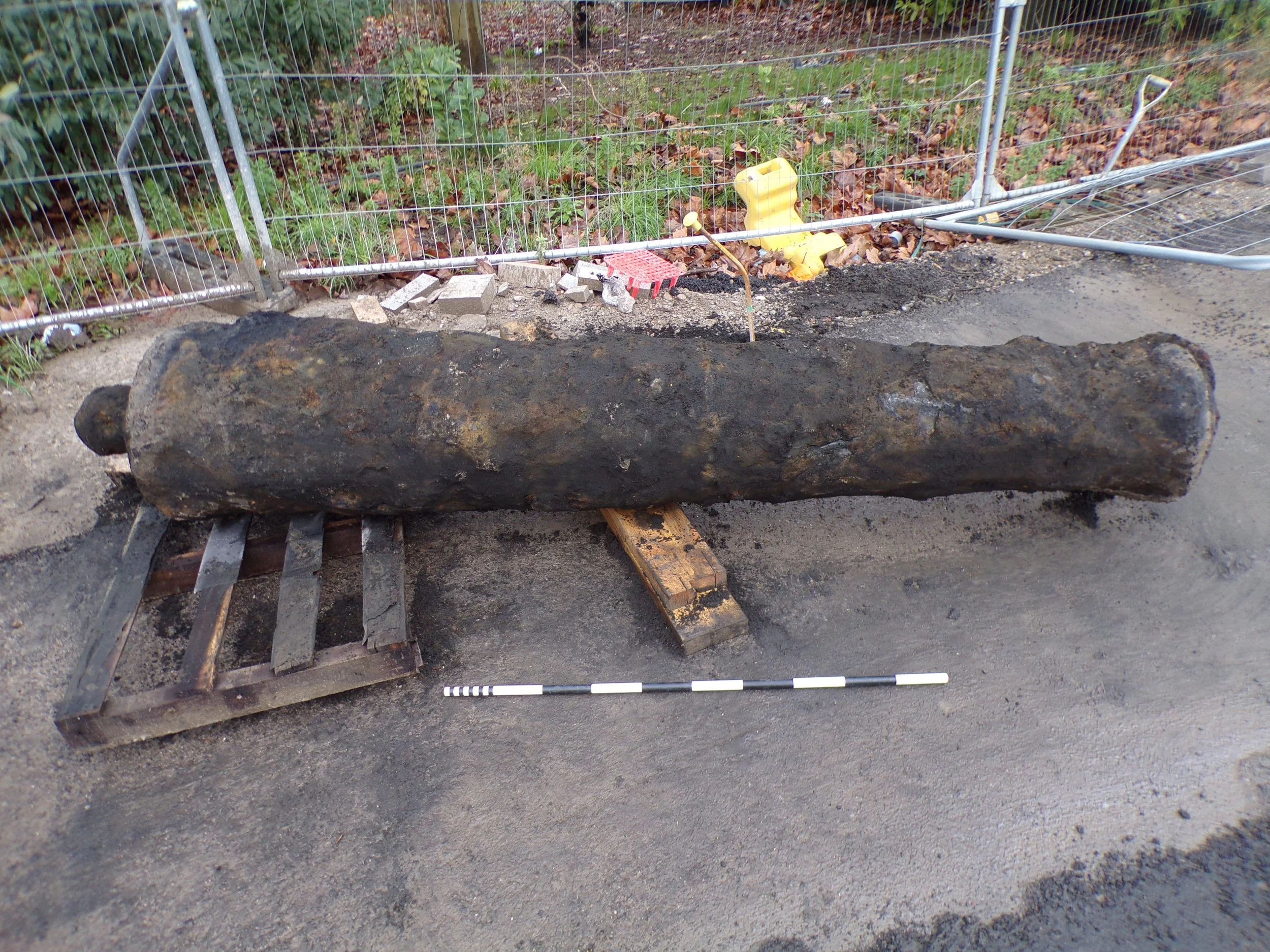
DECOMMISSIONED: The cannon is thought to have been pushed into the dock in the 1920s or 1930s
It is thought the cannon, which is 2.6 metres in length and believed to weigh over a tonne, was probably used as a mooring post for ships before being pushed into the dock when it was being filled in during the 1920s and 1930s.
The cannon had been decommissioned, with the nozzle capped. Using cannon as mooring posts was a common practice in the late 19th and early 20th centuries. Two surviving examples can be seen at Humber Dock Street.
Peter Connelly, of Humber Field Archaeology, said: “This is a fascinating discovery that offers a glimpse into Hull’s maritime and military past. Our archaeology team is now carrying out detailed assessments and we’ll be able to share more once their work is complete.

DUAL USE: A cannon in Humber Dock Street which was used as a mooring post
“Finds like this highlight the rich history beneath our city and the importance of careful excavation as we deliver the Queen’s Gardens transformation.”
The cannon is the latest piece of the city’s history to be uncovered during recent improvement works. In January, part of the Old Town’s medieval walls were discovered in Guildhall Road during work to install a new district heating network. Hull’s walled defences were completed around 1356 with just over four million bricks used during their construction.
The major revamp of Queen’s Gardens is due to be completed in spring. As well as being an attractive open space in its own right, it will form a key part of the Hull Maritime project, linking the refurbished Maritime Museum with the new visitor centre at North End Shipyard, which will also be home to historic former trawler Arctic Corsair and the city’s last surviving Scotch Derrick crane, which has also been restored.