
Humber restoration project achieves record 300,000 native oyster release

‘CRUCIAL ECOLOGICAL ROLE’: A volunteer with one of the oyster spats. Picture credit: Finn Varney
By Simon Bristow, Co-Editor
A seascape restoration project on the Humber has accomplished the largest release of native oysters in an intertidal zone anywhere in the UK.
In July this year, Wilder Humber released 28,000 native European flat oysters (Ostrea edulis) into the Humber Estuary, the first time native oysters have returned to these waters since the 1940s.
Now, following an additional release of around 250,000 oyster spat (settled oyster larvae) on scallop shells, Wilder Humber has introduced 300,000 oysters into the estuary, a UK record to date and a huge leap forward towards its ambitious target of restoring half a million native oysters over five years.
The intertidal zone is the coastal region between high and low tide, characterised by unique ecosystems and diverse marine life.
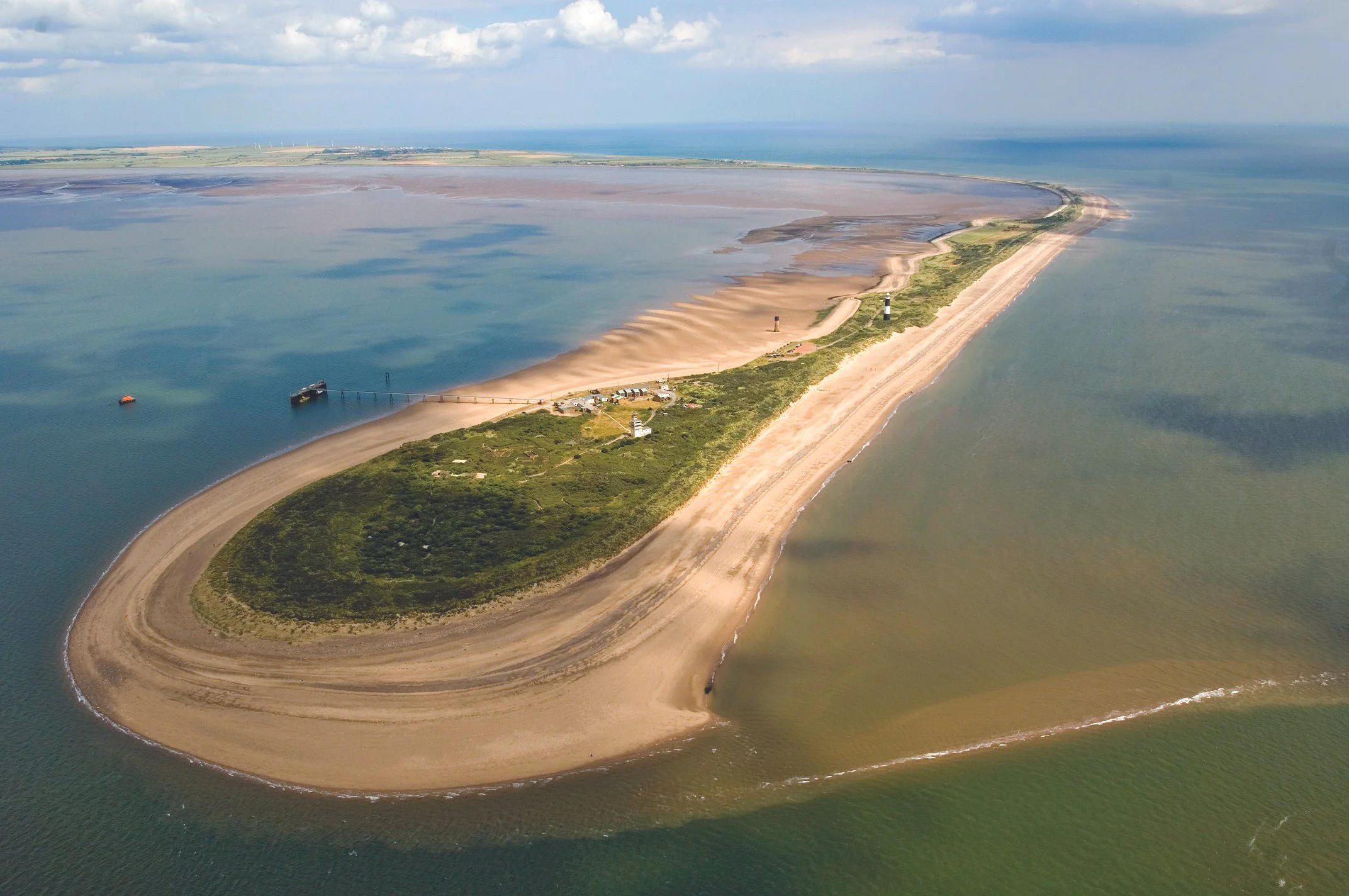
LOCATION: An aerial view of Spurn Point. Picture credit: David Nichols
Once home to extensive oyster reefs spanning more than 300 acres, the Humber Estuary supported a thriving oyster population that played a crucial ecological role. However, overfishing, pollution, and disease decimated these populations over the past century, leaving them extinct within the Humber and severely depleted across the UK.
Wilder Humber aims to change that, bringing back what it describes as “these incredible ecosystem engineers”, a species that helps create, shape, and sustain entire habitats.
Oysters naturally filter seawater, improving its quality and clarity by removing excess nutrients. Their reefs create essential nursery habitats for marine life and act as natural coastal defences, helping to stabilise sediments and reduce erosion.
Oyster reefs are known to support over 466 marine organisms, including species such as common shore crab, flounder, sea bass, shrimp, herring, curlew, and oystercatcher, and are considered keystone species – makers of whole ecosystems. In short, restoring oysters means restoring the health and resilience of our marine environment.

To maximise restoration success, the project is testing two methods: oyster spat settled onto scallop shells at The Oyster Restoration Company’s hatchery before being deployed onto the seabed at Spurn Point, versus traditional deployment, where individual juvenile or adult oysters are directly placed onto clutch (the mass of stones, broken shells, and grit on which an oyster bed is formed).
The majority of the 300,000 oysters now thriving in the Humber come from The Oyster Restoration Company’s hatchery in Scotland. Many were deployed as “Rapid Reefs” – clusters of spat attached to shells and enclosed in biodegradable mesh bags, forming ready-made living reefs when placed on the seabed. The remainder are individual adult oysters.
This large-scale experiment is being carried out at Yorkshire Wildlife Trust’s Spurn Point Nature Reserve. The findings will help determine whether innovative, cost-effective techniques like “Rapid Reefs” can make oyster restoration more scalable and sustainable in the future.
The success of this latest deployment has been made possible by an incredible volunteer effort, involving 48 volunteers contributing over 340 hours to transport and position oyster larvae across Spurn Point’s mudflats.
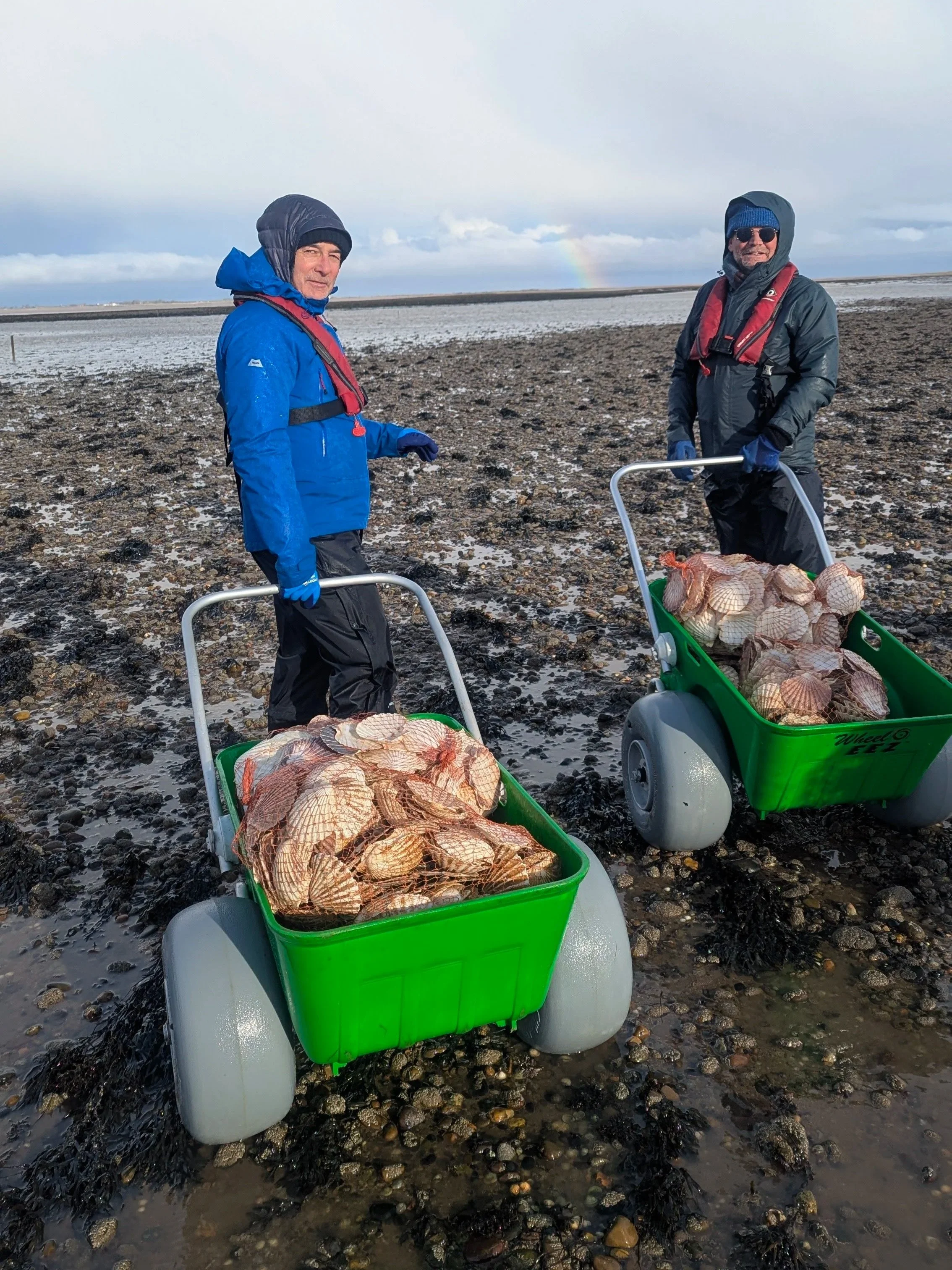
GOING IN: Volunteers deploying ‘Rapid Reef Bags’. Picture credit: Monika Smieja
Wilder Humber is one of the UK’s largest seascape restoration projects, delivered in partnership by Yorkshire Wildlife Trust and Lincolnshire Wildlife Trust, with support from Ørsted, The Oyster Restoration Company, and the Fisheries and Seafood Scheme operated by the Marine Management Organisation.
Andy van der Schatte Oliver, marine programme Manager at Yorkshire Wildlife Trust, said: “Bringing oysters back to the Humber after almost a century is more than a milestone, it’s a moment of leadership in marine restoration.
“Wilder Humber is one of the first projects in the UK, if not the first, to restore native oysters in the intertidal zone, where they can be monitored and studied far more effectively. Most restoration work elsewhere in the UK happens subtidally, often in areas that are difficult to revisit because of competition and access challenges.
“By working intertidally, we’re setting a new precedent, accelerating learning, and opening the door for many more restoration projects like this across the UK.”

COASTAL DEFENDERS: Oysters in the Humber
Owain Wynn-Jones, chief commercial cfficer at The Oyster Restoration Company, said: “We are proud to have partnered with the Wilder Humber team on this incredible journey. Right from the start we worked closely together to shape the project design, secure funding opportunities, and ensure the restoration strategy was both ambitious and achievable.
“With our hatchery team doing an incredible job in getting the Rapid Reefs ready ahead of the required deployment window, we are honoured to have joined forces on this key project with Wilder Humber in making possible UK’s largest intertidal restorative oyster release.”
Samir Whitaker, biodiversity lead specialist at Ørsted, said: “The Wilder Humber project embodies Ørsted’s commitment to an ecosystem approach to restoration – looking to promote the recovery of essential ecosystem processes and create functional, resilient habitats.
“This project forms part of our ongoing commitment to ensuring that offshore wind can be a powerful force for good – providing clean electricity at the same time as creating opportunities to regenerate nature.”