
The rise and fall of Humberside

WISH YOU WERE HERE?: A postcard of Humberside in the 1970s

The Way it Was
In partnership with Hull History Centre
By Martin Taylor, city archivist - based on the text of the exhibition, Remembering Humberside
April 1 this year was the thirtieth anniversary of the abolition of Humberside County Council. Its life had been short and controversial.
In 1974, as part of a major reform of English local government, most of the East Riding of Yorkshire, some of Lindsey in Lincolnshire, and a bit of the West Riding of Yorkshire were combined and named Humberside. Just 22 years later, the new county was gone.
It seemed that few regretted its demise. Perhaps it had come to be seen as an exercise in top-down reorganisation, without regard for existing communities and their identities.
Yet the sense that there is something particular about life by the Humber – that there may be something that connects communities on the north and south banks – did not begin in 1974. Nor did it die in 1996.
The creation of the county of Humberside was intended to unite the region around the Humber estuary. Originally conceived in the 1960s, it became part of broader visions for transformation set out by politicians, officials and planners from elsewhere.
The argument was supported by some of the leaders of the urban centres of Hull, Grimsby and Scunthorpe, who lobbied Prime Minister Edward Heath’s government to include Humberside as a new county in the Local Government Act in 1972, which took effect from April 1, 1974.
As the name suggests, the county of Humberside conceived the area around the Humber as a focus for modern regional development. Ports and estuary communities such as Hull, Grimsby and Goole (historically in the West Riding) and heavy industries such as Killingholme’s oil refinery and Scunthorpe’s steelworks were now joined by a new administration that could better reflect their shared interests and unite them for economic investment.
However, Humberside also included varied landscapes and communities from the seaside towns of the North Sea coast to the rural plain of Holderness, the market towns of the Yorkshire Wolds to the fens of the Isle of Axholme and intensive farmland south of the river.
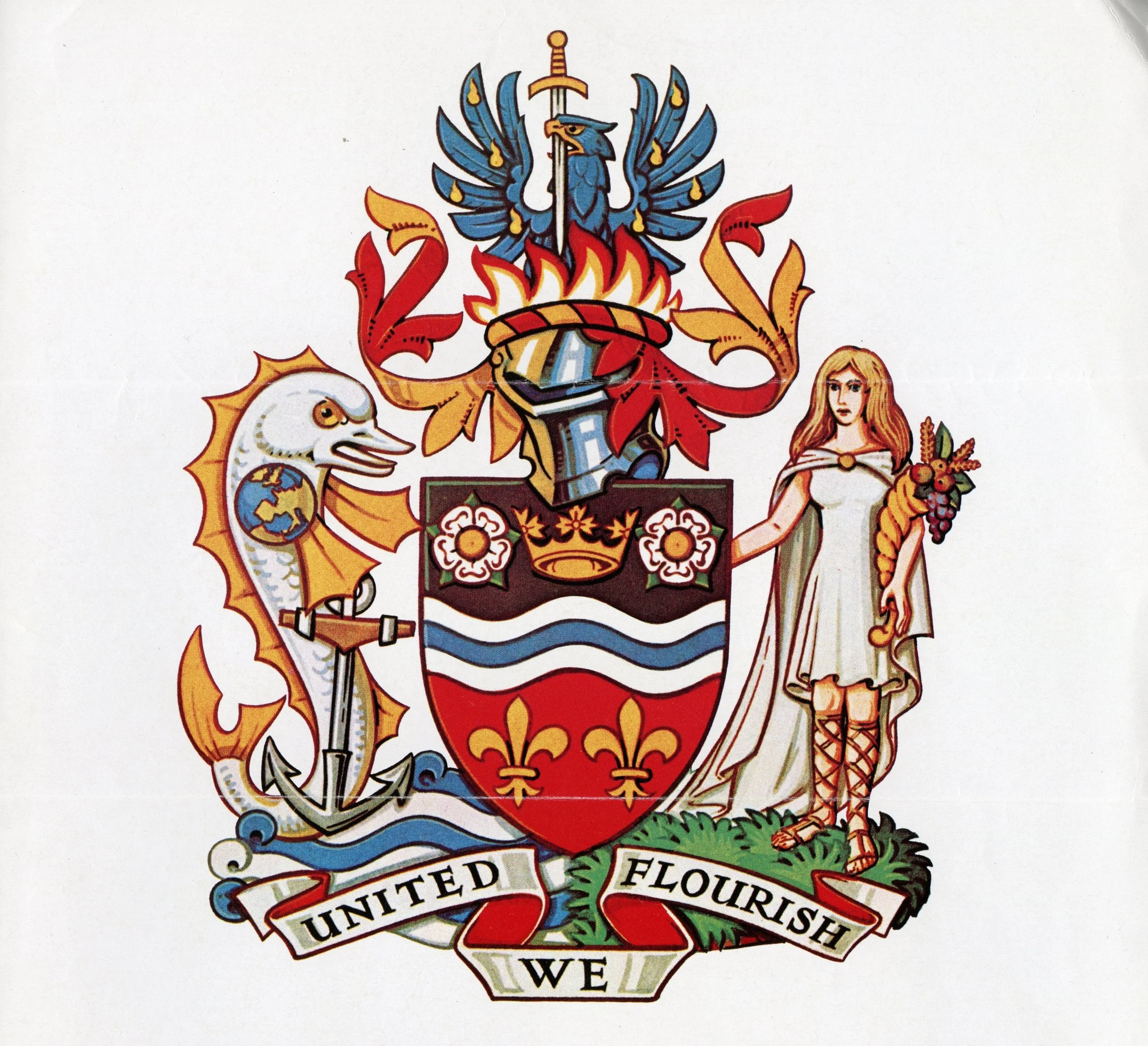
SHORT-LIVED: The Humberside coat of arms
It was said at the time that Humberside was to have been bigger on the south side, but that the then Earl of Yarborough lobbied successfully for his estate at Brocklesby to remain in Lincolnshire, where he was Vice-Lord Lieutenant, and hence the odd isthmus of Lincolnshire between Grimsby and Cleethorpes.
But it wasn’t just from the gentry that there was opposition to the creation of Humberside, and pressure to restore the old counties only continued to grow over the years.
In March 1990, a review by the Local Government Boundary Commission for England reached the interim decision that the interests of effective local government would be best served by the preservation of Humberside.
However, the release of this recommendation disappointed the county’s critics, spurring them to a fresh round of activism. The commission received 28 petitions bearing a total of 81,500 signatures, the vast majority of them seeking the abolition of Humberside.
By the end of the year, the commission had revised its view, concluding that “opposition to Humberside has hardened and is so widespread and deep-seated” that it would not be able to command a sufficient degree of loyalty for many years to come.
The commission’s final report, recommending the abolition of both the county council and the county of Humberside, was accepted by John Major’s government and the county was dissolved on April 1, 1996 – exactly 22 years after its creation.
The very name Humberside caused much unhappiness and still does when misapplied in postal addresses. But Humberside is an older name than many people think. It was used as a geographical description during the 1800s, and Humberside seems to have entered common usage over the first few decades of the 1900s.
We can see this from its appearance in local newspapers, in articles covering everything from trade policy to the news that both Hull City and Grimsby Town had been knocked out of the 1928 FA Cup.
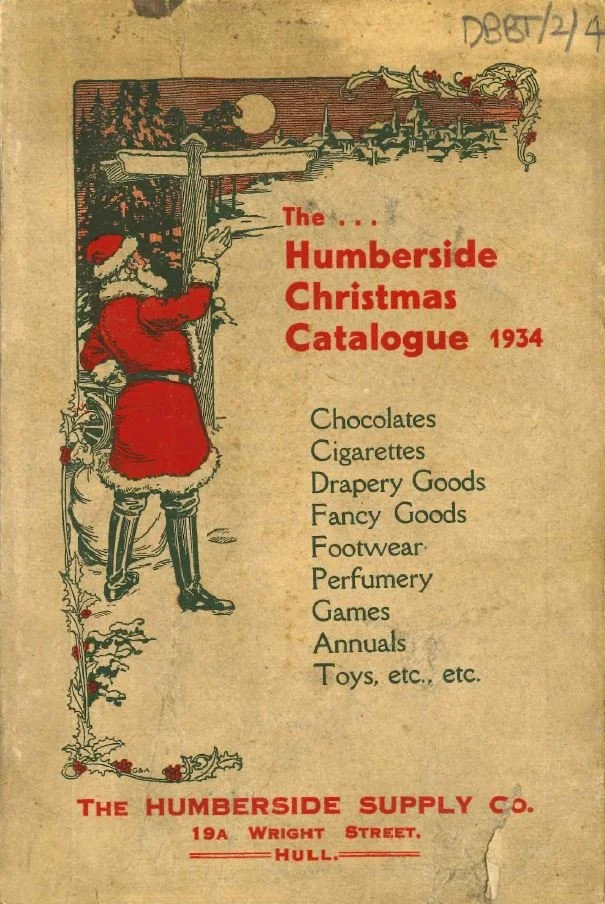
AN OLDER NAME THAN PEOPLE THINK: Humberside Supplies catalogue cover, 1934
A racehorse named ‘Humberside Hurry’ competed in the 1940s-50s. Local businesses had adopted the name decades before the county existed – such as the Humberside Supply Company, which operated from Hull in the 1920s.
Geography and the then transport links didn’t help the new county cohere. The estuary, which before the railway age was the main artery of communication, was now seen more as a barrier.
After a century or so of discussion and aborted proposals, the key promise to construct a bridge was made by Prime Minister Harold Wilson during the 1966 Hull by-election, although it would be another six years before construction began. The Humber Bridge was formally opened by Queen Elizabeth II on July 17, 1981.
In the 1970s, there was genuine optimism about the new county. The new council leader hoped that this would “move the centre of gravity in the north from the west to the east” and that economic investment would follow.
Culturally too, people strove to establish links between south and north bank. Dramatist Alan Plater wrote a 1975 play, Tales of Humberside, in which his characters decided it was better for both sides of the estuary to unite against the “common enemy” – in this case, southern capitalists.
Local folk artists described the north and south banks in their Song of Humberside as “joined by a river that’s kept them apart / joined by a bridge for today”, and the BBC commissioned a work entitled Scenes from the Humber, by composer Anthony Hedges.
The new local radio station BBC Radio Humberside cultivated a sense of identity with programmes like Top Town Quiz, in which teams largely made up of village-dwelling schoolteachers demonstrated their general knowledge.
The annual Humberside Festival of Arts and Humberside County Show celebrated the new county.

‘THE MAJORITY FELT IT WAS A MISTAKE’: A Humberside County Council report to the Boundary Commission
But Humberside provoked strong antipathy from the start. One man reportedly changed the name of his house to ‘East Yorkshire’ simply to keep the words in his address.
In Scunthorpe, the graffiti ‘Keep Lincs Links’ disfigured a railway bridge for years.
People continued to feel a loyalty to the counties in which they had been born. My late mother – a proud Lincolnshire ‘Yellow Belly’ – refused to stand at a school concert for the ceremonial entrance of the Chairman of Humberside County Council.
Humberside faced sustained and organised opposition from those who wanted it to be abolished. The East Yorkshire Action Group was particularly energetic in mounting letter writing campaigns, organising petitions and writing to the press.
The optimism that greeted Humberside’s inauguration was short-lived. Further shocks came with deindustrialisation, unemployment and the poverty of the 1980s, as big employers like the fishing industry in Hull and Grimsby disappeared and the steel industry in Scunthorpe shrank.
England’s motorway network fizzled out at North Cave and Barnetby Top, and the area remained as out-of-the-way as Philip Larkin recorded in his 1961 poem Here.
By the 1990s, the region included some of the most deprived areas in the country.
In 1990, the Local Boundary Commission for England commissioned a survey of attitudes across the county. A majority felt that Humberside had been a mistake.

SUSTAINED OPPOSITION: A headline from the Grimsby Evening Telegraph in 1988
Despite best efforts, there was little sense of a cross-Humberside identity, and the Humber Bridge was widely viewed as an expensive white elephant.
Three quarters of those based in North Humberside actually identified as living in Yorkshire. While the new county was more popular south of the Humber, most people still believed themselves to be really living in Lincolnshire.
There were strong voices in favour of the young county. Economic development and leisure services were seen to be successful. Yet it passed out of existence in 1996, being split into four unitary authorities.
The last Leader of Humberside County Council went on record decades later that in his opinion abolition “set the [local] economy back 30 years”.
The name Humberside lives on in the names of our police force, fire service and BBC local radio.
Small societies, associations and businesses continue to use it. But it provokes strong emotions still. Government and economic planners euphemistically refer to ‘The Humber’ and there was found to be no merit in the idea of creating a combined mayoral authority for both banks of the estuary.
The most visible legacy is the Humber Bridge, which enables the everyday connections imagined by the creators of Humberside envisioned it being. However, at the same time it is also a powerful symbol of the physical boundary between north and south banks.
But for some of us who grew up in Humberside, it educated us and gave us libraries, film theatres and youth services. We can remember it with affection.
To mark the 30th anniversary of Humberside’s abolition, Hull History Centre will host an exhibition Remembering Humberside throughout May.