
The ghostly monks of Bransholme
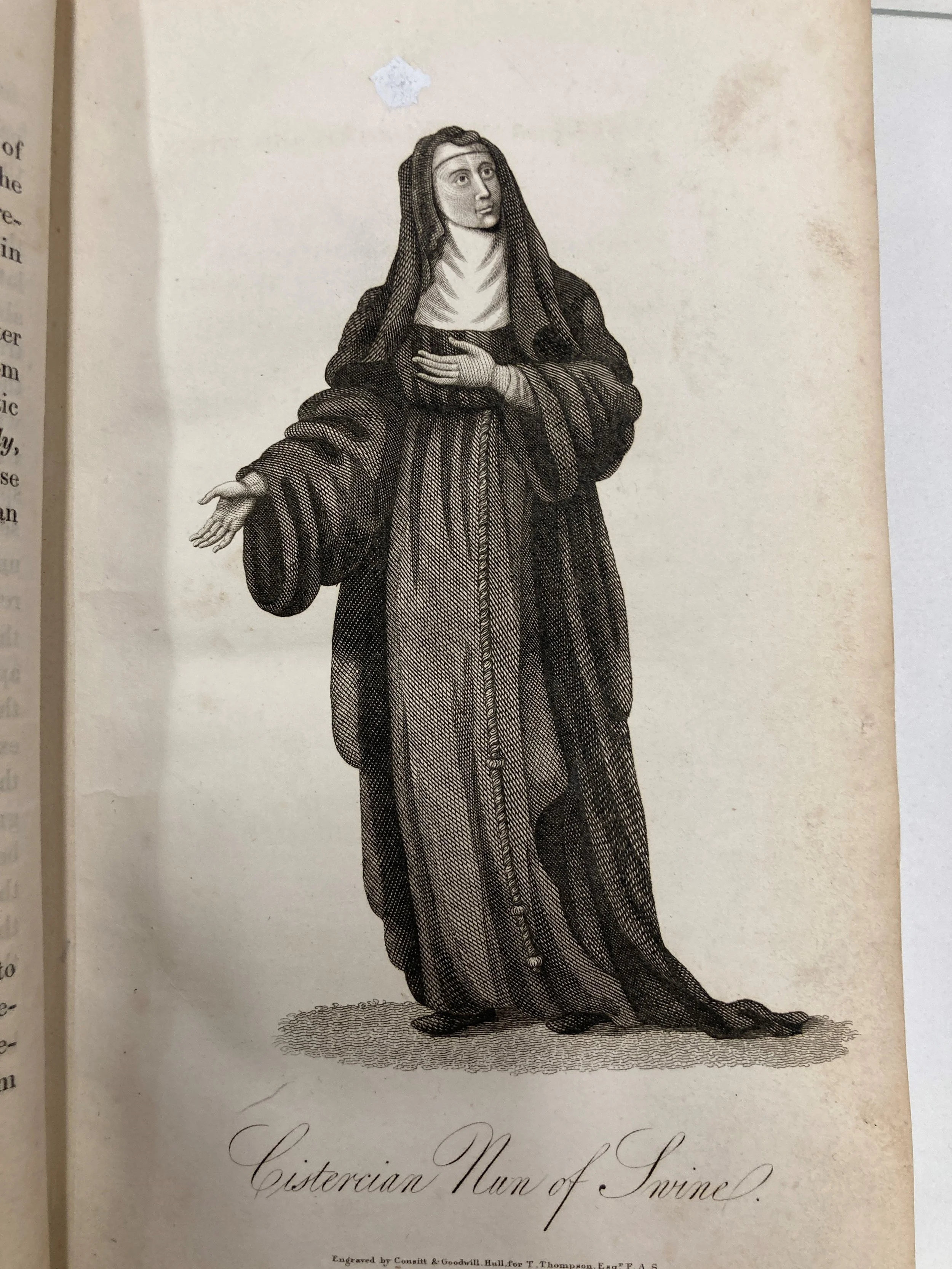
LEGEND HAS IT: A Cisterican nun of Swine Priory was said to have eloped with a local man - possibly a monk

The Way it Was
In partnership with Hull History Centre
By Neil Chadwick, archivist/librarian
Ghost stories have long formed part of local folklore, and one of the most persistent tales connected with Bransholme concerns sightings of mysterious monks across the estate and surrounding area.
These apparitions are often linked to Meaux Abbey, a major medieval monastery founded around 1150 by William le Gros, Earl of Holderness. William established the abbey as an act of penance for failing to join crusade. He also founded Thornton Abbey in Lincolnshire, where he was later buried.
The abbey’s earliest buildings were constructed from timber taken from a castle captured by William. These wooden structures were later replaced with stone buildings, creating one of the most important religious institutions in Holderness.
Although Meaux Abbey stands approximately a mile or two north of modern-day Bransholme, its influence extended across the surrounding landscape, providing one possible explanation for the association between the area and reports of ghostly monks.
As members of the Cistercian order, the monks of Meaux followed a strict lifestyle that emphasised manual labour. Rather than remaining within the monastery walls, they transformed the local environment by draining marshland through an extensive network of drains, ditches and dykes, some of which survive today.
These improvements enabled the cultivation of crops and the creation of pastureland for sheep, the wool of which became one of the abbey’s greatest sources of wealth.
Wool was central to England’s medieval economy and formed an important export to continental Europe, especially the Low Countries. The abbey was connected to the River Hull by the Eschedike, allowing wool to be transported to ports such as Wyke and later Hull. Historical records even note that wool shipped from Wyke helped contribute towards the ransom paid for King Richard I after his capture following the Third Crusade.
These waterways around Bransholme had close links to the abbey. The original Foredyke Stream, parts of which are now known as Wawne Drain, provided a route between Meaux Abbey and Hull. Running through what is now present-day Bransholme, this waterway would have been familiar to generations of monks travelling through the area, tending livestock, maintaining drainage channels and transporting goods.
These routes were the medieval equivalent of modern A and B roads helping integrate the monastery into daily life across Holderness.
Given the monks’ constant presence in the landscape, believers in the supernatural suggest that their spirits may still linger. One possible candidate is Adam, the first abbot of Meaux.
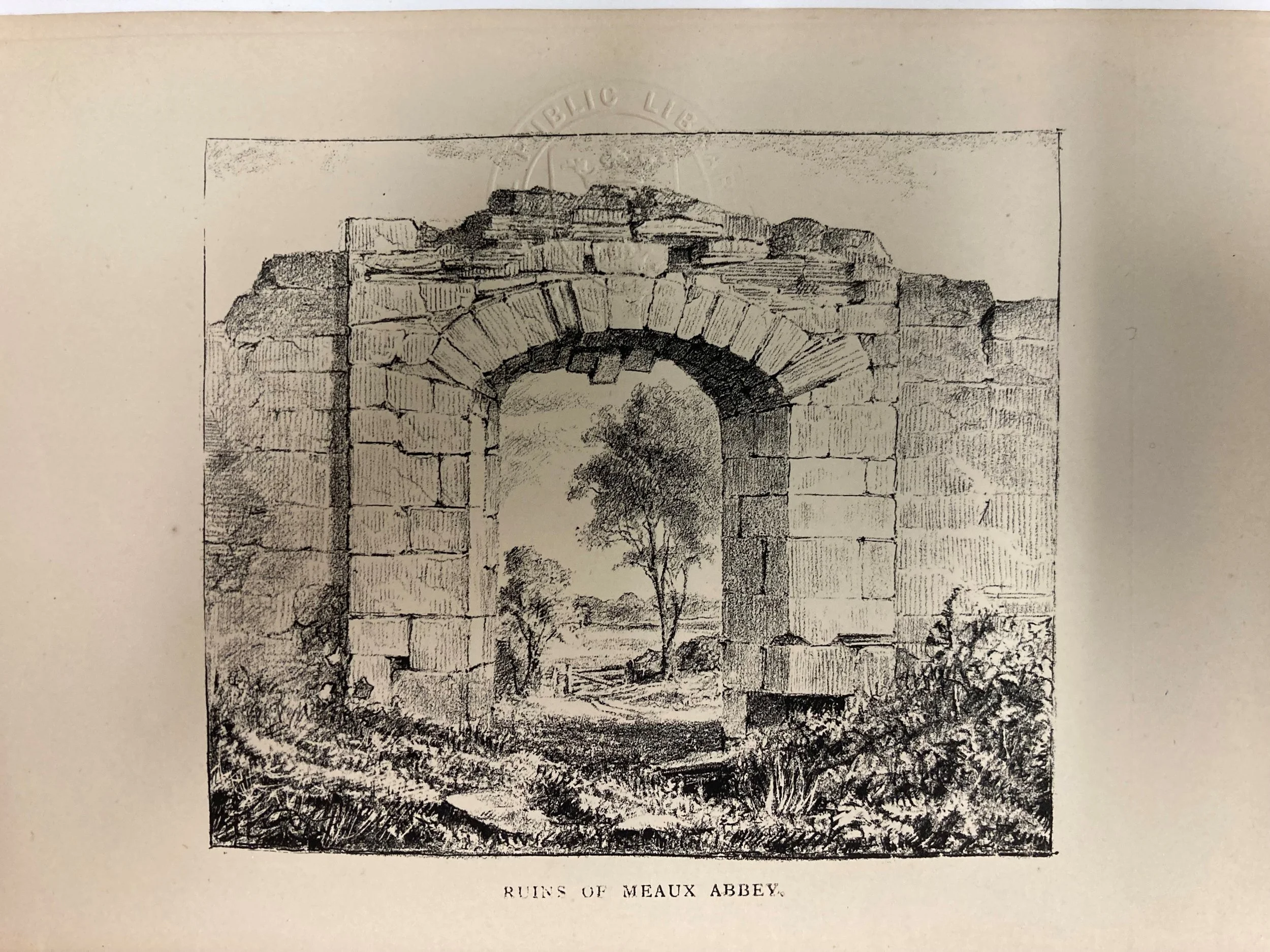
SPECTRAL SIGHTS: A drawing of the ruins of a doorway at Meaux Abbey
Originally from Fountains Abbey, Adam chose to leave the security of an established monastery to oversee the creation of the new religious Meaux community. As the founding abbot, his dedication to the abbey was immense, leading some to speculate that his spirit may still watch over abbey lands he helped shape during its early days.
Another figure possibly connected to such stories is Michael de Brun, a respected monk who later became abbot. He was highly regarded by his contemporaries and was consulted on important matters even during his final illness.
Despite his advice on disputes involving fishing rights and woodland management, his recommendations were ignored by his fellow monks. Folklore invites the possibility that an aggrieved Michael may still roam the abbey and surrounding countryside, angry that his advice wasn’t taken.
An incident of a reputed sighting took place in the early 1930s, when a delivery driver was walking towards a farm near the ruins of Meaux Abbey. The driver reportedly encountered a monk standing before him. Frightened, he continued on his way, but when he looked again, the figure had vanished.
Such tales gained further intrigue because human remains had previously been discovered on the abbey site, including skeletons buried beneath stone coffins and floor slabs. These discoveries add credibility to local ghost stories, suggesting that disturbed burials may be linked to lingering spirits.
For those who believe in ghosts, it is said ‘violent’ or ‘sudden deaths’ are to explain why they are said to be seen. Their spirits haven’t passed into the spirit world and therefore remain trapped in the living world.
Meaux Abbey witnessed immense tragedy during the Black Death. In August 1349, the plague devastated the community. Of the abbey’s 42 monks and seven lay brothers, 22 monks and six lay brothers died within a single month. On one day alone, the abbot and five monks succumbed to the disease.
Only ten monks survived overall, meaning nearly four-fifths of the community perished. Over four centuries of existence, hundreds of individuals were buried at the abbey. Such a concentration of death naturally fuels speculation about hauntings, especially among those who believe sudden or traumatic deaths can leave spirits trapped in the mortal world.
Not all dangers faced by the monks came from disease. Historical records reveal tensions between the abbey and local landowners. One notable antagonist was Sayer II, lord of Sutton, who bitterly opposed lands granted to the abbey by his father.
In the early thirteenth century he forcibly expelled monks from the West Marsh, resulting in the death of one of his own followers. Known for his violent behaviour, Sayer was also accused of seizing a ship on the River Hull and killing its crew. Such actions have inspired speculation that conflicts with the abbey may have led to attacks on isolated monks, whose disappearances remained unexplained.

HISTORICAL WATERWAY: The view across the Foredyke Stream towards Howard’s Row, Chapman Street
Life itself was hazardous in medieval Holderness. The abbey’s construction, first in timber and later in stone, would have involved strenuous labour with little regard for what we would now call health and safety. Building accidents, collapsing structures and serious injuries were inevitable risks. Equally dangerous were the challenges of the surrounding landscape. Floods, collapsing drainage works and treacherous marshland posed constant threats.
Before extensive drainage schemes transformed the region, what is now modern Bransholme sat between large expanses of wetland, including the North Carr to the north and the salt marshes of the Stanmer to the south. For monks unfamiliar with the terrain, a wrong turn could prove fatal. Individuals could easily become trapped in boggy ground, drown in floodwater or disappear into remote marshes without hope of rescue.
People have reported seeing monks on their property across Bransholme, including apparitions stood in their homes. Reported as wearing a habit, hood or head covering, they suddenly vanish. Such deaths offer another possible reason for the said sightings of ghostly monks.
Although monks are often remembered for their piety, they were still human. Historical evidence from monasteries across England reveals that some clergy formed romantic relationships despite vows of celibacy. During the Dissolution of the Monasteries in the sixteenth century, numerous reports described abbots maintaining mistresses. At nearby Swine Priory, one nun was said to have fallen pregnant by a priest.
Legends from Swine also tell of a nun who eloped with a local man. According to tradition, she was returned to the priory while her lover was killed. While no evidence links similar incidents directly to Meaux Abbey (or such incidents were suppressed) it is possible to imagine situations in which a monk became involved in a forbidden relationship, provoking anger or even violence. Such scenarios may provide fertile ground for later ghost stories.
Financial misconduct also occurred within religious communities. In 1399, a monk named Robert Leconfield misappropriated money and fled Meaux Abbey. Although little is known about other cases of corruption or theft, disputes were not unknown in medieval monasteries. This raises the possibility that some seemingly accidental deaths may have involved darker circumstances. If an honest monk uncovered wrongdoing, this may have led to retribution by the offending parties, leading to violence and the concealment of such crimes or unexplained disappearances.
Ultimately, none of these theories proves the existence of ghosts. Whether one believes in the supernatural remains a matter of opinion. However, the history of Meaux Abbey offers numerous explanations for why stories of ghostly monks have persisted for generations.
The monks transformed the landscape, travelled extensively through the area, endured plague, hardship and conflict, and left a lasting imprint on Holderness. Combined with centuries of local folklore, these factors help explain why reports of monk-like apparitions continue to be associated with Bransholme and the surrounding countryside.
Such stories remain part of the region’s rich heritage, blending documented history with local legend and ensuring that the monks of Meaux Abbey continue to capture the imagination, centuries after the monastery itself disappeared.