
Tragic deaths, fed-up cyclists and swearing fishermen: The secret life of a subway
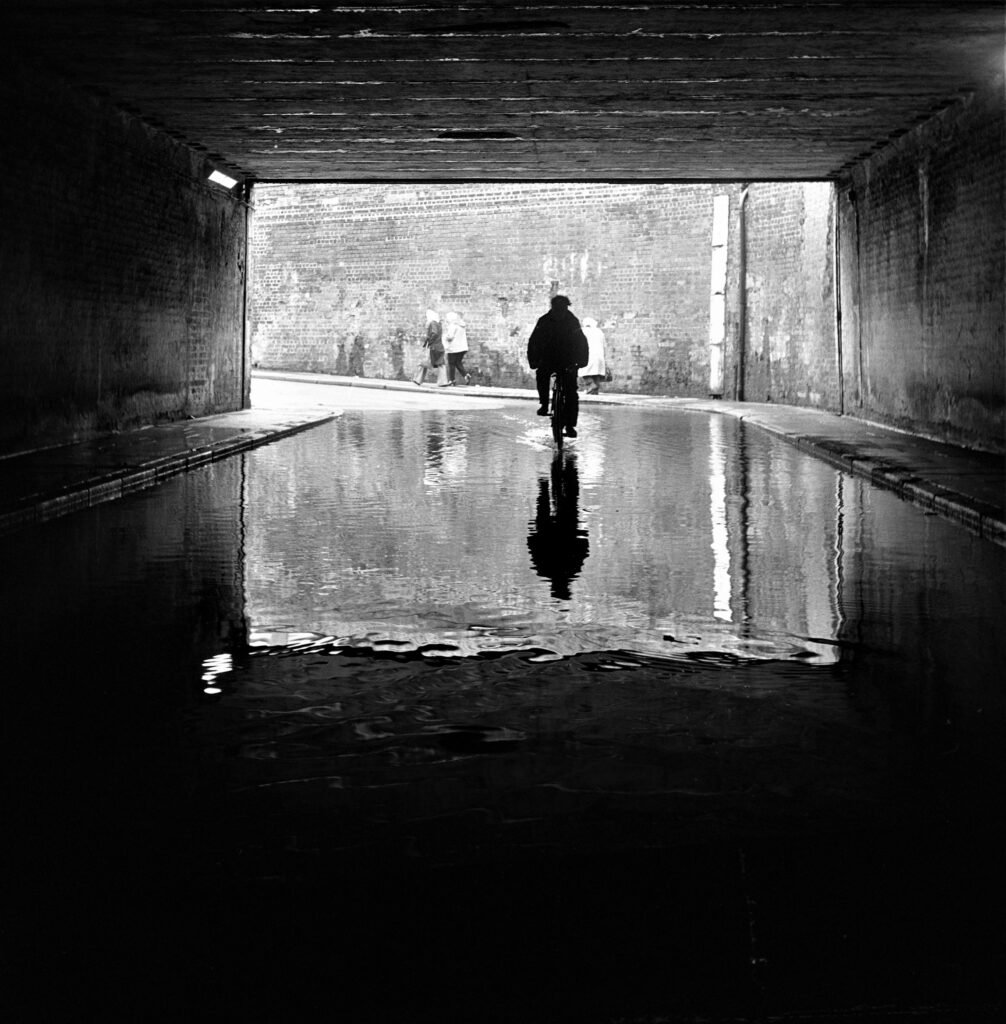
‘THE PERFECT MOMENT’: Photographer Alec Gill captured a cyclist in a subway off Hessle Road in the early 1970s, in a picture dubbed ‘The Tunnel’

Now & Then, a column by Angus Young
The new-look Castle Street and its underpass is finally nearing completion but it’s not the first major transport tunnel in Hull.
Just over a mile away lies a tunnel which has seen many changes since it was first constructed back in 1882.
When it was originally built, the subway provided the main access route to a new dock being laid out next to the Humber, eventually to be named St Andrew’s Dock.
It ran under railway lines taking trains to and from other neighbouring docks and shortly afterwards inspired the name of a new nearby street.
Today both the subway and Subway Street are still with us, albeit looking very different to how they first appeared in the late 19th century.
Illuminated with permanent neon blue lights, the subway now runs under the A63. It’s still an access route to the derelict dock as well as for employees heading to the Cranswick Foods factory on William Wright Dock.
Here’s a short history of one of the city’s largely hidden civil engineering landmarks.
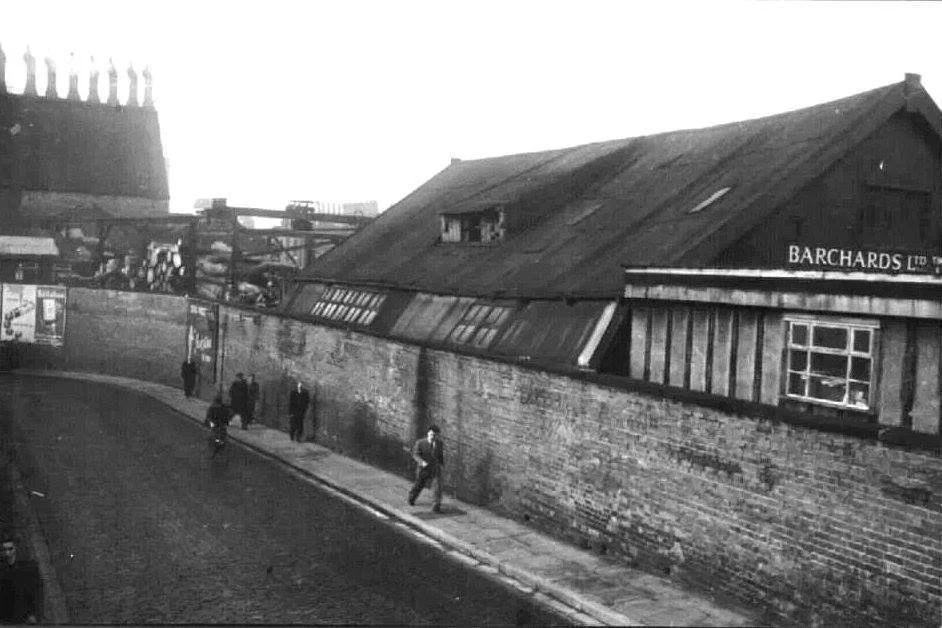
DAILY COMMUTE: People using the subway in an undated photograph
Monday, August 28, 1882: An official ceremony by the Hull Dock Company marks the turning of the first soil of the subway project intended to connect what was then known as the new No 2 Extension Dock with the Dairycoates district.
Located at the eastern end of the dock, the subway has been designed to run beneath the railway lines of the North-Eastern Railway Company.
It will be constructed by Mr G.B. Godfrey, contractor for the Hull Dock Company, the North-Eastern Railway Company and the Hull and Barnsley Railway and Dock Company who all have provided financial support for the scheme.
Dock company chairman Mr John Ringrose says the subway will be a “great convenience” to the fishing trade. The dock opens the following year.
Saturday, October 24, 1885: After a high tide on the Humber, the subway is completely flooded with several feet of standing water.
A newspaper report notes “this is not an unusual occurrence” and concerns are raised over the impact on the foundations of the overhead railway bridge.
Friday, October 26, 1894: The “deplorable condition” of the subway is discussed by Hull Corporation’s Footpaths Committee. It is noted there is currently four feet of water standing in the main channel. Seven years later a bed of gravel was laid in the subway to improve drainage and maintain access.
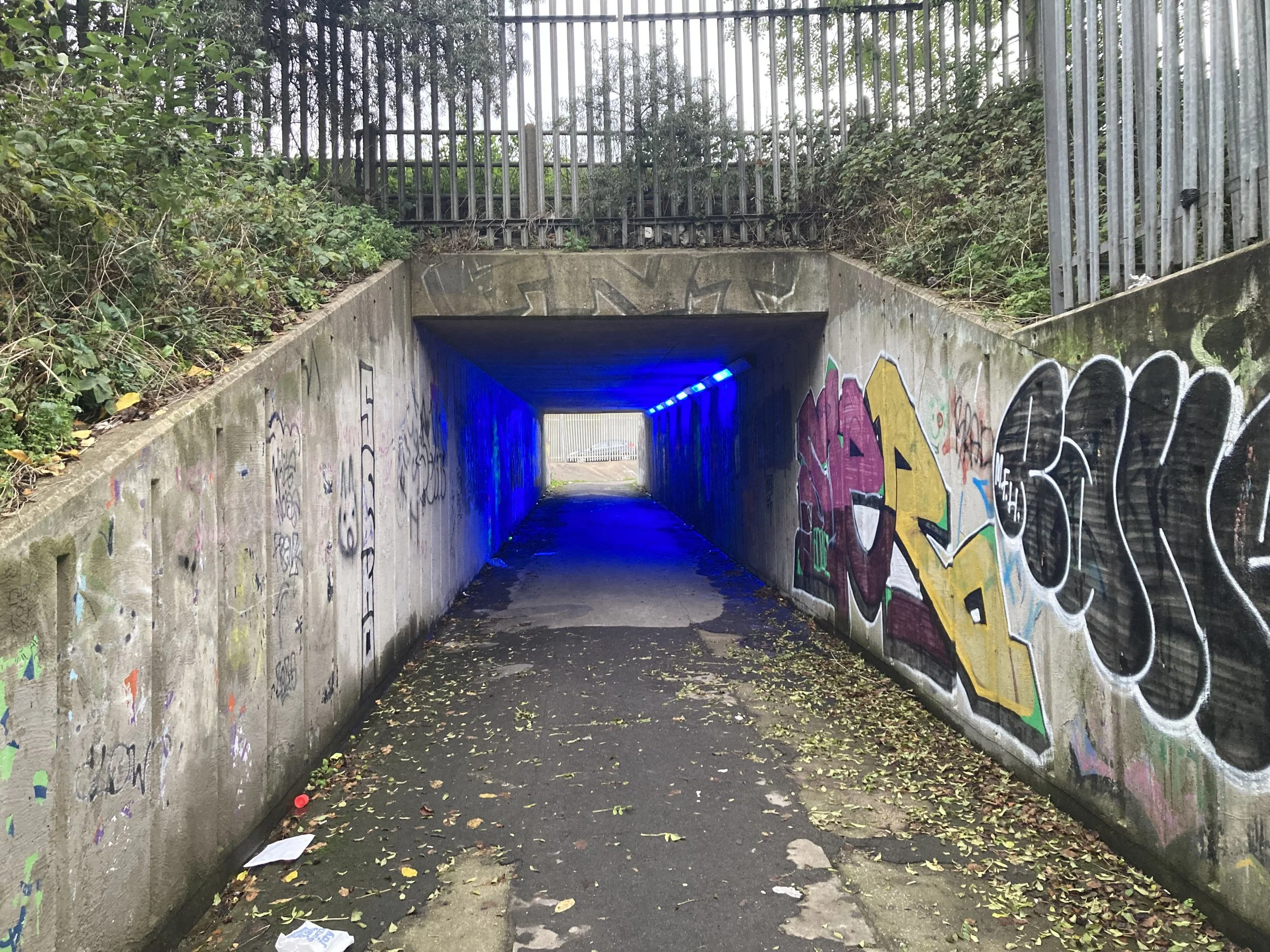
EERIE: The subway is now illuminated with neon blue lights
Saturday, June 11, 1904: A fire breaks out in the workshops of Messrs Hellyers Steam Fishing Co. on the south side of St Andrew’s Dock.
Rushing to the scene, a fire engine drawn by two horses enters the subway.
The horses are urged into a gallop to pull the water-filled engine up the incline towards the dock but the wheels clip a kerb and the vehicle tips over.
All the firemen are thrown against a subway wall, one being saved from a serious head injury by the solid brass mounting on his helmet, which was badly crushed.
They all end up lying in a narrow space between the wall and the overturned engine.
In the chaos, one of the horses is also knocked off its feet and suffers extensive grazing.
Friday, March 5, 1920: A collision between a hand-pulled rully cart and a taxi-cab at the city exit of the subway ends in a claim and counter-claim for damages heard at Hull County Court.
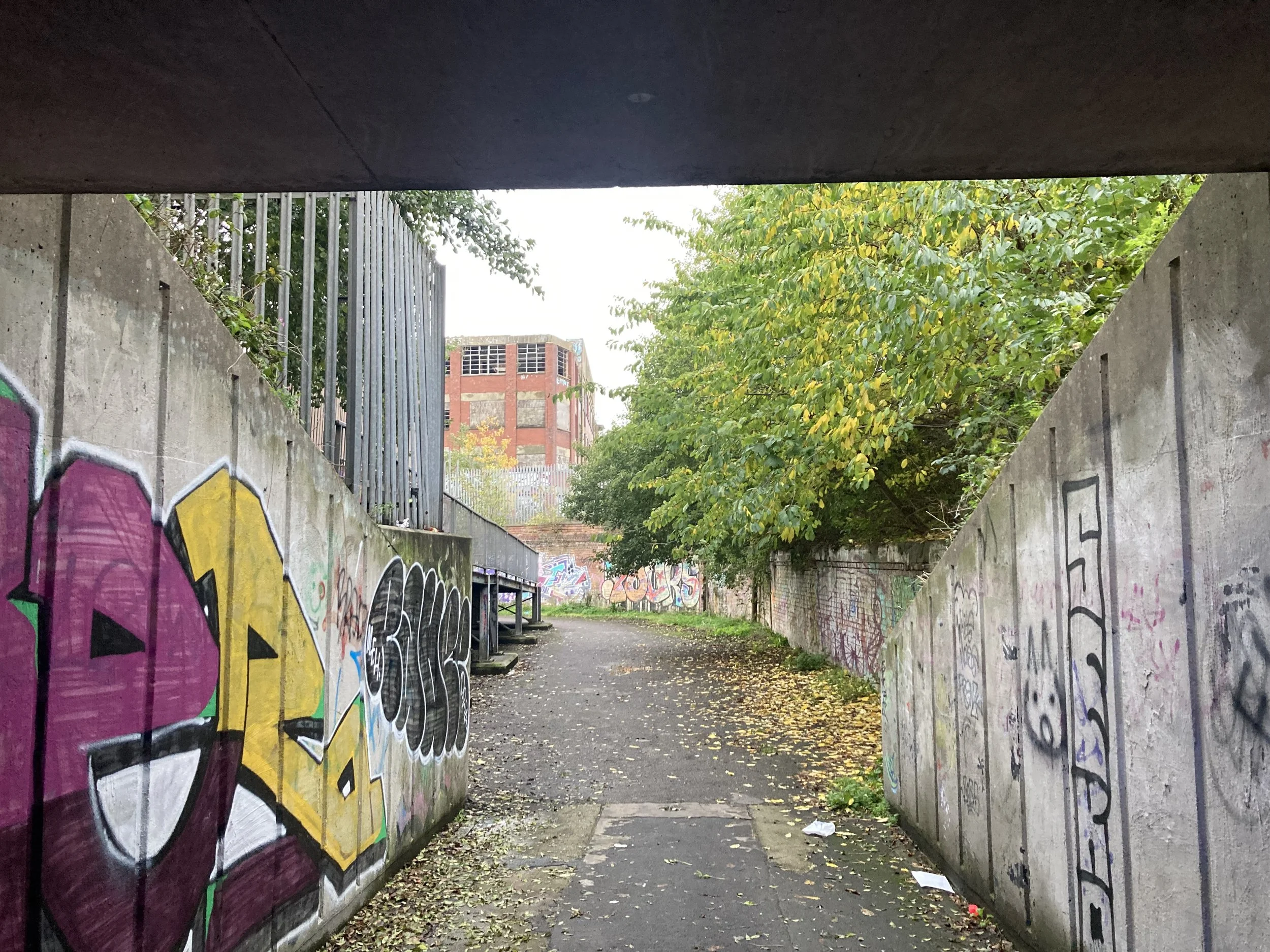
WAY OUT: The graffitied entrance to the subway, which now runs under the A63
Taxi-cab owners Messrs. Brettell & Co claim damages of £6 2s 9d to cover the cost of repairs against Wilson Pounder, carting agent and owner of the rully, who counter-claims for £6 12s 6d for damages to the rully.
The judge concludes both parties were to blame and dismisses both claims without awarding costs.
Thursday, December 29, 1938: Extensive improvements are announced for St Andrew’s Dock including the construction of a new overhead pedestrian bridge from West Dock Street aimed at relieving congestion in the subway.
Four years later, a fed-up cyclist pens a letter about the closure of an access ramp across the railway lines every night at 5pm.
“Many of us leaving business premises at 5pm or after are faced with the nightly alternative of either carrying our cycles over the Liverpool Street footbridge – an exhausting process involving the negotiation of some 80-odd steps – or using the obsolete subway.
“To the elderly (and probably to many girl office employees) the shouldering of cycles over the footbridge is distressing physically, and the prospect of the dangerous subway route, especially during the approaching early black-outs, is equally uninviting.”
Saturday, February 14, 1970: Police are called to the subway where a group of striking fishermen are reported to be causing trouble.
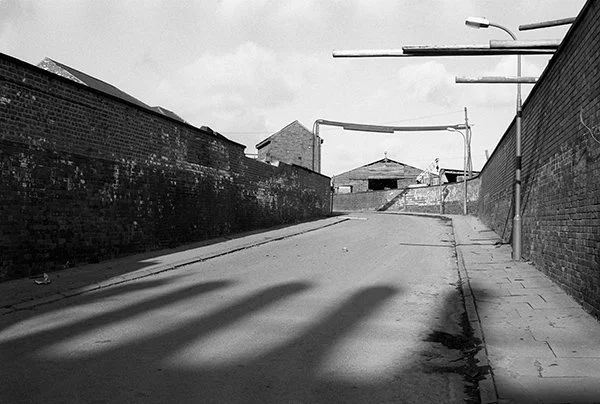
DESERTED: The road leading away from the subway
Ian Oakes, 19, of Rosett House, Walker Street, is arrested and later pleads guilty to using obscene language. He is fined £10.
In court, Oakes tells magistrates: “All I said is, ‘you are a f****** blackleg’. It was not meant really. It was just in anger that I swore.”
Asked about paying the fine, he replies: “I can’t pay it now. I’m out of work on strike.”
Friday, October 23, 1970: A tanker carrying propane gas severs a power cable clamped to the roof of the subway triggering a massive explosion and fireball.
At the time, around 20 people were inside the subway going to and from the dock.
The heat was so intense that white paint peeled off its walls.
Two people die and another 19 – including several children – suffer injuries, mostly severe burns.
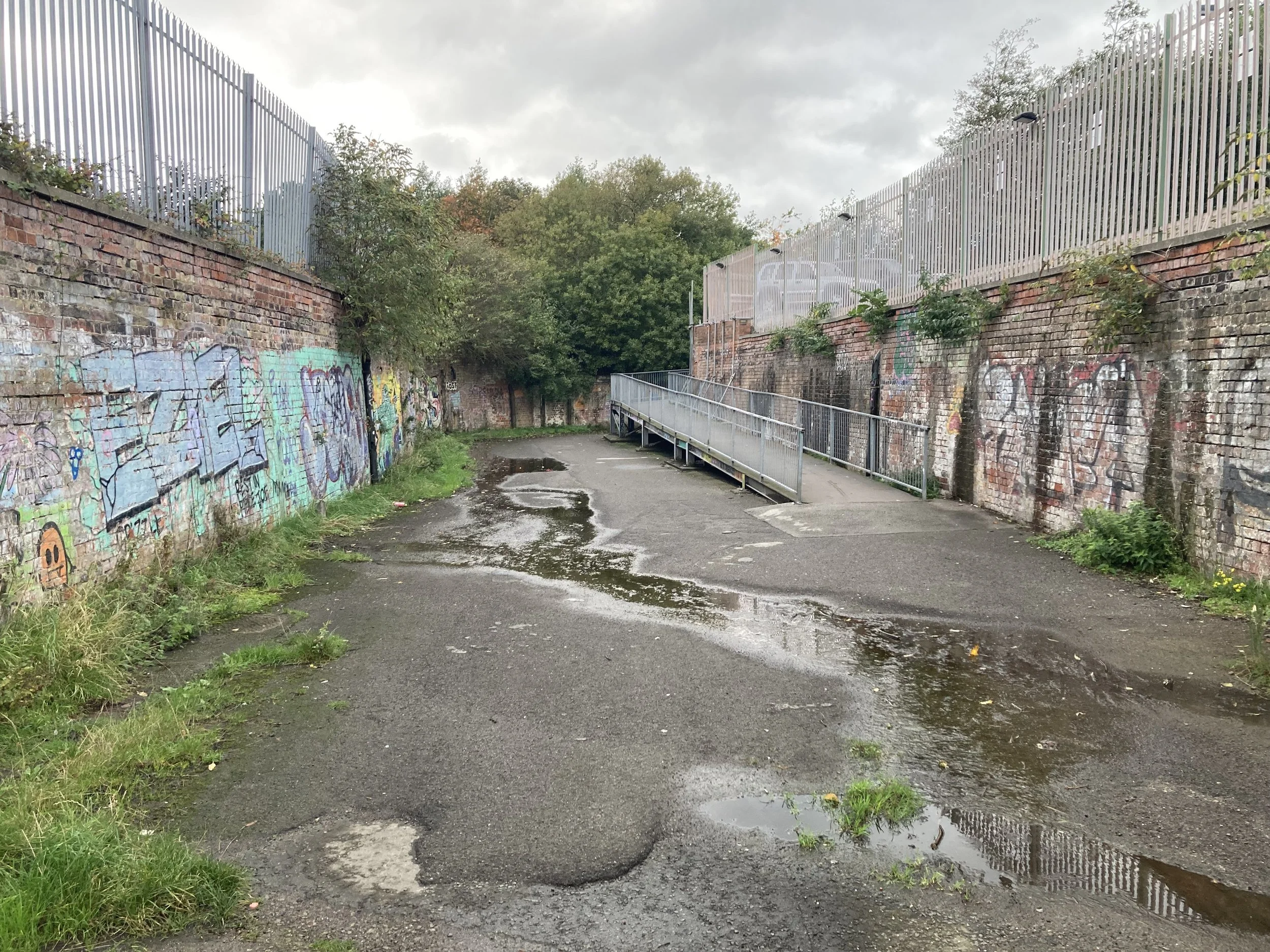
WELL BUILT: The original 19th century brickwork is still standing
Early 1970s: Photographer Alec Gill is just starting to record life on the dock and the surrounding Hessle Road area with his camera when he spots the perfect moment for a snap in the subway.
“It was nicknamed The Tunnel – the access to the fish dock under the railway lines,” he recalls. Every now and then after a heavy downpour it flooded – providing a wonderful opportunity for me to capture a very reflective shot.
“The cyclist in the photograph strikes a very solitary figure with his silhouette set against the sunlit wall. He is peddling home while three women behind him head into work.”
Friday, November 1, 1985: The new South Dock Orbital Road – named Clive Sullivan Way – is officially opened by transport secretary Nicholas Ridley.
The dual carriageway takes vehicle traffic over the newly-strengthened subway for the first time, the old disused railway tracks having been removed as part of the road construction scheme.
Mr Ridley is lobbied by union members from Hull’s council-owned bus company protesting about the government’s bus privatisation plans.
Late 2025: Opened 142 years ago, the subway is still doing its job. Access is now limited to pedestrians and cyclists with the concrete walls installed in the 1980s upgrade providing a contrast with the original surviving brick at the southern end.
To see how it looked in its prime, an impressive scale model of St Andrew’s Dock at the Hull Fishing Heritage Centre in Hessle Road features the subway complete with advertising billboards on either side of the route used by generations.