
Revealed: How social media helped deliver historic election win for Reform UK’s Luke Campbell

WINNING TEAM: From left, Jack Anderton, Mayor Luke Campbell, and Robin Hunter-Clarke
EXCLUSIVE
By Angus Young
Campaign spending returns for May’s first ever Hull and East Yorkshire mayoral election have revealed how Reform UK prioritised social media to help Luke Campbell secure an historic victory.
The election came after Hull City Council and East Riding Council agreed a devolution deal with the Government to create a new mayor-led combined authority to oversee strategic issues such as economic development, transport and skills.
Under Electoral Commission rules, each candidate standing in the contest was allowed to spend up to £42,005 on their election campaign.
An analysis of declared returns show all six candidates stayed within the spending limit.
The highest spend of £40,055 was recorded by Liberal Democrat Mike Ross, who eventually finished second.
Campbell spent £38,803 on his campaign, Labour’s Margaret Pinder – who finished fourth – spent £38,053, while third-placed Conservative Anne Handley recorded a total spend of £37,646.
In contrast, Green Party candidate Kerry Harrison’s campaign cost just £4,359 while Yorkshire Party candidate Rowan Halstead spent £3,593.

In each case, most of the campaign costs were met by the candidates’ party topped up by a small number of personal and local branch party donations.
Drilling down into each candidates’ returns, the £18,437 spent by Reform UK on hiring an election agent and a social media manager as well as providing accommodation for them during the campaign is the stand-out figure.
It includes £7,650 paid to Jack Anderton, the owner and sole director of Inflamer Media Ltd, who acted as Campbell’s press officer and media manager during the campaign. He was also paid £465 to cover expenses.
Another £3,987 was paid to Robin Hunter-Clarke, a district councillor in East Anglia, to act as Campbell’s election agent. He also received £684 in expenses.
Notes in the spending returns say both men were “seconded by Reform UK”. The party also paid another £5,659 for “accommodation and administration”, including renting an Airbnb property in Hessle where the two men stayed.
No other candidate hired a dedicated social media manager giving 23-year-old Anderton – who had previously launched Reform leader Nigel Farage on Tik Tok – free reign to capitalise on Campbell’s already large online following from his days as a high-profile professional boxer.
Always dressed in trademark all-black during the campaign, Anderton literally became Campbell’s shadow as he carefully limited his appearances on mainstream media platforms.
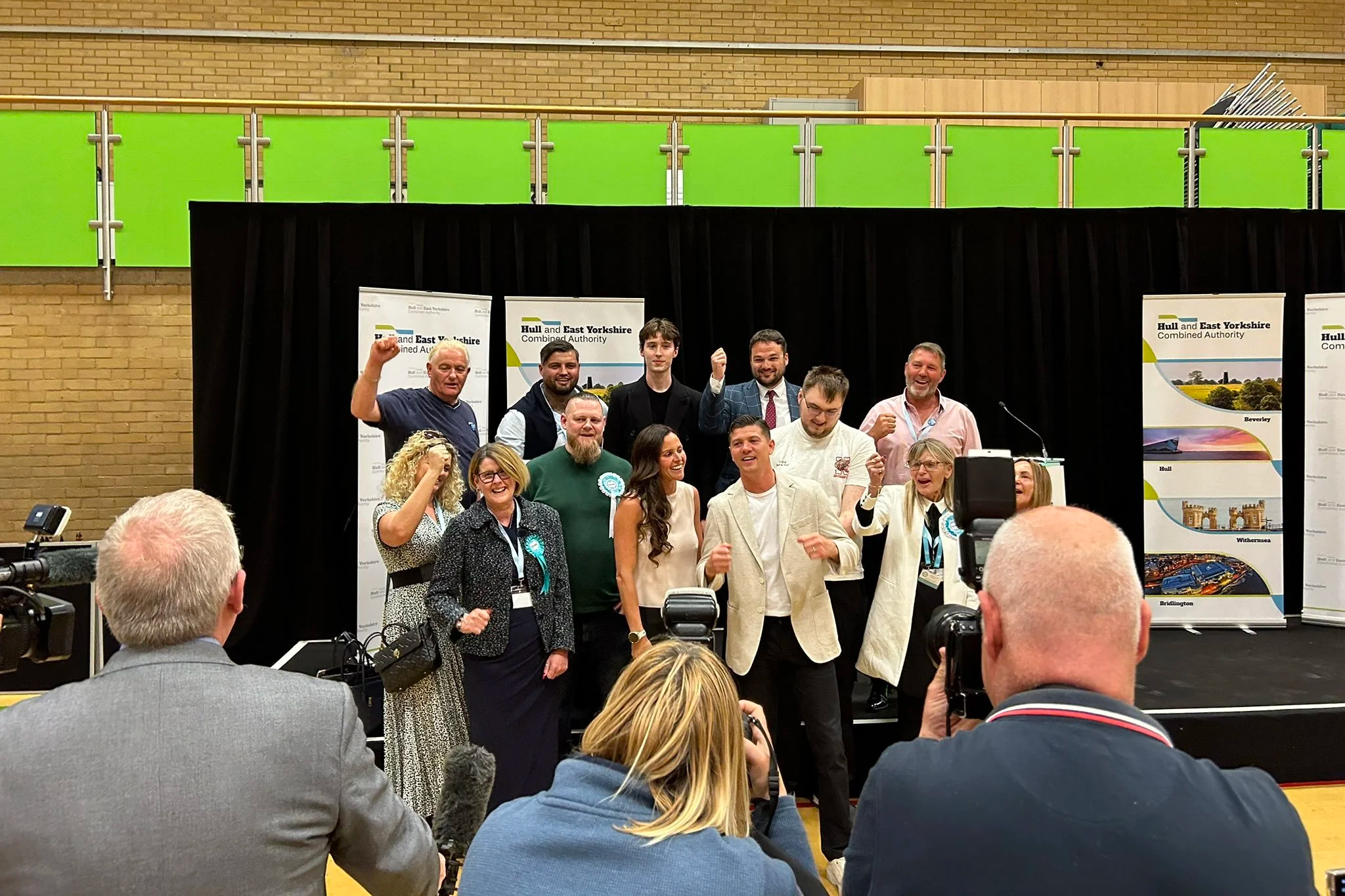
VICTORY: Luke Campbell, front and centre, celebrates becoming the first elected mayor of Hull and East Yorkshire. Jack Anderton and Robin Hunter-Clarke are on the back row, third and fourth from left respectively
Instead, a resulting flurry of campaign videos grabbed attention featuring Campbell delivering national Reform slogans despite it being a local election.
Invoices in the spending returns itemising paid-for content on Facebook featuring the Campbell videos also include engagement data for each post.
They show at least ten times the engagement rate compared to similar ads by Conservative rival Anne Handley, the only other candidate to use Facebook advertising.
With the exception of Handley’s Facebook ads and another £6,000 spent by the Tories on a slot on a giant roadside digital advertising screen next to the A63, the other candidates mainly relied on traditional election advertising such as mailshots, leaflets and posters.
The Campbell campaign’s spending total also includes four separate hotel bills. The hotels aren’t identified but the highest charge is for £2,830.
Since the election, Anderton and Hunter-Clarke have remained close to Campbell.
In a recent story in the Daily Telegraph they were both identified as being at the centre of a row at the combined authority with Campbell reportedly frustrated that his attempts to employ them as his full-time advisors were being blocked by officers.
By law, such jobs in local authorities are classed as politically restricted. As such, it means the post holder cannot also be a councillor or someone standing for election, an election agent, an officer of a political party or someone who has canvassed on behalf of a political party.