
Whale skeletons returned to Maritime Museum
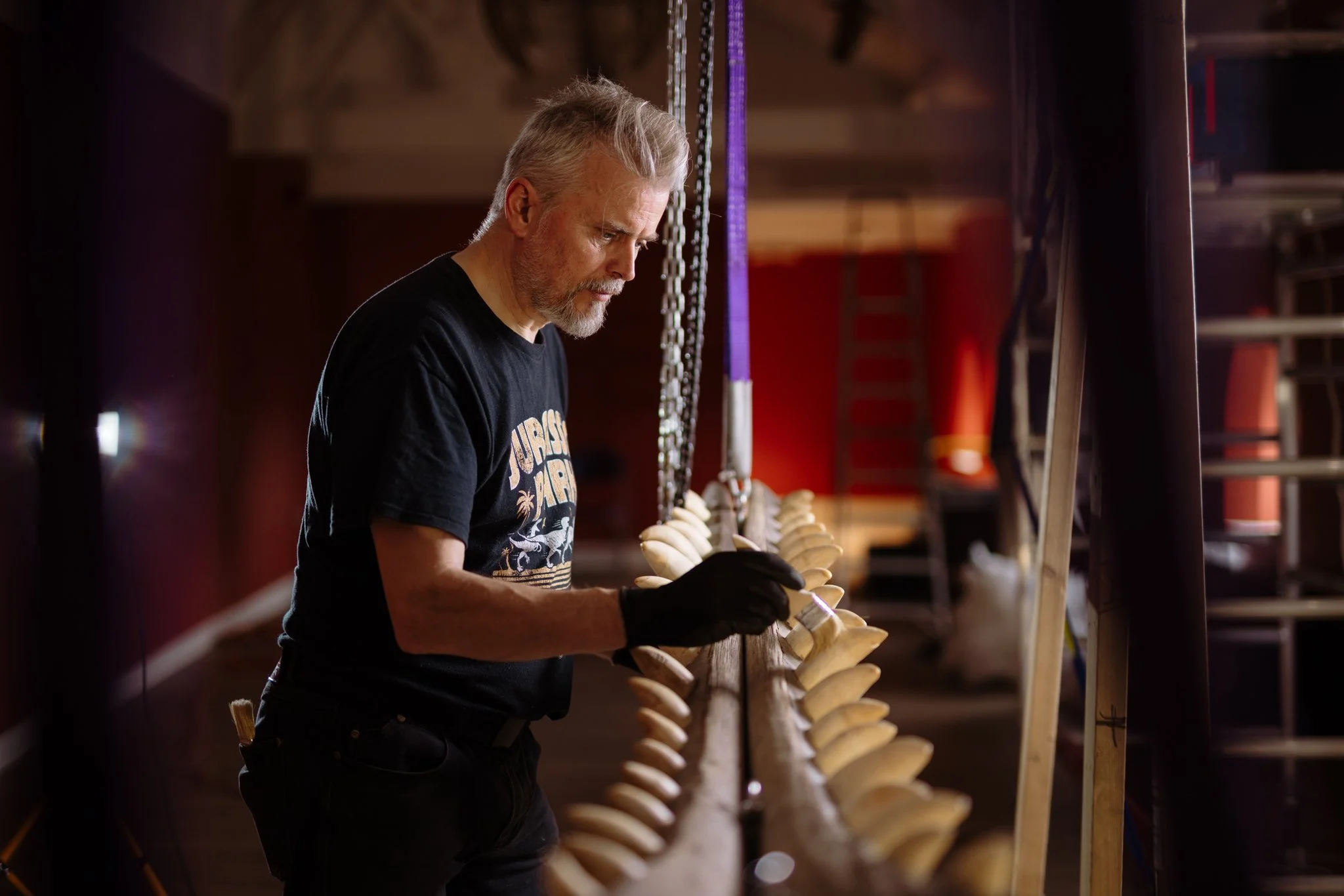
CAREFUL WORK: Nigel Larkin makes final preparations to the 145kg sperm whale jaw bone before it is suspended to the ceiling at the Maritime Museum
By Simon Bristow, Co-Editor
Five historically important whale skeletons and marine specimens have returned to Hull’s Maritime Museum following an extensive and meticulous programme of cleaning and conservation.
These large specimens are among the first major items to be reinstalled as part of the museum’s multi-million-pound transformation. Led by renowned natural history conservator Nigel Larkin, the project has included the dismantling, cleaning, conservation and remounting of the specimens.
Several specimens will be dramatically suspended in the museum’s revitalized galleries, including a minke whale, a killer whale, a lesser rorqual, a false killer whale, a bottle-nosed whale and the huge four-metre-long jawbones of a sperm whale. The 15-metre-long juvenile North Atlantic right whale is due to return early next year.
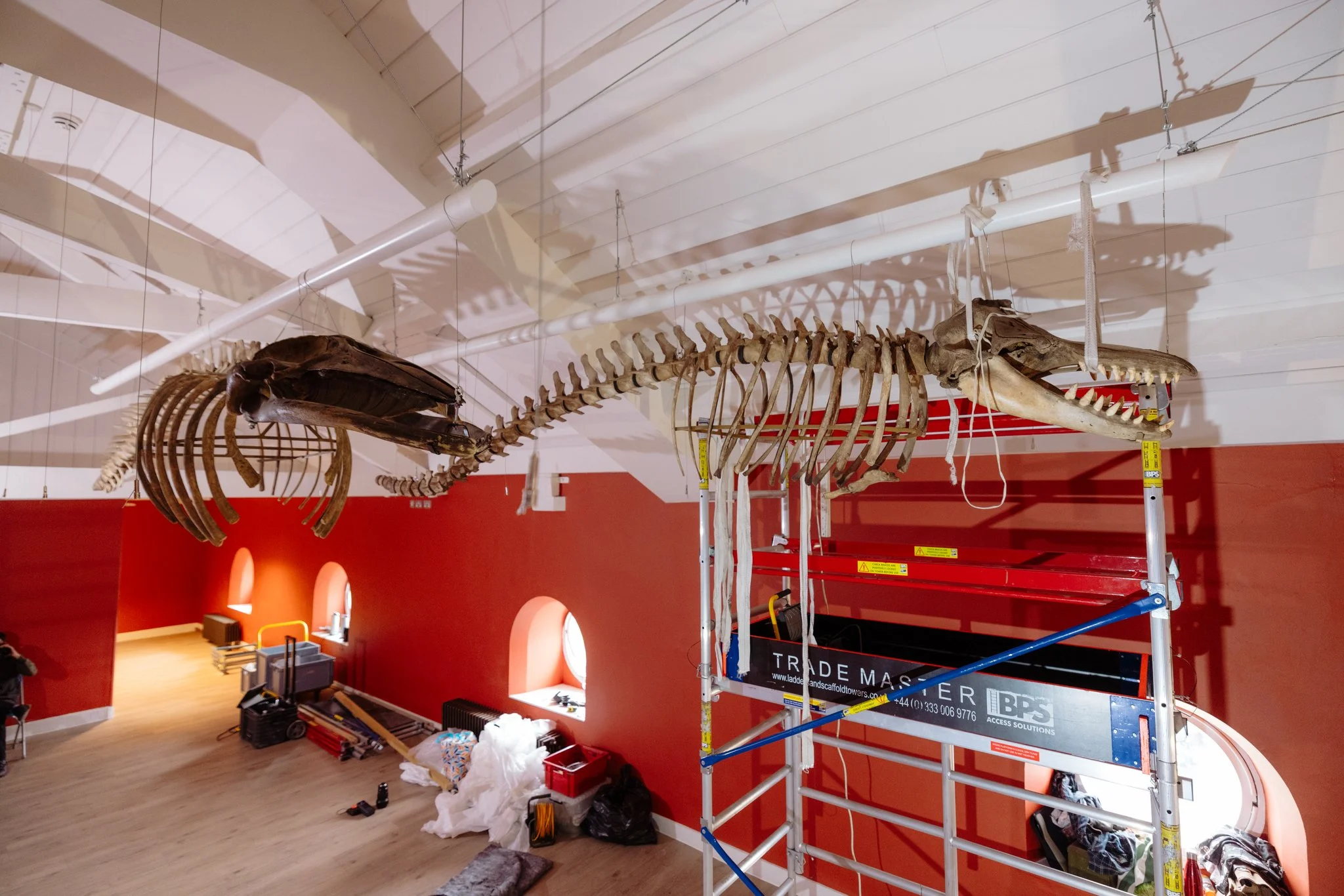
GETTING READY FOR VIEWING: Skeletons of a lesser rorqual and false killer whale are among the first large artefacts installed at the refurbished museum
Councillor Mike Ross, leader of Hull City Council, said: “It is great to see the museum entering this stage of the transformation. The suspension of these fragile skeletons is a huge undertaking and will offer visitors a unique view of these conserved artefacts. This is an exciting chapter in the project as the museum comes back to life.”
Mr Larkin, a specialist in the conservation and curation of skeleton materials, said: “It is very satisfying to see these beautiful skeletons return to their home and be on display again for the public to enjoy.
“It has been a huge project for me to dismantle each skeleton, carefully clean and assess every bone and then remount them with modern techniques and materials so that they can be enjoyed by visitors for many more decades to come.
“It has been a privilege to spend so much time with these beautiful animals.”

HISTORIC: Assistant curator Susan Capes prepares other items for display
In the coming months Marcon, who are leaders in their field, will create, test and install the audio visual and IT hardware. The general fit-out of the building will include installing display cases, joinery items, plinths and stands.
Electrical services including projectors, speakers, screens and exhibition lighting will also be fitted. The team at Marcon will create mechanical interactives, the making of models and props, and work alongside museum staff on the final installation of the museum collections.
The museum displays will be able to draw on more than 1,300 objects and artefacts being returned after being stored off-site. It will display 50 per cent more objects than previously shown.
The museum is expected to reopen in 2026 once the hundreds of artefacts have returned, and their many stories can take centre stage once again.