
‘An invitation to look inwards and out, to see how water links everything’: Maritime Museum preview
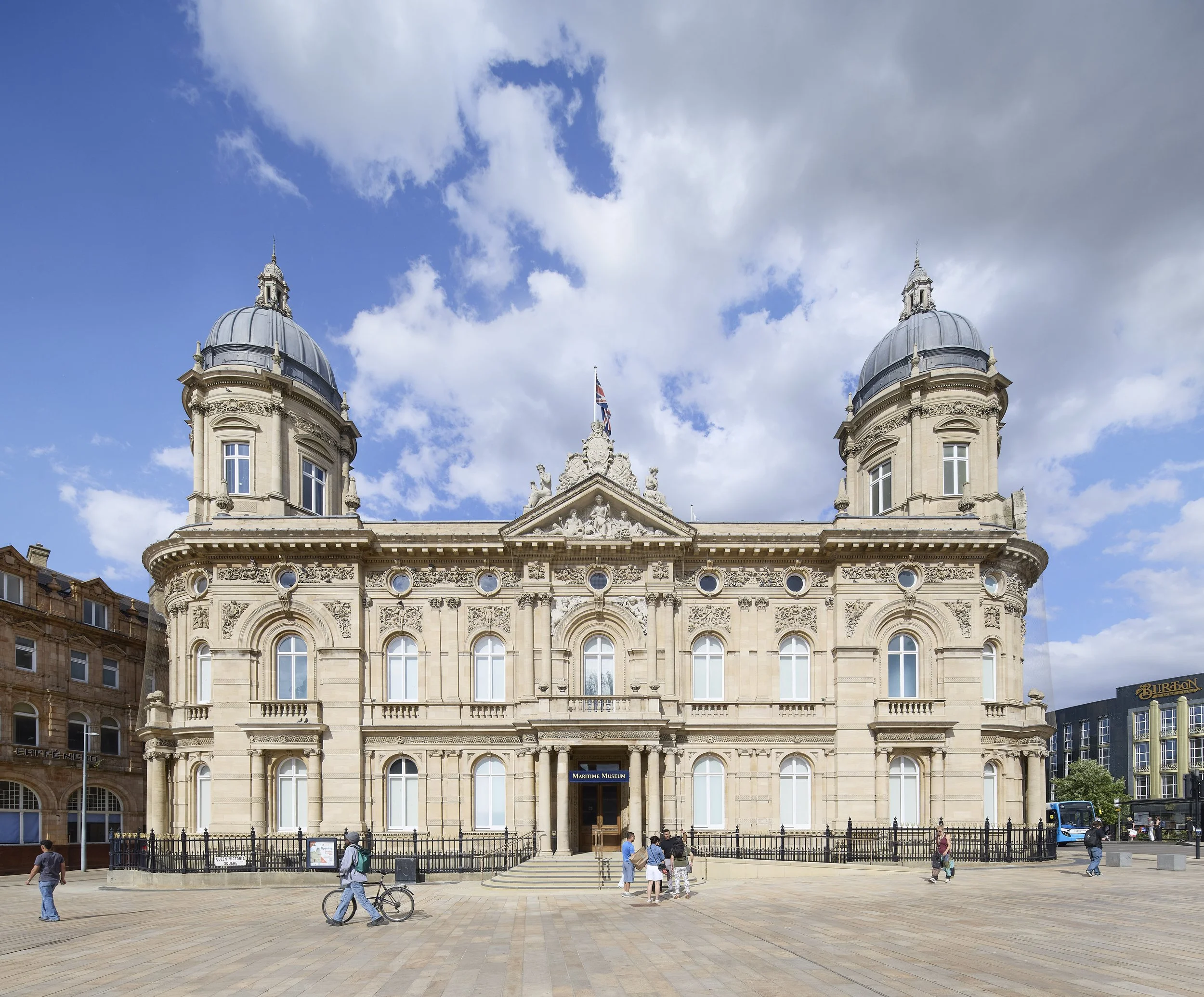
STORIES TO TELL: The Maritime Museum. Pictures by Hufton+Crow
The Maritime Museum reopens tomorrow after a six-year closure for a £20m transformation as part of the Hull Maritime project. Vicky Foster had a look around
It’s hard to explain the particular kind of excitement I feel as I make my way to visit the Maritime Museum in Queen Victoria Square, ahead of its reopening to the public on Saturday. I was there in 2024 to view the restored building before they started returning the artefacts and exhibitions, but aside from those couple of hours 18 months ago, like most people in Hull, it’s been six years since I’ve stepped inside.
As I glimpse it from afar, and realise how well it looks, how bright and clean the stonework is, how elegant the brass handrails are, I realise I feel the way you might if you were meeting up with an old friend you haven’t seen for a long time, who’s called you in advance to say they’ve got lots of old stories they want to mull over with you, as well as lots of new ones they’ve created in the time they’ve been away. You realise how much you’ve missed them and can’t wait to catch up.
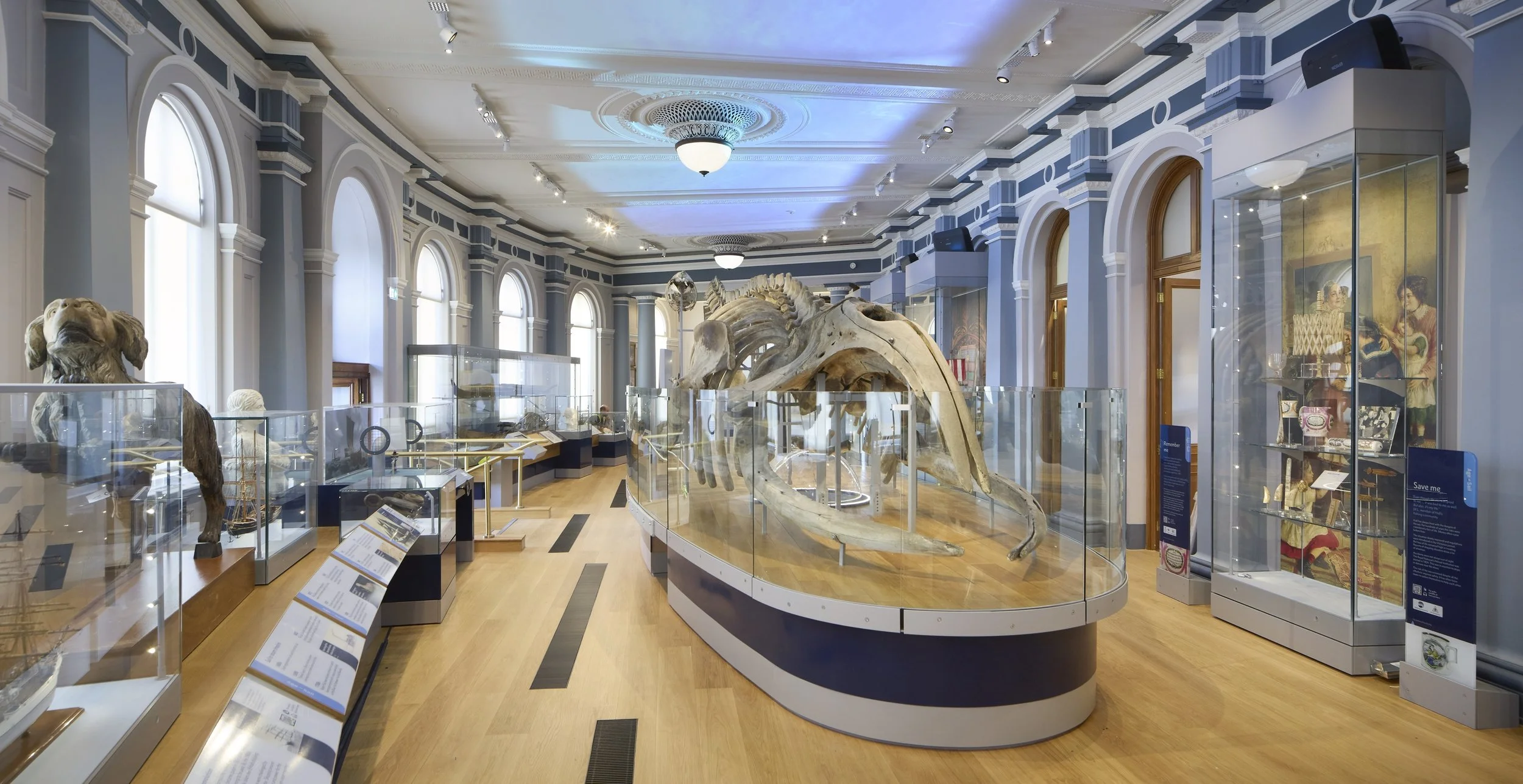
FROZEN IN TIME: The Age of Sail gallery
When I get inside, I’m greeted by a beautiful grand staircase and invited to wander three floors of rooms packed full of interesting things. Because we’re so well-acquainted, I know there’s no payment required and I can linger as long as I like.
The ground floor contains maybe the grandest, most striking displays, with an airy atrium where a whale skeleton is suspended high above you, and glass walkways span the space. The main gallery holds another huge whale skeleton that anyone who visited before the renovations will remember. It’s now accompanied by a moving projection of a full-grown whale that is just one element bringing movement and light to the space.
Erik the polar bear sits behind these, and they’re all surrounded by artefacts that include an Inuit kayak, a child’s model igloo made of whalebone, pistols, spurs, snuffboxes and a medicine chest from Hull whaling ship, The Diana.
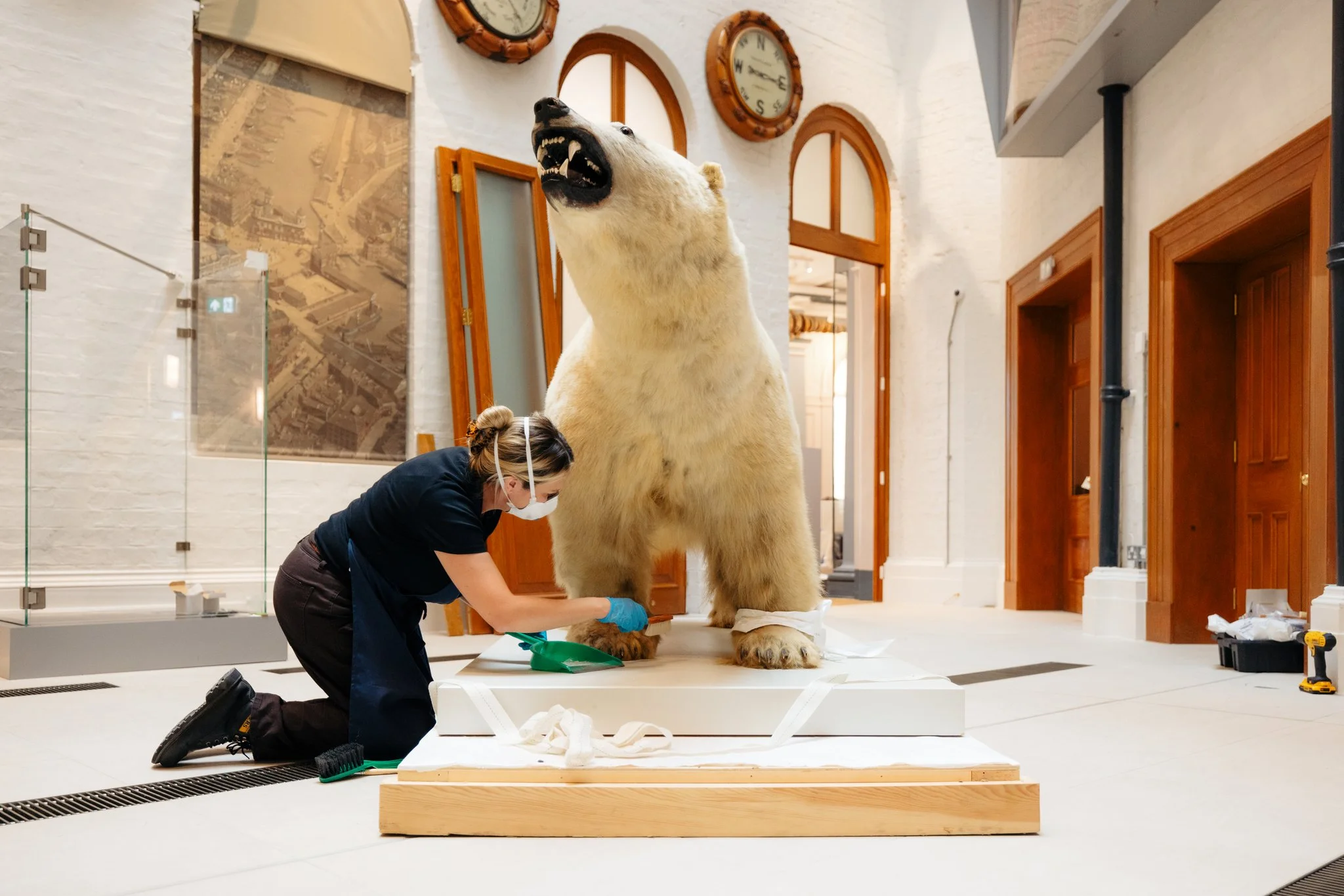
SEE YOU SOON: Conservator Lizzie Millar prepares Erik the polar bear. Picture credit: Maritime Museum
Images of snow and ice move across one of the walls; part of an animation depicting one of the Diana’s journeys to the Arctic, where it became trapped in frozen seas in 1866. Words from the ship’s surgeon’s journal appear alongside the images – “we sit like hares, startled and alarmed at the slightest sound” and “if the ship is lost, nothing remains for us but to lie down and die upon the ice”.
On the first floor, there’s a cinema gallery that feels, when I enter, like a chapel, with its wooden pews, muted light entering through soft blinds and a silent film playing on one wall, showing wild seas in black and white. This film gives way to an educational video about the East Yorkshire coast – the grand sweep of Flamborough cliffs, bright green seaweed-draped beaches, crabs in rockpools – and I begin to see how curator Robin Diaper’s vision has come to life. Not only are we deep-diving into moments of Hull history, but we’re sweeping out across the county, to feel how we’re connected more widely.
At the opposite end of the first-floor, another circular room has become a dedicated remembrance area, with a book for people to share memories or comments. Another book – St Andrew’s Memorial of Lost Hull Fishermen – is displayed in a glass case, its cover rich with reds and golds, and a digital screen nearby allows you to flick through the pages. Maritime flags hang from the walls, and a window looks away to what’s left of Princes Dock and the marina beyond. Another invitation to look inwards and also outwards. To see how water is linking everything.
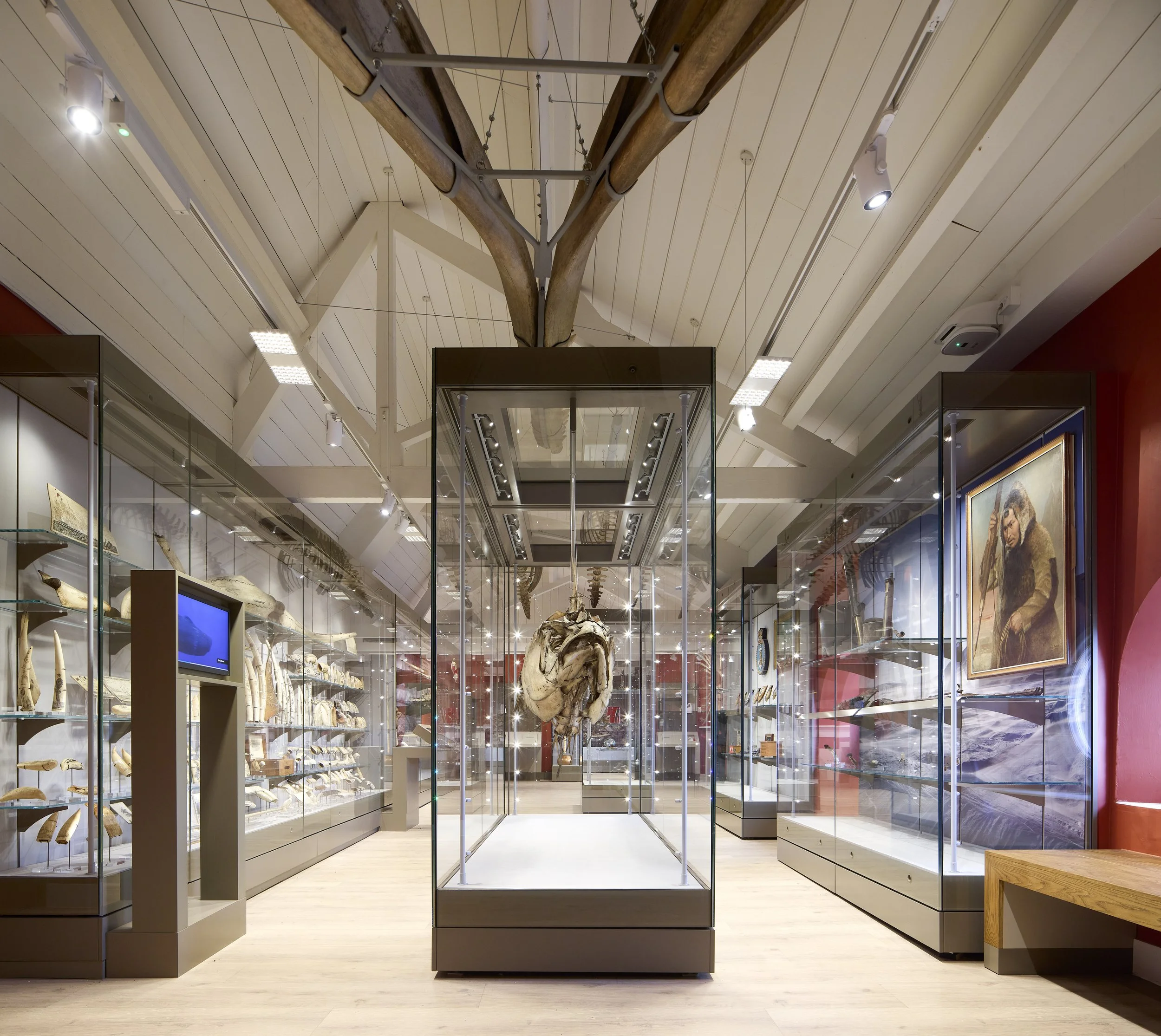
SO MUCH TO SEE: The Hidden Treasures gallery
A huge portrait of the Headscarf Revolutionaries dominates a larger gallery on this floor, with oversized newspaper cuttings from their campaign on another wall. A handwritten letter in a glass case beside them catches my eye, and as I read the words “I pray I will get complete safety for these lads,” I feel sudden, strong emotion. I skip to the bottom and see, sure enough, that they were written by Lillian Billocca and dated November 1962.
On another wall here, one of Dr Alec Gill’s photographs accompanies quotes from people in the local community and more of his photos are projected as a slideshow – a butcher’s shop and pie shop on Hessle Road, Sea Rangers in uniform, women pushing prams – snapshots of a community that grew up around the fishing industry. A real flavour of this place in another time.
As you move between galleries, each floor gives you a different view of the whale skeleton in the atrium, a new angle through which to see it, and likewise my view of the city’s history shifted as I moved around. A room with a huge globe shows our connections across the world, a board depicting the natural history of the River Hull encourages us to look closer at areas where the water winds inland.
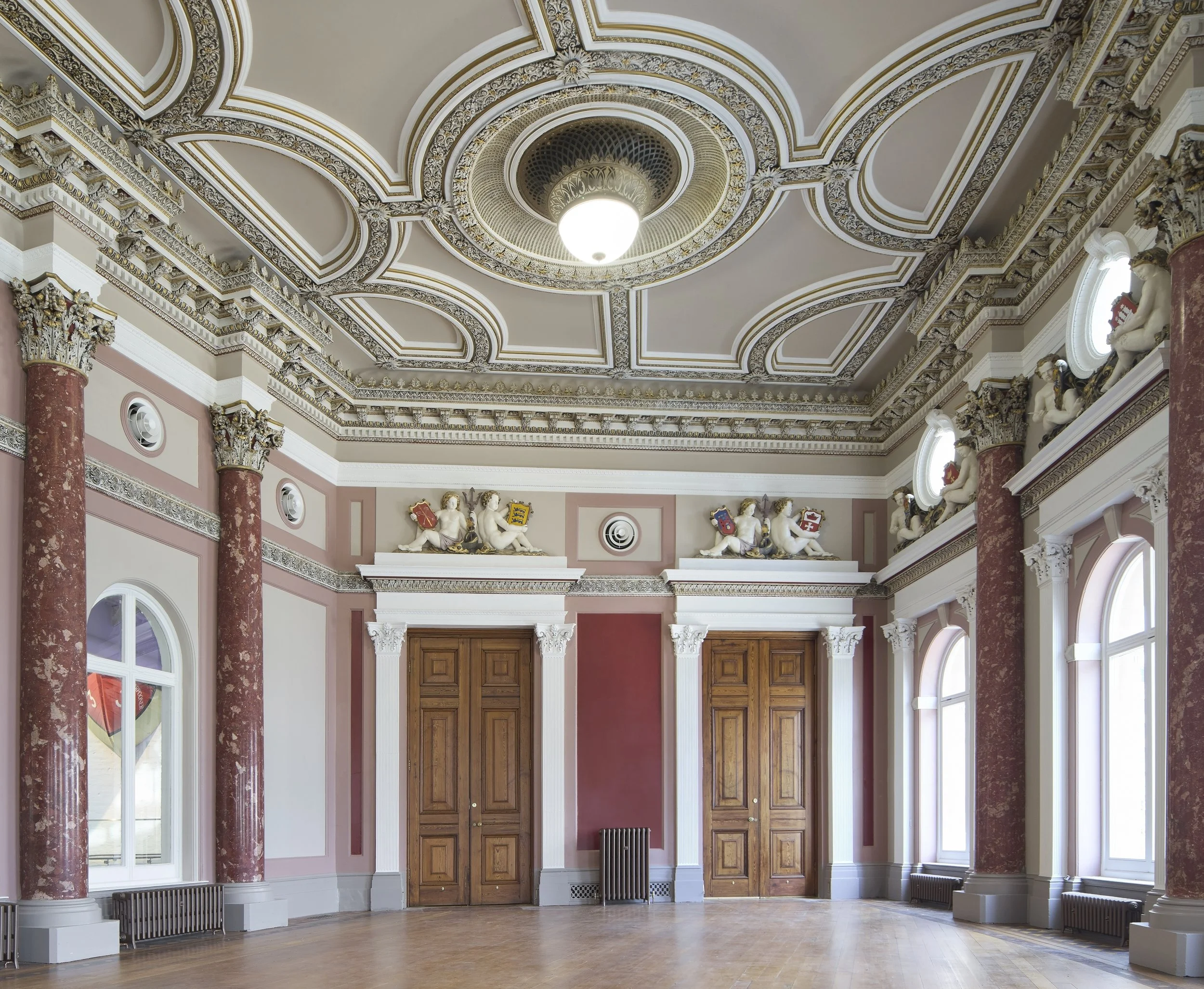
MAGNIFICENT: The Court Room
The planetarium, located in another beautiful circular gallery, shows projections of stars and the earth, with a narrated explanation of how sailors used the stars and coordinates to navigate. Look even further out, it seems to be telling us, but see how it all connects back here, to this place.
There are really special moments to be found – the climb up to the dome that looks out across the city, the projections of fish and water on the floor in a corridor that made me feel like I was standing on a ship or a bridge and watching them move below me. Magic windows that look out into the past.
There are interactive displays and activities where people can create and discover for themselves, and I was lucky enough to chat with Ralph Marks, who worked in the building when it was still the Town Dock Offices. He explains how the top floor, with its porthole-shaped windows, was where he worked in the mechanical engineering office, helping maintain the cranes and lock gates that kept the docks moving.
My old friend has always been a place of industry associated with the water, and it’s doing well now, I think, as I leave. More connected to this particular spot in the heart of the city than it’s ever been, and more full of stories and the people it serves and celebrates than at any time I’ve known it.