
‘Hull’s answer to Lowry’: The life and legacy of artist Frederick Schultz Smith
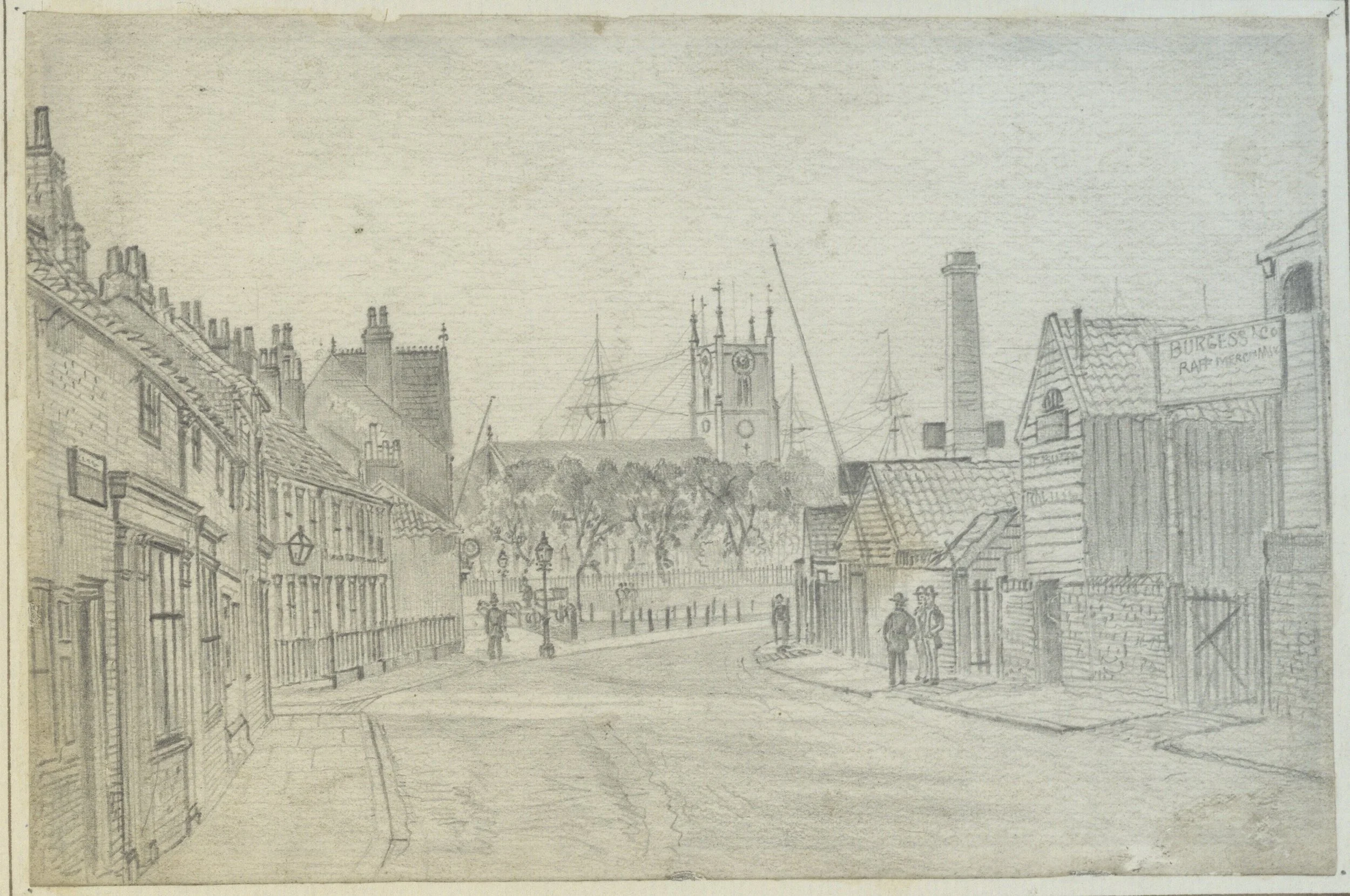
GLIMPSE INTO CITY’S PAST: Drypool looking along Church Street. All sketches circa 1890

The Way it Was
In partnership with Hull History Centre
By Martin Taylor, city archivist at Hull History Centre
Many of us will have seen drawings by Frederick Schultz Smith, either knowingly or not.
They’ve been reproduced over the years, whether in the local press, as postcards or on display as part of an exhibition.
Some have adorned important offices in Hull or hung on the walls of people’s homes. Between 1989 and 2011, three volumes were produced by Hull Museums showcasing his work. Whilst in 1990 a number of his preserved drawings went on display at a new exhibition at Ferens Art Gallery.
Smith went on to produce over 700 illustrations during his life. And whilst most are held by Hull Museums, almost 50 originals are held at the Hull History Centre.
This year marks the 100th anniversary since the death of one of Hull’s best known and best loved artists. Therefore, it is a fitting tribute to look back at the life and work of Smith.
The History Centre currently has an exhibition of these illustrations which are on display to the public.
Opening times for the exhibition are Tuesday to Thursday 9.30am-4.30pm, together with the first and third Saturday of each month, 9.30am-12.30pm. This exhibition runs until August 28
Early life
Commonly referred to as F.S. Smith, he wasn’t born in Hull. He was born in Sussex in 1860.
At some point during Smith’s youth, the family moved to Hull. It had previously been written that his father, Edward, was a house painter, and his mother was called Mavis.
This is incorrect. Edward was a watchmaker, born in Liverpool. According to the 1861 census, his mother Maria was born in Hull. This connection to Hull may be the reason the family relocated.
By 1871, the family were living at No.22 Myton Street, though Smith’s father is recorded as a widower at this point. We are not sure how or when Maria died.
By 1881, Smith, now aged 19, worked as a clerk. He had two sisters. His older sister, Annie, was a domestic servant. His younger sister, Florence, was a housekeeper. It was Florence who Smith would remain close to throughout his life.
By 1891, the family had moved to No.2 Rose Street, located between Beverley Road and Newland Avenue. It is at this point, aged 30, that Smith was recorded as an ‘architectural artist’. The whole family, including his father and his sisters, all lived at the Rose Street address.
By 1901, it was just Smith and Florence who were recorded as living at No.2 Rose Street. Smith was listed as a ‘pen and pencil artist’. Both Smith and Florence would continue to live at Rose Street, at least until the outbreak of the First World War.
Smith and Florence never married. Annie was said to have lived with Smith, though we now know this to have been Florence. Smith and Florence would continue to live together until his death in 1925.
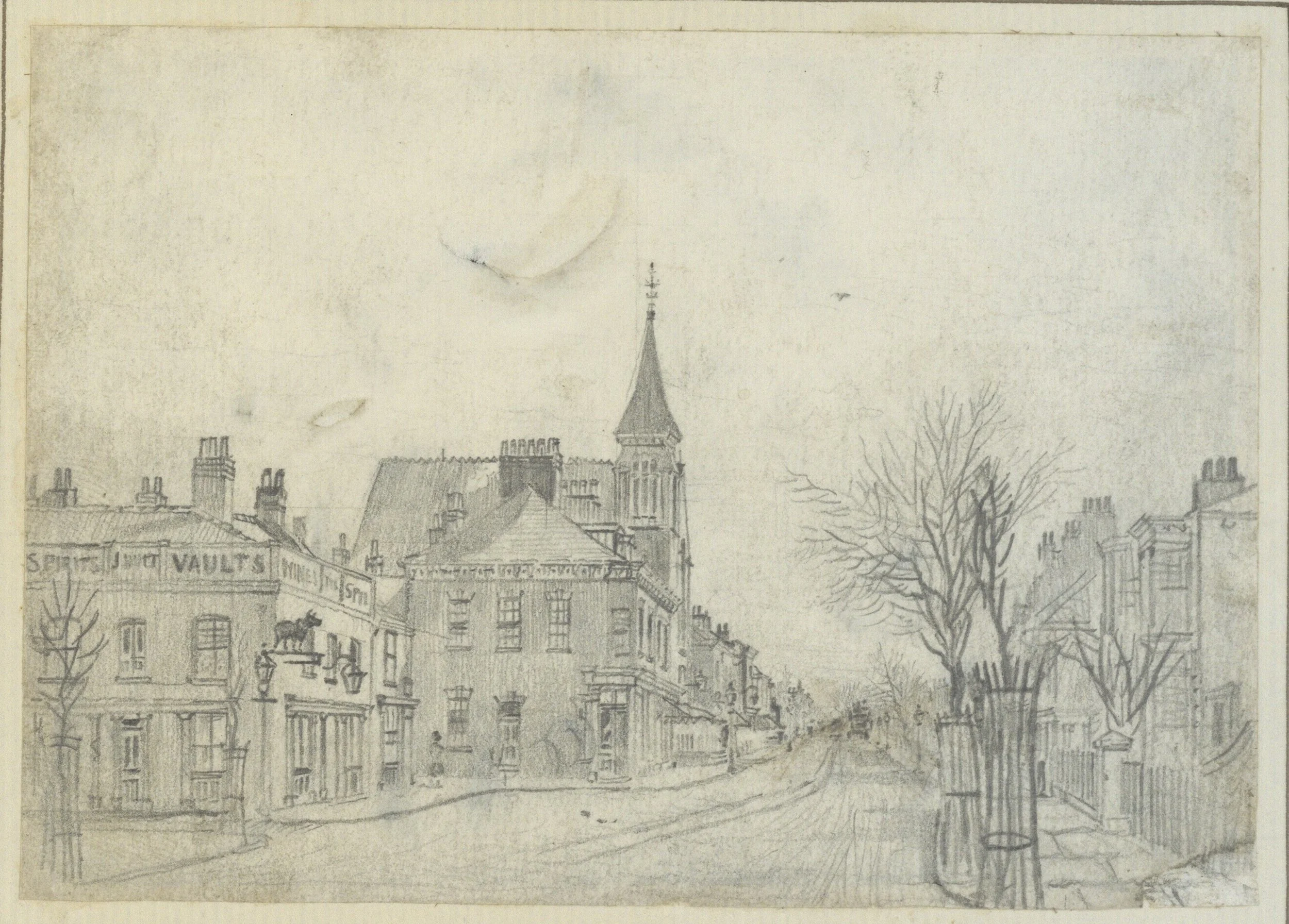
KEEN EYE: Beverley Road and Stepney Lane
Smith the artist
Smith’s artistic training is somewhat unclear. It is almost certain that he had a natural gift if anything is to go by from his sketch of Anlaby Road, when he was aged 13.
He appears to have been encouraged by Rev. W.J. Pearson, the vicar of St. Mary’s, who is said to have paid Smith’s first term fees to study at the Hull School of Art. Whatever the truth, there is no doubt that Smith possessed an exceptional talent.
He was well-known, often seen in doorways and sheltered places sketching. Smith was left-handed and is said to have sketched with lightening rapidity. The detail which he captured suggests his eyesight was second-to-none.
Hull has been blessed with exceptional artists. The maritime painter John Ward (1798-1849) was born in Hull and would go on to depict some of the city’s most well-known and famous maritime scenes.
Henry Redmore (1820-1887) was another maritime artist from Hull. Today, both Ward and Redmore are recognised as two of this country’s finest maritime artists.
Whilst Ward and Redmore gained national recognition, Smith in comparison has gone somewhat under the radar. Despite this, his work is on a par with that of Ward and Redmore, particularly in terms of social history. Smith also produced a small number of watercolours, though the vast majority were pen and pencil.
Smith’s work covers the later decades of the 19th century and early decades of the 20th century, before photography superseded the role of the illustrative artist. His drawings or sketches offer an insight into how Hull looked in the late Victorian, Edwardian and post First World War era.
Whilst many of his drawings depict Hull, some depict scenes from the surrounding countryside. He was prolific, often producing several versions of the same scene, sometimes making just small amendments and changes, such as adding or removing people from a scene.
Disappearing Hull
The value of his work didn’t go unnoticed. His drawings were collected by amateur historian, Charles Edward Fewster.
We often think of the major changes happening in Hull from the end of the First World War onwards, more so after the Second World War when Hull was severely damaged by air raids.
Hull, however, had been evolving and changing over the 19th and early 20th century. This was recognised by Fewster, who employed Smith to record the disappearing streets and buildings in Hull.
Its main thoroughfares were narrow. Bottle necks were a constant, and the streets were often in poor condition, even principal streets such as Whitefriargate were rutted and potholed. What is Alfred Gelder Street today was once an area of slum housing. Many of the residents here were relocated to the new Preston Road Estate in the years after the First World War.
Fewster was a keen collector of all things Hull. It was said he had the finest set of Hull coins, tokens and medals in existence, as well as a wonderful series of printed pamphlets and other valuable items.
Arguably one of the most important contributions Fewster gave to Hull was the drawings of Smith. He went out and captured Hull at a time when parts of the city were disappearing. Smith set about capturing bridges, schools, churches, chapels, streets and houses prior to their demolition. Fewster collected around 300 of these drawings and in 1929, after his death, Fewster’s widow and daughter gave them to the city via Hull Museums.
As mentioned earlier, Smith in 1891 was an architectural artist. He appears to have done this role at least four or five years earlier as in 1886, Smith, aged 25, drew a reconstruction of the centre of Hull, what is the new town area around Queen Victoria Square.
This illustrated work, believed to be in the possession of Hull Museums, proposed the layout of municipal buildings and the construction of new streets. Three streets drawn by Smith later became what is now Jameson Street, King Edward Street and Ferensway.
Later life
Outside of drawing, Smith was well respected and liked. As noted, he lived with his sister, Florence. People found both he and Florence very friendly. They both liked to talk to children.
There are no images or photographs of Smith, though he was described as a thin man of average height. He is said to have had bushy hair and walked rather fast, always carrying a brief case under his arm (presumably containing his materials for drawing) and never wore anything on his head, which presumably at the time was perhaps seen as rather odd.
Children would have tea with Smith and Florence and Smith, often playing ludo and snakes and ladders.
Smith and Florence, it was said, always went to church. It is believed they attended Christ Church on Charles Street (now the site of Ron Dearing UTC), just a stone’s throw from Hull History Centre, where a number of his original illustrations are kept.
Smith liked music and had a piano in his house. Despite blindness, John Harmer would often go down and play for him.
Smith was a quiet and reserved man, and in his later years he moved down Holderness Road, living at No.2 Eastbourne Avenue, Arundel Street, until his death.
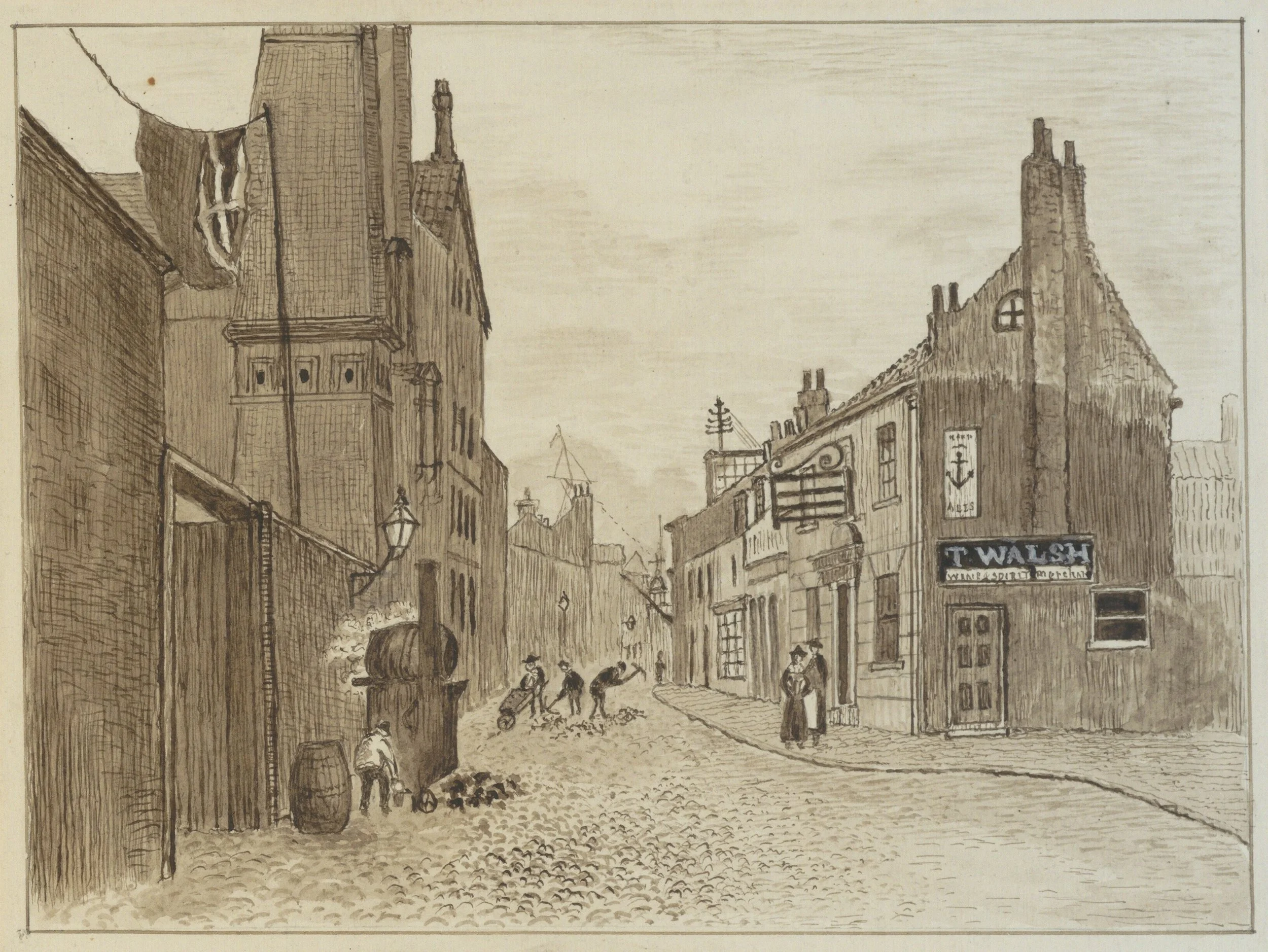
ETCHINGS: Wincolmlee looking south
Hull’s Lowry?
There are some similarities between Smith and Lowry.
Both were well-known in the area in which they lived, Hull and Salford respectively. Both went out into their communities, in the case of Lowry he painted, whilst Smith sketched almost exclusively in pen and pencil.
Both captured life as it was. The buildings and the people. And to quote the song from 1977 by Brian and Michael, Matchstalk Men and Matchstalk Cats and Dogs, ‘Lowry’s hang up on the wall, beside the greatest of them all’ (that is Da Vinci, Picasso etc).
Smith never got the recognition that perhaps he deserves. Beyond Hull anyway. This has, however, worked in Hull’s favour.
Rather than been snapped up by dealers, collectors and galleries all over the world, rarely to be seen, if ever, his sketches and illustrations remain in the city of his adopted birth. A gift to the people of Hull.
Death and legacy
Smith died on September 26, 1925. It was noted that he ‘had a reputation which many aspirants would have been proud to have possessed’.
He was interred at Hull’s General Cemetery. The Hull Daily Mail reported that amongst the mourners were W.G.B. Page, a local Hull author and historian and Smith’s sister Annie, though this may have in fact been Florence, who he lived with for most, if not all his life, and who didn’t die until 1936. That’s not to say his elder sister Annie didn’t also attend. Also present were neighbours and friends.
The Hull Times noted that ‘numerous numbers of wreaths were left in memory of Frederick’.
Smith is no doubt Hull’s answer to Lowry, minus of course the matchstalk men and matchstalk cats and dogs. His illustrations live on through his collections held at the Hull History Centre but also those held by Hull Museums, to be enjoyed for generations to come.