
Hull College launches pioneering ORBIT programme to open up space sector careers to students
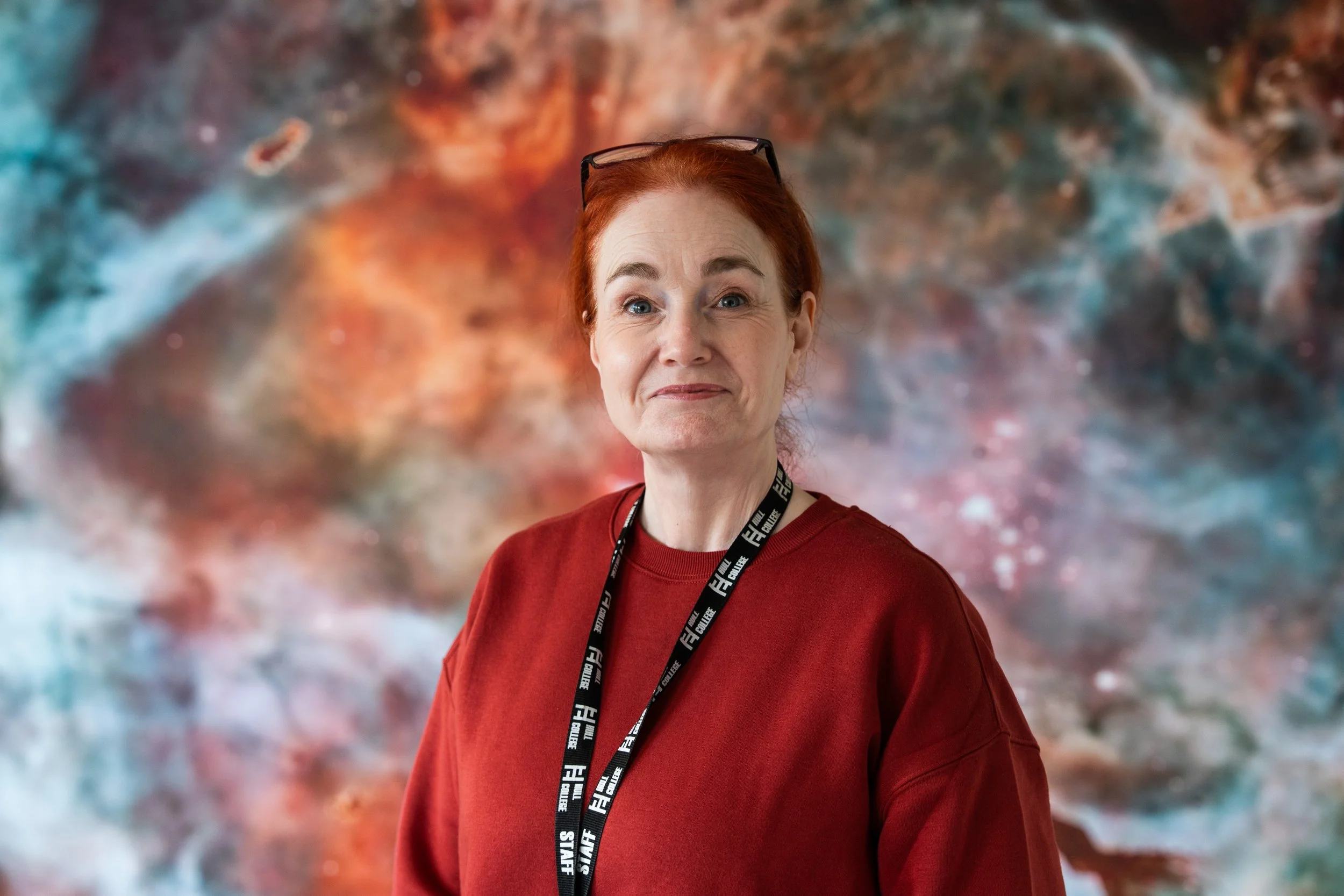
BUILDING A PIPELINE OF TALENT: Debra Gray CBE, principal and CEO of Hull College
By Rick Lyon, Co-Editor
Hull College has launched an innovative new programme designed to put further education at the forefront of developing the skilled workforce needed by the UK’s rapidly growing space sector.
ORBIT (Opening Routes Between Industry Talent) will introduce students to the huge range of career opportunities connected to space by embedding the subject into existing vocational courses.
Developed by the college under a special project run by the Space Universities Network (SUN) with funding from the UK Space Agency, the new space awareness curriculum comprises 12 flexible micromodules aimed at Level 2 and Level 3 learners. Most of the modules have been developed with the agency funding.
The programme has been designed so it can be made available free to colleges across the country, creating pathways into an industry which Hull College principal and CEO Debra Gray CBE believes will increasingly rely on the technically skilled workforce produced by FE.
Rather than treating space as a standalone STEM subject, ORBIT will demonstrate its relevance across areas ranging from engineering, digital and AI, construction and manufacturing to logistics, cyber security, business, hospitality, environmental technologies, agriculture and health and care.
The modules will connect space to different vocational disciplines and include subjects such as Satellites and Everyday Life, Farming from Space, Food Beyond Earth, Space Tourism, Orbital Sustainability, Design in Microgravity, Cyber Security and Settlements Beyond Earth.
The Farming from Space micromodule has been developed and piloted in partnership with Bishop Burton College, drawing on its specialist expertise in agriculture and related industries.
Each ORBIT micromodule will take around 60 to 90 minutes and can either stand alone or be embedded within an existing programme. They are digital and classroom-ready and include an interactive online course, tutor lesson, learner workbook and assessment.
Crucially, colleges will be able to introduce them without redesigning their curriculum, gaining qualification approval or investing in specialist facilities.
Debra said ORBIT was about ensuring FE learners can see themselves as part of an industry which is expected to create an increasingly diverse range of technical and vocational careers.
She said: “When people think about working in space, their first thought is often astronauts or scientists. But they are really only the tip of the iceberg.
“The space sector needs engineers, manufacturers, digital specialists, people working in AI and cyber security, logistics, construction, business, law, healthcare and many other areas. These are exactly the kinds of skills Further Education develops every day.
“Universities are excellent at what they do. They are the innovators, researchers and pioneers in the space sector, but the missing conversation is about who is going to build, operate and maintain the infrastructure around that innovation.
“In 20 years, the space sector will be far more technician-based than it is today. ORBIT is about starting to build that pipeline of talent now.”
The UK space sector already encompasses more than 1,900 organisations and employs more than 55,000 people, generating billions of pounds in income and investment. Satellite services also underpin a significant proportion of the wider economy.
However, Debra said many young people and adults remained unaware of the scale of the industry or the opportunities within it, while skills shortages presented a growing challenge.
She said: “Space is critical national infrastructure, but for many people it still feels distant and inaccessible. There is also a major issue around who we are currently reaching.
“Talent is everywhere, but opportunity isn’t. Further Education is inclusive by its very nature and that means we have an enormous role to play in opening this industry up to people who may not previously have imagined that space could be for them.
“That includes adult learners, women returning to work, neurodivergent people, people with disabilities and those from other backgrounds which are currently under-represented within the industry.
“ORBIT is about aspiration as much as skills. It is about showing learners that the skills they are already developing can lead to careers they may never have considered.”
Hull College is a member of SUN, a collaborative network bringing together universities and other partners involved in space research and education.
ORBIT represents an opportunity to connect that Higher Education expertise with the reach and vocational strengths of the FE sector, creating what Debra describes as the “technical layer” needed to support the future growth of the space economy.
It has been selected as one of only two SUN special projects for 2026-2027.
Ian Raper, co-chair of SUN, said: “SUN is all about enhancing the quality and availability of support and resources to the UK Further and Higher Education space community.
“Hull’s project aims and vision perfectly aligned with our goals and supports bringing FE and HE closer together to address the sectors skills gap. This project is excellently placed to address an important stage in the talent pipeline, and we are delighted to be working with Debra and her team.”
Debra said the ambition was for ORBIT to become a national resource, allowing other FE colleges to incorporate space awareness into their existing provision and begin developing a much broader talent pipeline.
She added: “There isn’t currently a national space curriculum, so ORBIT is our answer to that.
“We are not asking colleges to create completely new programmes. We are giving them something flexible which can be dropped into what they already do, making the UK space sector visible to learners who already have many of the skills it needs.
“This is the start of a solution to a much bigger workforce challenge and it is hugely exciting that it is being led from Hull.
“There is nothing else quite like this happening in Further Education nationally. Why shouldn’t something which could help shape the future workforce of the space industry start here in Hull?”
Hull College is bringing together leaders from the space sector, industry and Further Education for a special conference to explore where the UK’s future space workforce will come from. Hosted at the college as part of World Space Week and developed with Space Hub Yorkshire, Building the Workforce Beneath the Satellites will take place from 10am-3pm on Thursday, October 8. To register, visit https://www.hull-college.ac.uk/space-conference/