
‘No more turning a blind eye to failure’: Hospitals trust placed in Government intervention

UNDER PRESSURE: Hull Royal Infirmary and, inset, Hull University Teaching Hospitals NHS Trust interim CEO Lyn Simpson
By Rick Lyon, Co-Editor
The region’s underperforming hospitals trust has been named as one of the first the country to be placed in a new Government ‘intensive recovery’ programme.
Hull University Teaching Hospitals NHS Trust (HUTH) has this month slumped to the bottom of NHS England’s national performance league table, which rates trusts against criteria including patient safety, access to services and finances.
HUTH, which manages Hull Royal Infirmary and Castle Hill Hospital, has fallen four places since December and is now ranked 134th out of 134 trusts nationally.
Today, it has been named as one of the first five trusts in the NHS Intensive Recovery programme.
HUTH is part of the wider NHS Humber Health Partnership (HHP) group, which includes Northern Lincolnshire and Goole NHS Foundation Trust (NLaG). NLaG is another of the trusts placed in the programme.
Announcing the move, Health Secretary Wes Streeting said: “Right now, a cluster of high-performing trusts are masking some chronic under-performance in other parts of the country. Failure has been tolerated for too long. Staff know it. Patients feel it. And I won’t stand for it.
“We won’t have succeeded in changing the NHS until we change it for the patients who are suffering the worst services in the country.
“In some places, so many years of poor service without improvement is feeding that sense of fatalism. They believe that after so long, it just can’t get better – in fact, they’ve never seen it get better.
“That’s why I’ve announced today a new Intensive Recovery programme. This will target the worst performing providers, sending in our best leaders or delivering the structural changes necessary to get them back on track. No more turning a blind eye to failure.”
The programme will begin next month. Each organisation will receive a tailored improvement approach, designed jointly with local leadership and focused on delivery.
This will include changes of leadership where necessary at struggling trusts, NHS veterans with a history of success brought into underperforming areas, the merging or separating trusts so resources can be reallocated based on need, and improving access to capital for estates.
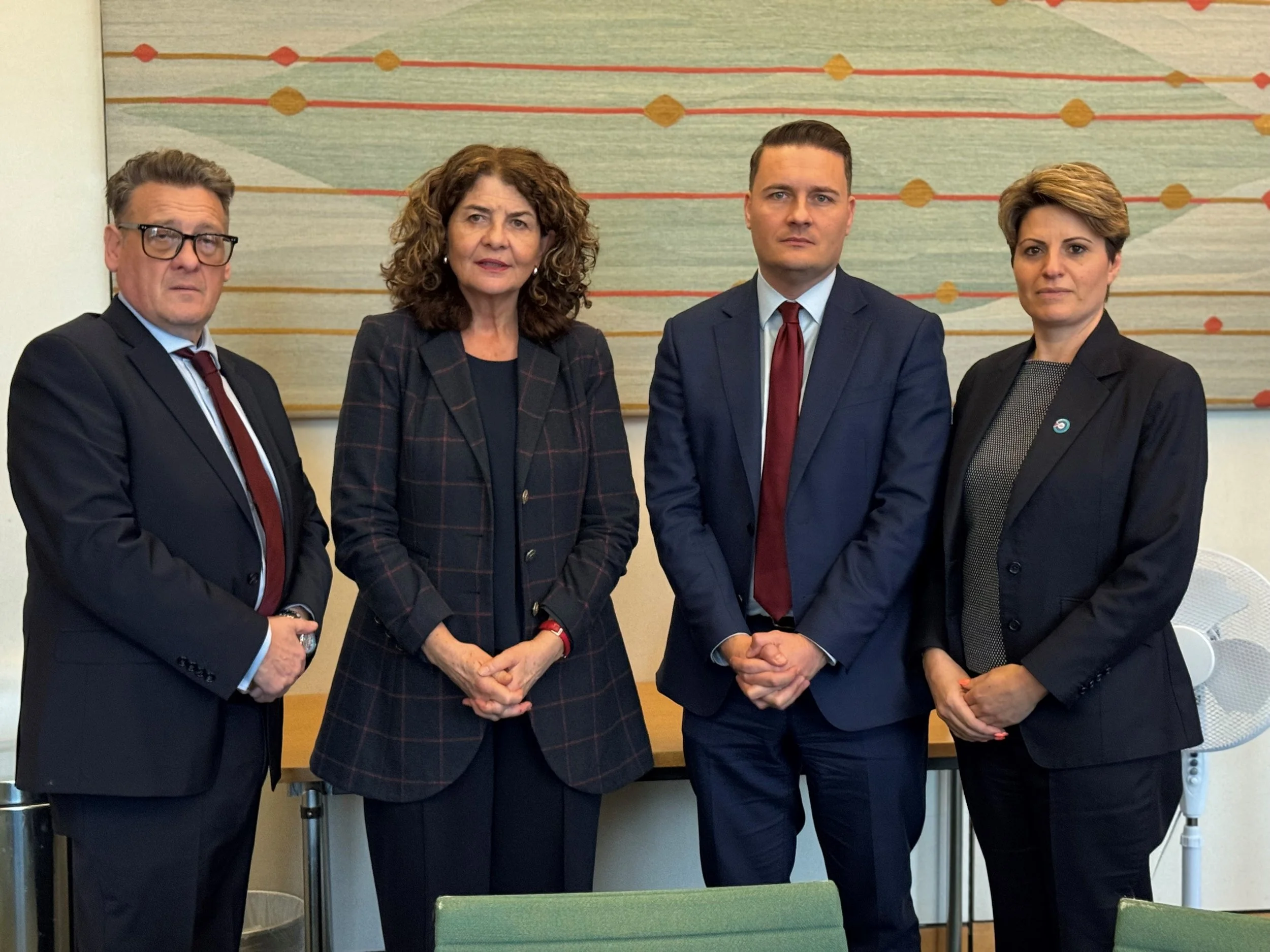
CONCERN: Hull’s MPs with Health Secretary Wes Streeting
Hull’s Labour MPs - who have expressed concern at claims of a bullying culture at HUTH - have welcomed the decision.
In a joint statement released to The Hull Story, Hull North and Cottingham MP Diana Johnson, Hull West and Haltemprice MP Emma Hardy and Hull East MP Karl Turner said: “Following Hull MPs’ discussions with health ministers, it’s welcome that decisive action is being taken by the Secretary of State for Health to make Hull part of the NHS Intensive Recovery programme from April.
“With Hull University Teaching Hospitals NHS Trust at the bottom of the national performance league table of 134 NHS trusts, today’s news cannot come soon enough. Wes Streeting is right to say that failure has been tolerated for too long. This is especially so when there are concerns about patient safety.
“The Labour Government is investing £29bn extra into NHS services across the country and Hull residents should share in the improvements that we see being made nationally. Although it’s true that Hull NHS trust has had many challenges and pressures, these are not unique to Hull. They are no reason for low standards to go unchallenged.
“The many hardworking frontline NHS staff that we have in Hull should feel that they are being supported in their work and we have been very concerned to hear about a bullying culture in the Trust.
“It’s clear that just spending more is not enough where there have clearly been deep-seated deficiencies and instability in the trust leadership in Hull.
“That’s why we agree with the Health Secretary that investment must go alongside other changes, including where necessary in leadership, in order to get the higher standards in healthcare that we all want to see in our city. Our constituents deserve no less.”
The league table HUTH has fallen to the bottom of is part of NHS England’s Oversight Framework (NOF). Under the framework, trusts are graded from a ‘segment rating’ of 1, which is judged to be “high performance”, to 5, which is classed as “significant concerns”.
HUTH had been segment 4 but has been informed it is being reclassified as segment 5, the equivalent of “special measures”.
It is also currently rated as ‘Requires Improvement’ by the Care Quality Commission (CQC) – the independent regulator of health and social care in England.
The failings come despite interim CEO Lyn Simpson, who joined in July 2025, bringing in a six-strong ‘improvement team’ of senior managers.
The trust has failed to respond to numerous requests from The Hull Story to interview Ms Simpson.