
From Jamaica to Boothferry: John Barnes on football, fate and finding his way
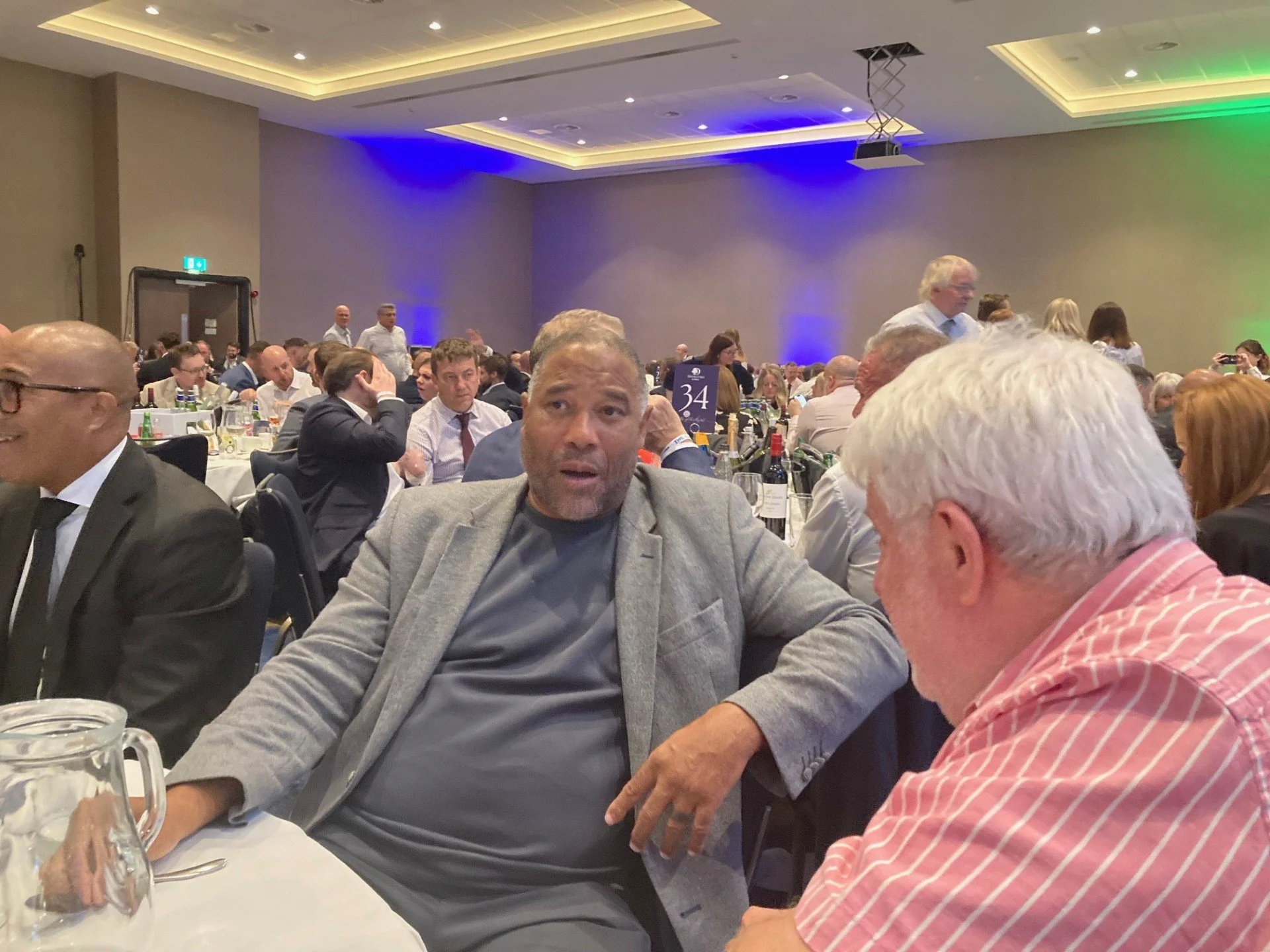
PLENTY TO SAY: John Barnes having a chat with Phil Ascough

Chewing the Fat – out to lunch with Phil Ascough
It was the second time I’d seen John Barnes performing in Hull to a full house, and what an afternoon it was. As guest speaker, the Liverpool and England football legend helped to raise more than £105,000 for the Sailors’ Children’s Society.
On stage he was funny, at times bordering on slapstick. Yet he was also stylish throughout, welcoming the flow of fans who approached him for autographs, selfies and chats about memories of a momentous football career.
We were guests of Corendon Airlines, a principal club partner of Hull City whose involvement as the headline sponsor of the charity’s annual sportsman’s lunch is seen as a major coup.
Natasha Barley, CEO of the society, announced: “An international airline sponsoring this event has elevated it to a whole new level I could only have dreamed of.”
John said he didn’t know anything about the charity but, as the son-in-law of a seafarer from Liverpool, he held a strong appreciation of its work. And then we talked football.
I had my prompts ready in my notebook, and they were all about the other time I’d seen John in Hull. Saturday, February 18, 1989. Boothferry Park. Hull City v Liverpool in the fifth round of the FA Cup.
He didn’t remember much other than the score, but we won’t spoil the fun just yet.
The record books show a crowd of 20,058 filled the stadium. The press box, where I was working with evergreen sports journalist Mike Ackroyd, was also full to overflowing, with national football writers heading to Hull for one of the ties of the round.
One of my orders was the Sunday Sport. They would take the bulk of the report from a local freelance, and then interview their big match expert to get the summary for the top of the story. I teamed up with Tommy Smith, legendary Liverpool hard man and the subject of a memorable quote from Bill Shankly: “Tommy wasn’t born, he was quarried.”
But Tommy was also feeling the wear and tear of his 550-plus professional appearances in a career which stretched from 1962 until 1979. He complained about the climb to the press box via a set of iron steps bolted onto the back of the main stand. Mike had once imagined that making the ascent on a wild and wintry night resembled clinging to the deck of a storm-tossed trawler.

ENTERTAINING: John speaking at the Sailor’s Children’s Society Sportsman’s Lunch
John smiled and remembered: “Tommy was always moaning!”
He said they never played against each other even in exhibition games, but he had faced much worse. So, I asked him about one candidate, Billy Whitehurst, rated by John’s Liverpool team-mate Alan Hansen as his most fearsome opponent.
Another smile as John revealed: “Billy was a real handful but he was known to everyone in our team anyway. He’d played with John Aldridge at Oxford and we used to get together for a drink.”
They both made an impact in a cup tie which was absorbing but, ultimately, a step too far for the Tigers.
John scored in the 15th minute with a deft header to send Peter Beardsley’s cross past Iain Hesford and into the net in front of Bunkers. Big Billy, generally considered City’s bull in a China shop, was more fox in the box as he pounced on a pass from Gareth Roberts after former City loanee Gary Ablett slipped. 1-1 in the 32nd minute.
Hesitation by Gary Ablett again and future City manager Jan Molby let in Keith Edwards to give City the lead. Liverpool, who had lost the previous season’s cup final to Wimbledon, were heading for another shock defeat. A nervous excitement buzzed round Boothferry Park, except for an uneasy silence in the Liverpool end.
Tommy Smith though was unperturbed. He maintained Liverpool would win, and two poacher’s goals in two minutes from John Aldridge justified his confidence.
The Match Of the Day coverage on You Tube is worth a look, partly to admire the array of talent assembled by the reigning league champions but primarily to study the calmness and technique of John Barnes.
It may only be a highlights package but on a tricky pitch, with defenders slipping, sliding and stumbling, he remained sure-footed, his close control keeping the ball away from City and his precision passing playing team-mates into space.
I couldn’t remember John scoring many headers but he said he bagged a few. He felt sure he’d played at Boothferry Park for Watford. The records on the fascinating stats website 11v11 suggest not.
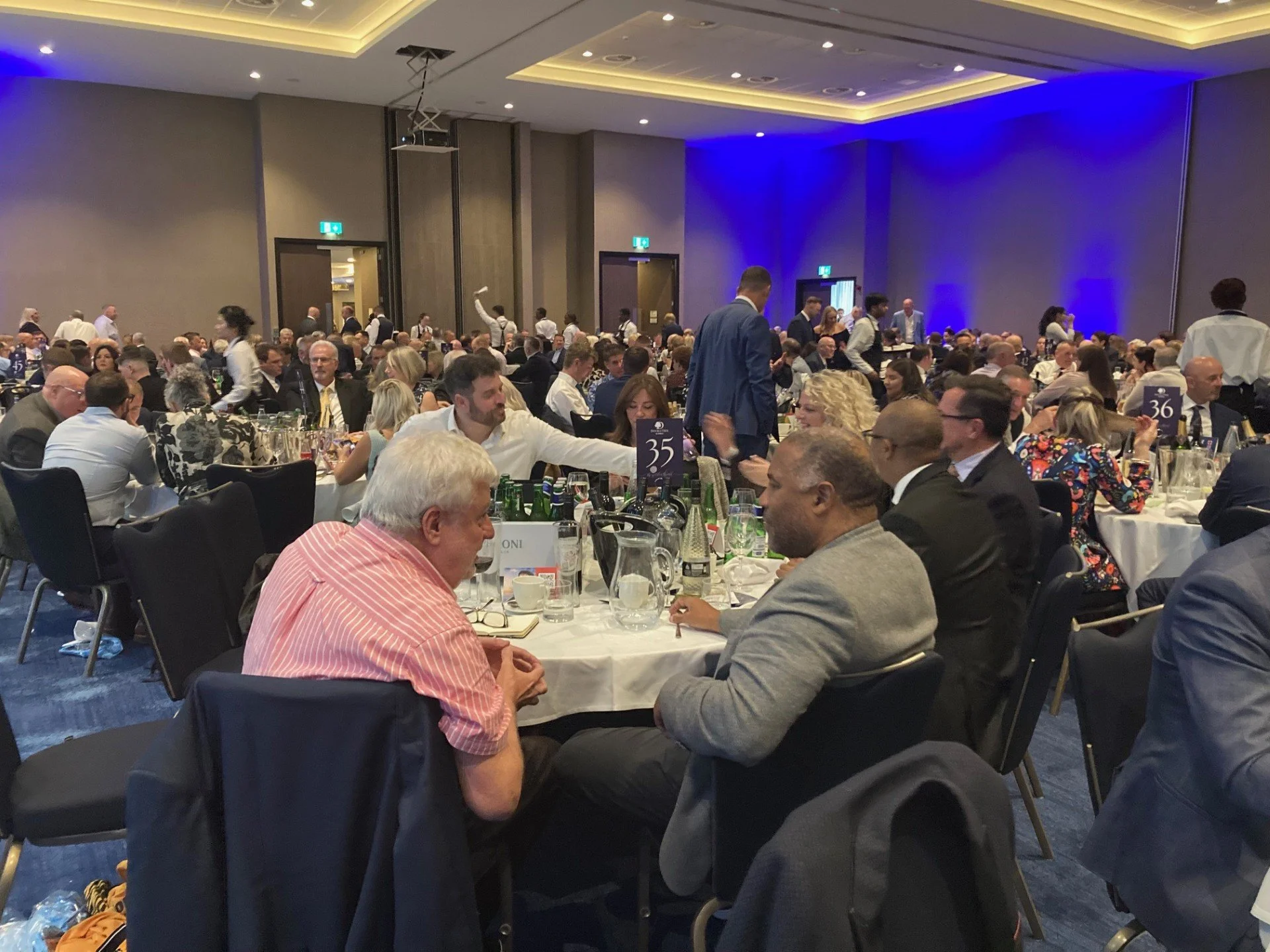
MEMORIES: Phil and John having a natter
Mike Peck, the match referee and, bizarrely, my old Latin teacher at school, would have had a ready explanation for any uncertain recollections: “Tempus fugit.”
Among the many links between City and John’s former clubs we picked out Andy Robertson as the highlight, sold by City to Liverpool in 2017 on his way to becoming one of the greatest full backs in the modern game. Neither of us could understand why he was allowed to leave so cheaply.
John’s Watford team-mates included future Tigers Charlie Palmer, Steve Terry and Richard Jobson when I went to watch them in a League Cup tie at Huddersfield in 1983. They lost but John scored a “worldie” of a goal from long range. That’s why we went, in the hope of seeing a moment of magic from a rising star.
We move on to the World Cup and, with England building for next summer’s tournament, the last time it took place in Mexico. John came on as a substitute in the 1986 quarter-final against Argentina. His cross provided the assist for Gary Lineker to score but the team were already 2-0 down to Diego Maradona’s infamous “Hand of God” punch and a wonder goal scored after he weaved through the English defence.
We focus on that one as I suggest the feat was inspired by John’s strike two years earlier against Brazil in the Maracana Stadium. Mark Hateley – remember him? – chested down the ball and played it to the left wing where John turned and ran for goal. To say he ghosted past half the Brazil team would be an understatement as he swept into the penalty area, caressing the ball with the outside of his left foot and then flicking it between left and right, leaving the goalkeeper bewildered and on his backside as he stroked the ball into the net.
“I scored that one in the wrong game,” John said.
“It was only a friendly and it would have made a big difference in a World Cup quarter final. Maradona’s second goal was good, and he scored an even better one in the semi-final against Belgium.”
At Italia 90, John played in England’s three group games but came off in the last-16 win over Belgium and the quarter-final against Cameroon.
“I was injured for the whole of that tournament,” he recalled.
“Cameroon should have beaten us, winning 2-1 with less than 10 minutes to go but we won it with two penalties. They were too naïve.”
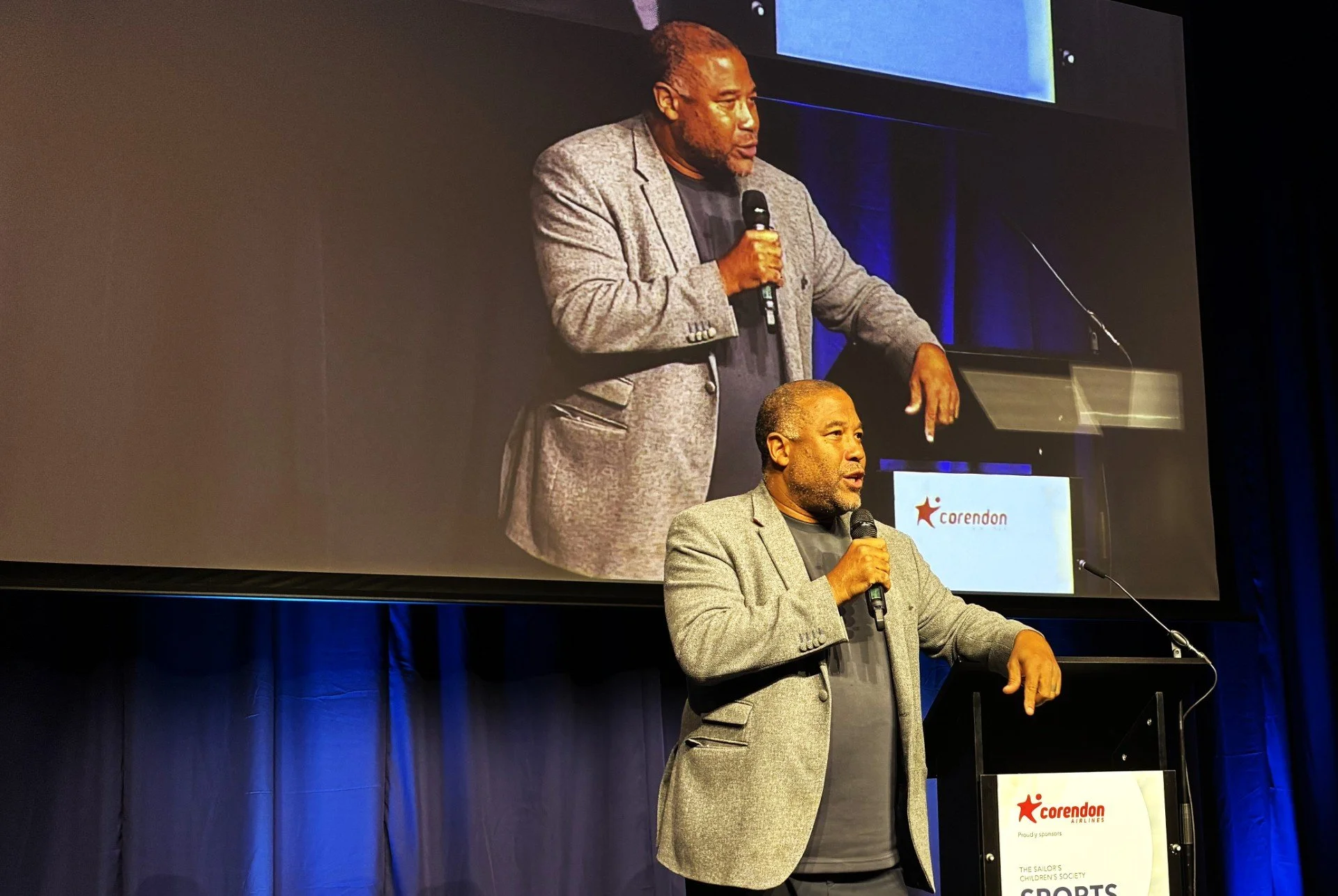
GREAT SPEAKER: John Barnes entertaining the audience at the fundraising event
Stepping onto the stage John told more than 700 supporters of the society how he came to England from Jamaica when his father was posted to Sandhurst for four years. He was playing for Sudbury Court shortly before the family was due to go home when fate intervened and a taxi driver spotted him and recommended him to a scout for Watford.
He said: “I was always a good player but if that taxi driver hadn’t stopped it would not have happened. I would have gone to America to university, done a degree and never have become a professional footballer. I had the talent but I would not have had the opportunity.”
Watford had a “fantastic chairman” in Elton John and a visionary manager in Graham Taylor who took the club from the Fourth Division to the First, with discipline at the heart of that ascent.
John said: “I was a superstar at 17 or 18 years old but, brought up as an army child, I knew about discipline and responsibility to the team. I played as a centre back from 13 to 17 because my dad said my responsibility was to the team. We finished second in the league and got to the FA Cup Final.”
When the time came to leave, his manager said Liverpool would be the best option: “They were the best team at the time and Graham said you should find a club that suits you, your character and your style and they were the right club.
“You could go there for the prestige or the money but in those days, it was about the club that suited you. At Liverpool they looked at the character of the players and considered whether you could fit in. I never thought I would be a Liverpool type player but they saw something in me that I didn’t know I had in myself.
“Liverpool did not coach you. They didn’t tell you want to do. They saw how you could instinctively fit into what they wanted. Unless you understand that you will never make it at Liverpool.”
John shared light-hearted stories about the antics of Paul “Gazza” Gascoigne, the forgetfulness of England manager Sir Bobby Robson, and the endless quest of Peter Shilton to prolong his career. In more serious moments he spoke about race and gender bias and how it is influenced by society, and he returned again to the importance of personal responsibility.
John still works as an ambassador for Liverpool FC and you’d expect him to be in demand as a pundit next summer, 40 years on from the Hand of God match. It’s too early for him to assess England’s chances other than to caution about the tropical temperatures if they have to play in Mexico.
I could have chatted all afternoon with a speaker who is one of the best I’ve heard at more than 40 years of sporting lunches and dinners. Just one more question – can we get him back for a replay?