
Tidal pumping station plan for drain where man died
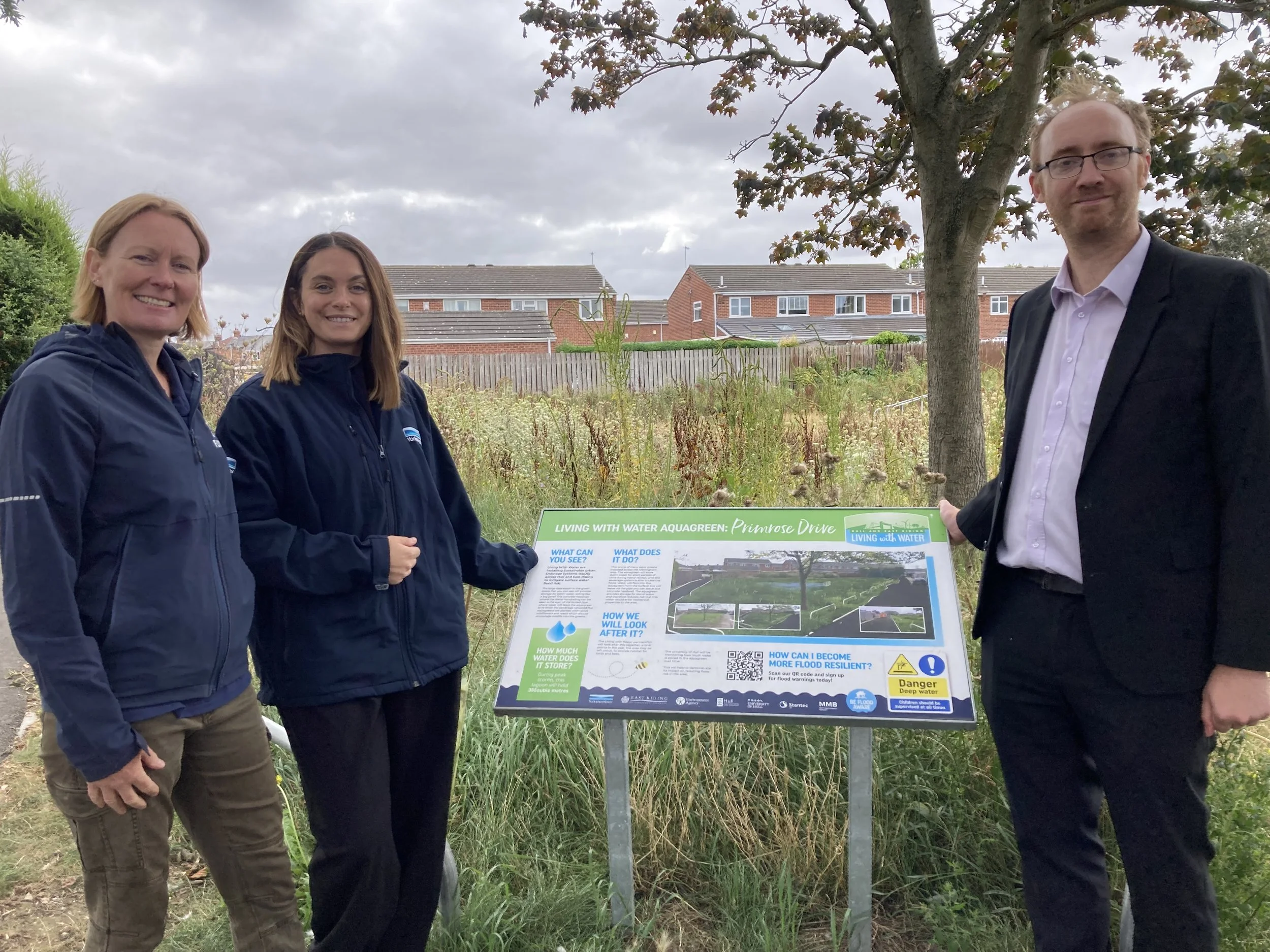
INVESTMENT: From left, Rachel Glossop, Hull City Council flood risk manager; Emma Brown of Yorkshire Water; and Councillor Charles Quinn, portfolio holder for environment
EXCLUSIVE
By Angus Young
Plans have been revealed to spend at least £26.3m on new flood alleviation projects in Hull over the next five years.
They include constructing a new tidal pumping station on Fleet Drain where Michael Barnett tragically died during the 2007 floods.
The new schemes form the next phase of programmed work by the Living With Water partnership, which includes Yorkshire Water, which is funding the work, Hull City Council, East Riding Council, the Environment Agency and the University of Hull.
The partnership recently completed the first five-year phase of its 25-year Blue Green Plan aimed at making the city and surrounding areas more flood resilient.
Initiatives included building a series of neighbourhood aquagreen sites, installing a rainwater storage system under a terraced street in east Hull and fitting free water butts to 500 homes.
Now details of the next phase of investment have been revealed with all the projects designed to reduce surface water entering the city’s combined sewer network during heavy and prolonged rainfall.
The new pumping station on Fleet Drain will allow the watercourse to discharge directly into the Humber at Hessle Haven irrespective of the tide level, increasing capacity in the drain itself.

Mr Barnett, 28, died from hypothermia after his leg became trapped in a metal grate while trying to clear debris from the drain at the height of the flooding in 2007.
So-called “blue-green corridors” are also planned along sections of Anlaby Common and Anlaby Park Road.
These will feature the installation of around 400 new roadside sustainable drainage systems. On Anlaby Common, a new surface water pumping station will be linked to a new deep drainage pipe earmarked on Springhead Lane to take surface water run-off from Anlaby Road.
In addition, the water butt installation programme will be expanded to include around 3,300 properties.
Speaking at a recent council scrutiny meeting, Hull City Council’s flood risk planning manager Rachel Gossop said: “This is all about removing surface water from the existing sewers and putting it into new flow routes to get it out into the estuary.
“Overall, we will be disconnecting over ten hectares of roof and road water which we can collect by using sustainable drainage systems, directing it away from the sewer network.”
Public consultation on the initial projects is expected to start early next year.