
Drypool Bridge closure: Public transport key to avoiding tailbacks

ICONIC: A view of Drypool Bridge looking west. Picture credit: Paul Harrop
By Simon Bristow, Co-Editor
Travelling by bus is likely to be one of the easiest ways of getting in and out of the city centre from east Hull this autumn.
In a city divided by a river, the lengthy closure of one of its key crossings will inevitably cause disruption, increased journey times and more congestion on a road network already beset by tailbacks at peak times.
The closure of Drypool Bridge for two to three months for structural repairs therefore presents challenges for those tasked with keeping the city moving.
An indication of how integral the bridge is to transport is revealed in crossing figures for a typical week in July. According to the city council, there were 94,146 westbound journeys over Drypool Bridge and 64,643 eastbound, a seven-day total of 158,789.
Even more vehicles use the approach roads but turn off before crossing.
Of the mitigation measures being introduced by the authority, the principal is the launch of a new temporary park and ride service on Holderness Road.

With free parking and capacity for more than 300 vehicles, it will give access to 18 bus services running to the city centre every two minutes on average. Those boarding from the park and ride will pay a £2 discounted fare on both Stagecoach East Midlands and East Yorkshire buses.
It will complement the existing park and ride at Priory Park to the west of the city.
A further incentive to travel by bus will come with the temporary extension of the city centre Bus Gate, which prohibits certain vehicles from using it currently operates from the east end of Carr Lane from Chariot Street to Queens Dock Avenue.
This will be extended to between Guildhall Road and Dock Street and will be in operation 24 hours a day. The only vehicles allowed to use the Bus Gate include buses, bicycles, motorcycles, taxis, emergency vehicles and Hackney carriages.
The Bus Gate extension is to ensure the continued reliability of services for the 42,000 people who already use buses to get in and out of the city each day. It will mean less access for most drivers.
Traffic prohibited from the area will need to divert around Wilberforce Drive and George Street and vice versa, depending on the direction of travel.
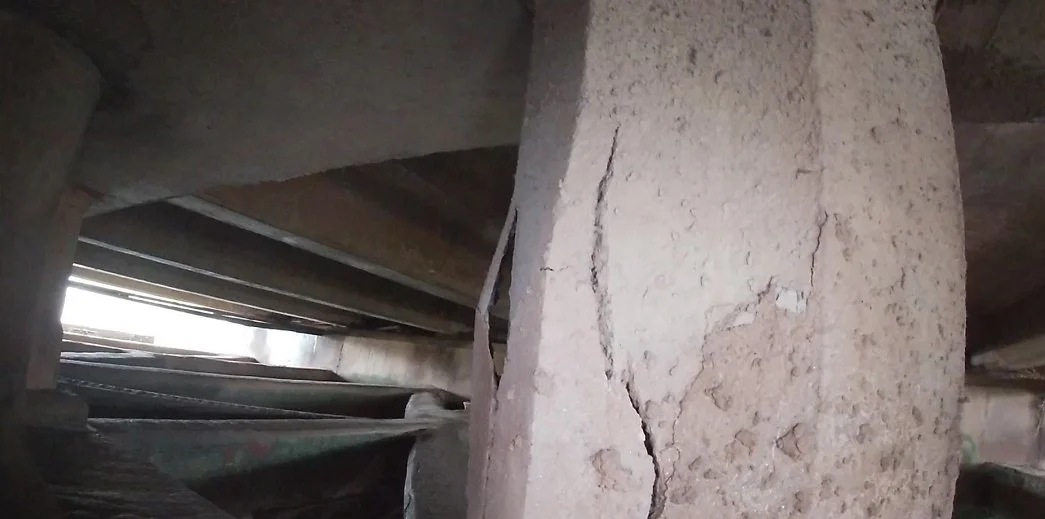
DAMAGE: Deterioration on a load-bearing column found during an inspection on April 10, 2024. Picture credit: Hull City Council
Councillor Mark Ieronimo, the council’s portfolio holder for transport and infrastructure, said: “We’ve got bus gates already in the city centre but we’re going to extend it in front of the BBC building. It’s really important for us that we continue to keep public transport moving and they need that to be able to keep to time and to help residents get in and out of the city.
“So cars will not be able to use the fountains area – that allows the buses to get around the city centre because you can appreciate there will be added pressures on say North Bridge and Myton Bridge, traffic travelling into those directions.”
He added: “We’re hoping people will work with us and choose to use the bus during this period – we can’t pretend that nothing’s happening here.”
He said he would “absolutely” encourage people to use buses during the period of closure.
The third mitigation measure will be the use of AI [artificial intelligence] technology on some traffic signals, which has been trialled successfully previously.
Coun Ieronimo said: “We’ve used that at junctions like Witham and George Street, so we know that this can be effective for traffic control and moving vehicles through those key junctions quite quickly, and that’s constantly monitored as well so that adjustments can be made.
“That hopefully means the traffic signals at key junctions around here can be managed much better.”
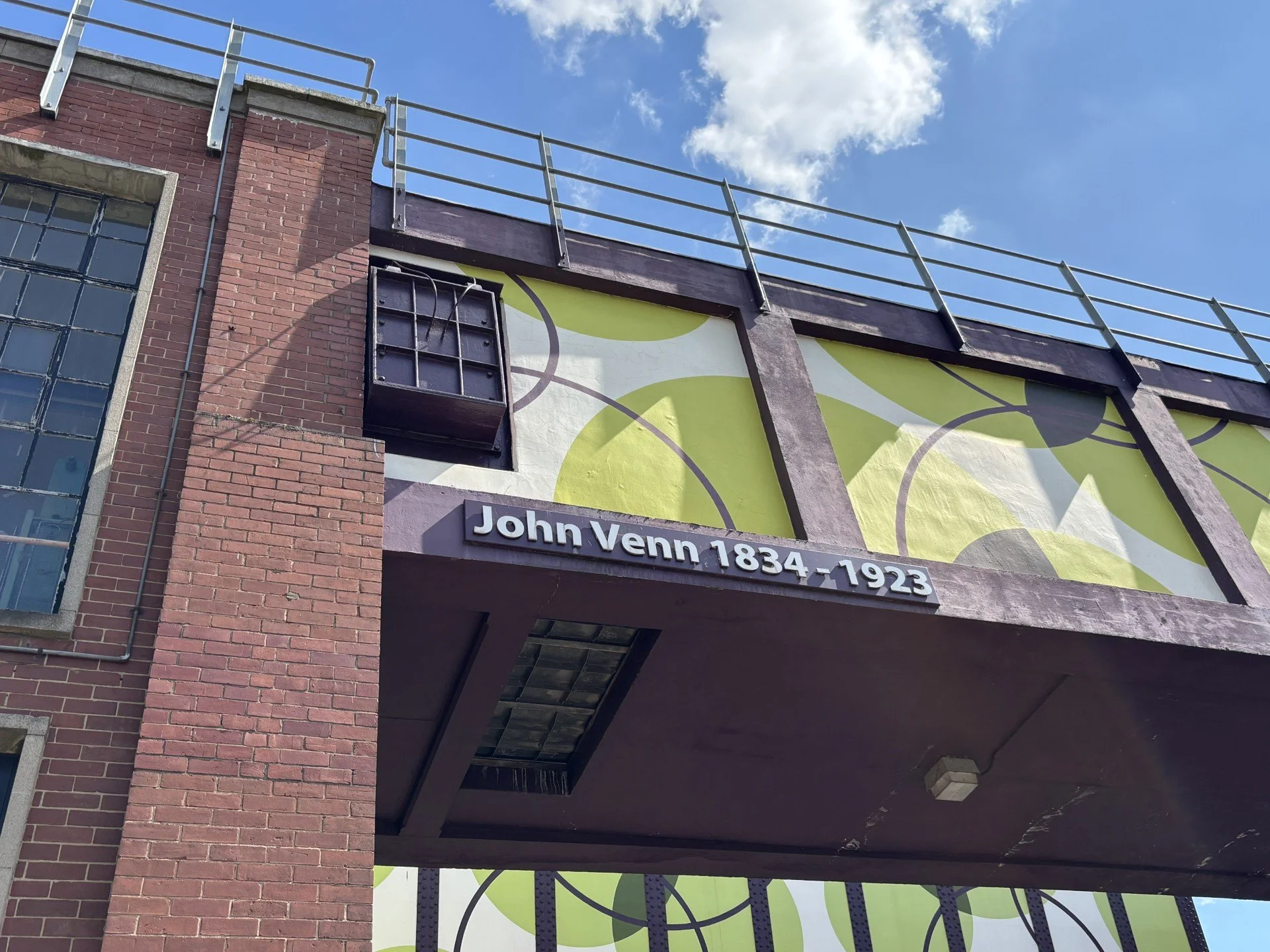
TRIBUTE: The bridge was given a makeover in 2017 in honour of Hull-born mathematician John Venn
He added: “The other part of our job is communicating key messages – how to move around in the area, where to avoid, keeping the public informed with what the next stages are.
“Those businesses [affected] will benefit from the investment in the bridge in terms of not having future closures but it’s also important that we ensure people can get into the city centre, so people need to work with us to ensure that works well.
“Our focus at all times is really keeping the network moving as much as possible.
“Some things stand in our way obviously, but from the planning to the sequencing of other roadworks to working closely with the bus operators, to working with local businesses, and encouraging those to encourage staff to travel in slightly differently for that period – we are just trying to do as much as we possibly can to make this go as smoothly as we can during the disruptive period.”
The work is being carried out by designers Mason Clark Associates and Esh Construction, with Esh employing locally-sourced sub-contractors where possible.
Work on the bridge is already under way ahead of the closure and it’s complex, with some elements only able to be tackled at low tide and on hands and knees in some areas, while there are daily deposits of silt to contend with.
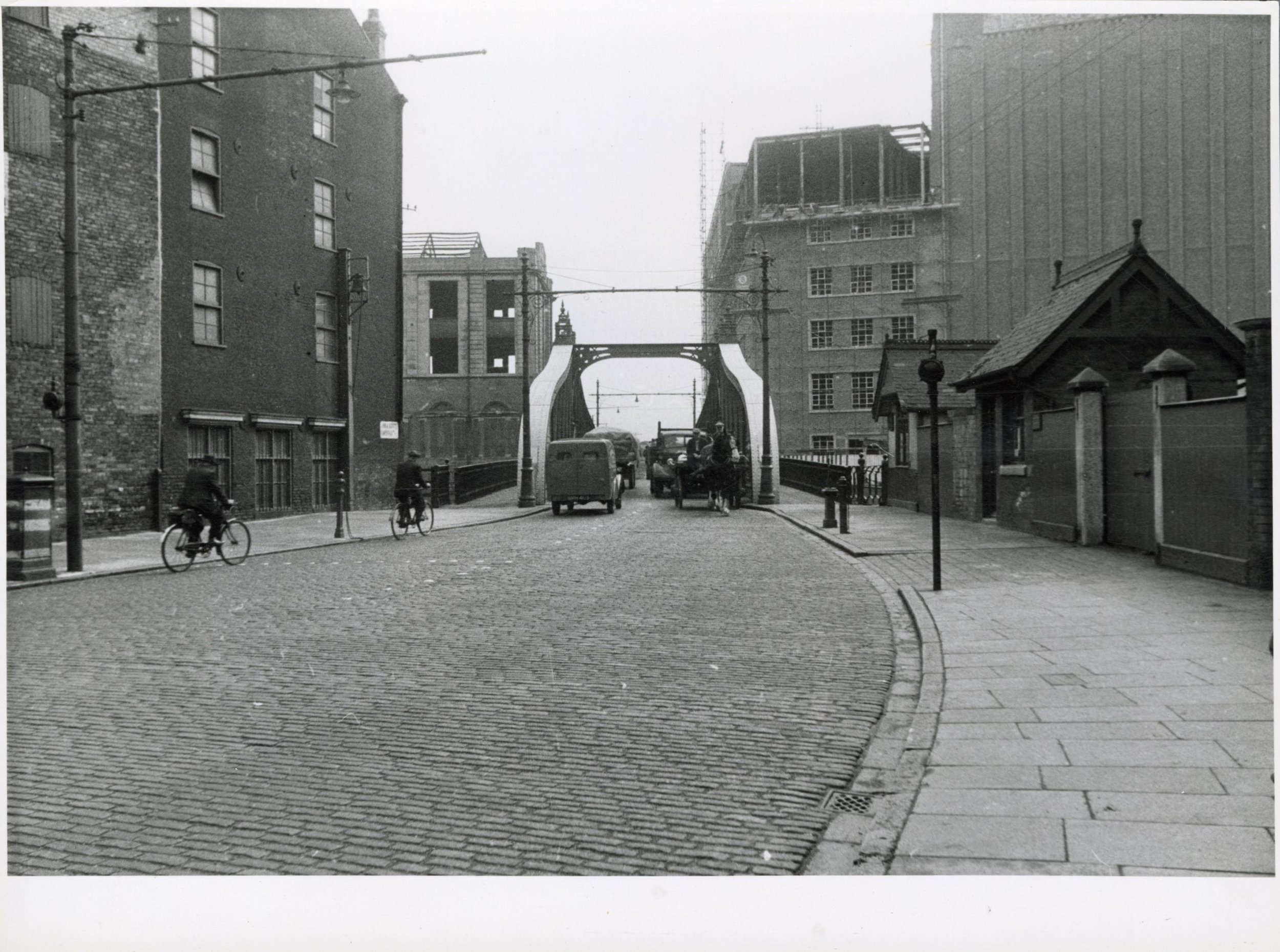
HISTORIC CROSSING: A horse and cart using Drypool Bridge in the 1950s. Picture credit: Hull City Council
It will be raised for the replacement of the timber fenders, with the crane arriving by boat.
The pre-closure work includes the jacking of the bridge to a height of 2mm during which traffic will still be able to cross it.
But delaying the full closure was impractical and likely to cause more disruption.
Andy Thompson, director of bridges at Mason Clark Associates, said: “It goes back to when we had to do the emergency closure last year. That wasn’t planned and it caused a lot of disruption.
“We did the assessment of the structure, we allowed it to reopen but that did highlight the fact it was going to continue to deteriorate and what we advised the council was that a scheme needed to be developed sooner rather than later.
“They took that on board and started developing a scheme pretty much immediately, so that minimises the amount of work that is needed.
“If it had been left a couple of years before any work had been done it would have deteriorated a lot further and there might have been other closures – there might have come a time when it just needed to be closed full-stop until the works had been undertaken.
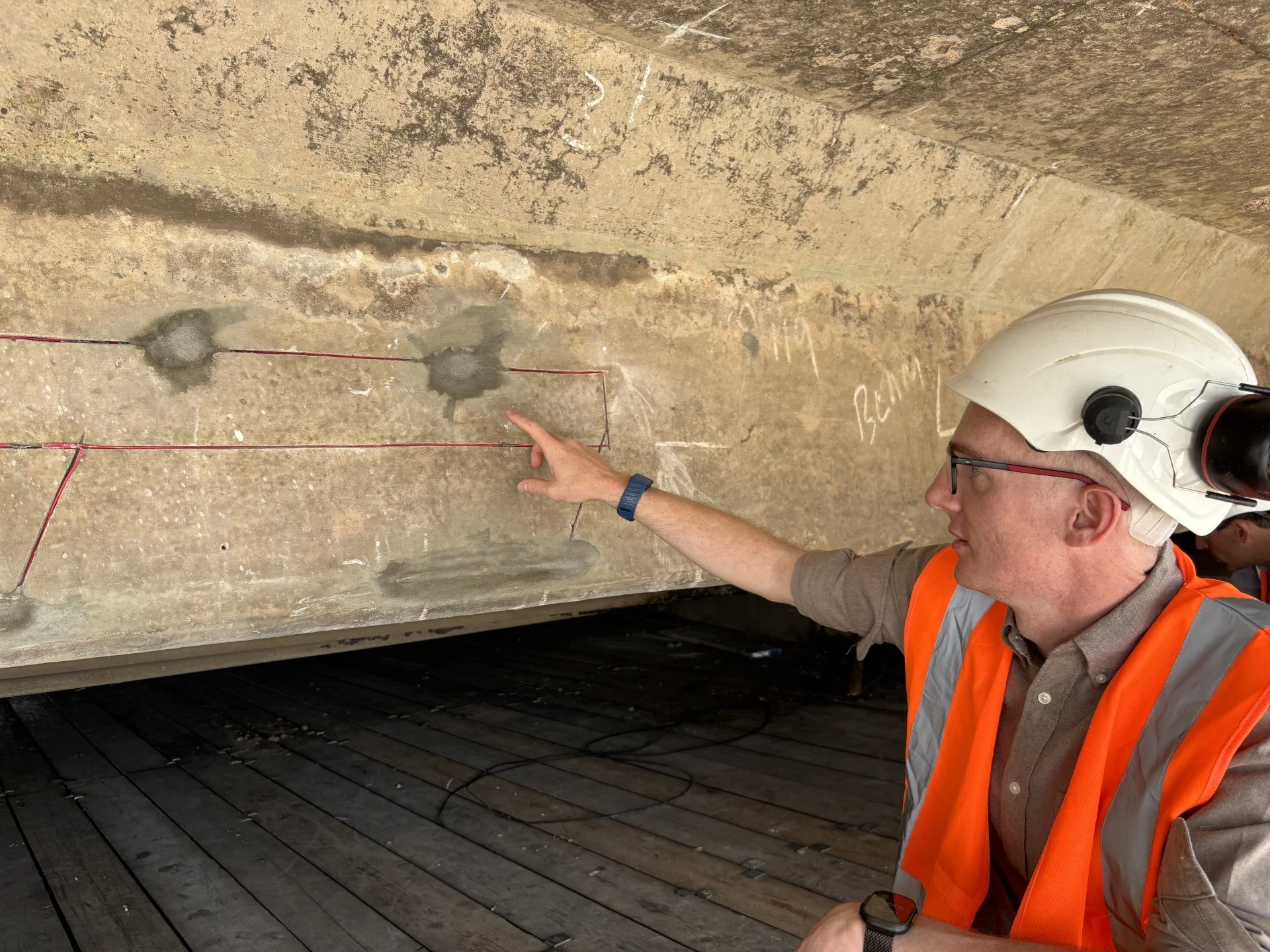
SCIENCE: Andy Thompson of Mason Clark Associates showing the use of cathodic protection, an electrochemical technique that prevents metal corrosion
“The way we’re doing it [at the moment] is that it still can remain open whilst the strengthening works are being undertaken.”
There has been a bridge over this part of the River Hull for nearly 140 years. It has witnessed the city’s transformation from a bustling maritime hub to a modern urban centre.
The first Drypool Bridge weighed 400 tonnes and took 18 months to build at a cost of £17,000 – about £2m today. It opened on September 13, 1888. But as horse and cart eventually gave way to motor vehicles it could no longer cope with daily use. It was closed on May 19, 1959, and demolished, with work on a new bridge beginning almost straight away.
Construction on the current bridge took about two years and it opened in 1961.
It is a single-leaf bascule Scherzer rolling bridge made up of three spans; two fixed east and west and with a central main moving span. The bascule construction rolls on its heel on the west side, lifting the nose on the east side to raise the deck to allow river traffic to pass through.
Drypool Bridge was given a colourful makeover in 2017 during Hull’s year as UK City of Culture in homage to mathematician and philosopher John Venn, who was born in the Drypool ward in 1834.
Once completed no further major structural work on the bridge should be needed for 60 years, although painting and surfacing will be done as required. The bearings, which allow the bridge to expand and contract, may need replacing again in 25 to 30 years.