
Hospitals trust among the worst performing in the country

FACING SCRUTINY: Lyn Simpson, interim CEO Hull University Teaching Hospitals NHS Trust (HUTH), which manages Hull Royal Infirmary
EXCLUSIVE
By Rick Lyon, Co-Editor
The region’s hospitals trust is now officially one of the worst performing in the country, despite spending hundreds of thousands of pounds to bring in an ‘improvement team’.
Hull University Teaching Hospitals NHS Trust (HUTH), which manages Hull Royal Infirmary and Castle Hill Hospital, is ranked 130 out of 134 trusts in the country by NHS England.
NHS England – the executive body responsible for leading and overseeing the NHS – ranks health trusts against a range of performance criteria, including patient safety, access to services and finances.
Along with the lowly Acute Trust League Table ranking, HUTH is currently rated as ‘Requires Improvement’ by the Care Quality Commission (CQC) – the independent regulator of health and social care in England.
It is ranked 116 out of 119 comparable trusts for cancer treatment waiting times on the NHS England Data Dashboard, when measured against the national 62-day target.
HUTH is also performing worse than the national average for every other measure on the dashboard, including A&E waiting times.
The trust is part of the wider NHS Humber Health Partnership (HHP) group, which includes Northern Lincolnshire and Goole NHS Foundation Trust (NLaG). The group serves a population of 1,500,000, employs 19,000 staff and has a budget of £1.6bn, according to its website.
HHP is failing and requires urgent improvement, according to another NHS classification.
The Acute Trust League Table forms part of NHS England’s Oversight Framework, which it describes as “a consistent and transparent approach to assessing NHS trusts, ensuring public accountability for performance”.
Under the framework, trusts are graded from a ‘segment rating’ of 1, which is judged to be “high performance”, to 5, which is classed as “significant concerns”.

FINANCIAL CONSTRAINTS: Departments managed by HUTH include the Paediatric Day Surgery Unit at Castle Hill Hospital
HHP had been segment 4 but has been informed it is being reclassified as segment 5, meaning it will be subject to “the highest level of NHS England scrutiny and performance management” to drastically improve standards.
The Hull Story understands HHP has a cost savings target in excess of £100m this year, which has resulted in significant financial constraints being imposed on most departments.
These include a freeze on recruitment for all non-clinical roles, even when there are vacancies. Teams also have to apply to senior management to buy basic items such as pens and pads of paper.
HHP is currently headed by interim CEO Lyn Simpson, who joined in July 2025 following the suspension of former CEO Jonathan Lofthouse three months earlier.
Mr Lofthouse was suspended following a clash with the trust’s chairman at the time. He took up a new role with NHS England as Director of Turnaround and Recovery for the North East and Yorkshire Region in January.
Ms Simpson joined HHP from North Cumbria Integrated Care NHS Foundation Trust, which is currently two places above HUTH in NHS England’s national league table.
Since her appointment, she has brought in six senior managers as part of the new improvement team, which is in addition to the existing executive team.
The cost of this team between August 2025 and January 2026 was more than £390,000 in salaries and expenses.
Despite this, HUTH has dropped from being ranked 123 in the country in September to 130 now.
The North Cumbria trust Ms Simpson left has risen from 130 to 128 in the same period.
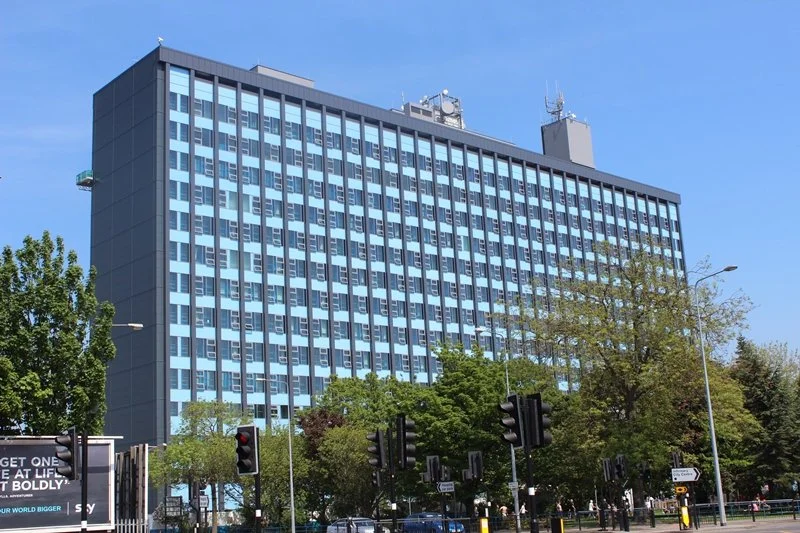
UNDER PRESSURE: Hull Royal Infirmary
Staff have also contacted The Hull Story to voice their concerns about the number of ‘Never Events’ – deemed so serious, they should never happen – taking place at the region’s hospitals.
NHS England describes Never Events as “serious, preventable patient safety incidents that should not occur if healthcare providers have implemented existing national guidance or safety recommendations”.
The latest published data shows there were six Never Events at HUTH between April 2025 and November 2025, with only four trusts out of 134 experiencing more in the same period.
One long-serving member of staff, who asked to remain anonymous due to fear of reprisals, said: “It’s as bad as it’s ever been.
“Staff and resources are stretched to the limit and, rather than getting better, things just seem to be getting worse and worse.
“Morale is at rock bottom and patient safety is a real concern.
“Many of us are asking why we’ve gone backwards, despite bringing in a new CEO and a whole improvement team.”
Specific concerns about the financial management of the trust, including how much is being spent on the improvement team when stringent spending restrictions are in place across other departments, have also been raised.
This includes on salaries and expenses, and comes as other staff have to pay £1 per day to park in hospital car parks.
However, HUTH refused to answer a number of questions posed by The Hull Story, based on these concerns. Instead, it directed us to submit these questions under a Freedom of Information (FoI) request.

LOW RANKING: The Day Surgery Centre at Castle Hill Hospital
After doing so, it provided us with limited information.
Regarding the improvement team, we asked questions including:
Who the team members are, what their roles are and when each of them started.
What the terms of their employment are, including how much they are each being paid.
The total expenses claimed by each member of the improvement team since they started working with the trust, with a full breakdown.
What improvements have been made by the team, supported by any relevant data, reports, staff or patient feedback.
HUTH confirmed the improvement team members as Sue Page, external contractor; Helen Marks, interim senior HR and OD consultant; Mark Graham, interim chief policy officer; Hilda Gwilliams, interim chief patient safety governance officer; and Karen Dark, interim business manager.
The trust said external contractor Moira Angel was also with the improvement team until the start of December 2025.
It revealed the costs related to the team between August 2025 and January 2026 were £366,000 in salaries and £24,000 in expenses.
HUTH said: “Temporary improvement support has been agreed with NHS England as part of standard regulatory and assurance arrangements. This reflects the scale and complexity of the challenges facing the Group, and the consequent need for additional senior-level capacity and capability.
“This support comprises senior operational, programme and clinical leadership expertise and is overseen through formal governance arrangements, including reporting to the Board and, where applicable, to NHS England.
“Support is delivered through a combination of NHS secondment and external support arrangements. Where individuals are seconded from other NHS organisations, they remain employed by their substantive NHS organisation.
“External support is approved through the Trust’s governance processes, including the Remuneration Committee, and managed in accordance with the Trust’s Standing Financial Instructions.
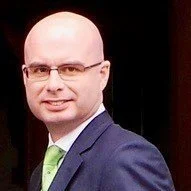
SUSPENDED: Former CEO Jonathan Lofthouse
“The total cost of improvement support to date is £390,100. In line with standard NHS England practice, costs associated with improvement support are met by the host Trust.”
In relation to Ms Simpson, we asked questions including:
What the terms of her employment are, including her annual salary.
How much Ms Simpson has claimed in expenses since July 2025, with a full breakdown.
The trust refused to provide these details, stating “this information is routinely disclosed in our annual reports” and “Chief Executive Officer remuneration, including salary (banded) and expenses claimed, will be published in the Trust’s Annual Report and Accounts.”
However, health trusts do not routinely publish the full breakdown of any individual’s expenses in their annual reports.
Regarding Mr Lofthouse, we asked:
Why he was suspended in April 2025.
What the terms of his suspension were and what his annual salary was at the time.
How long his suspension lasted and how much he was paid in total over this period.
What the result of the investigation was.
HUTH replied that it believes this information is “subject to exemptions” under the Freedom of Information Act regarding employment and HR-related information.
The Hull Story has appealed the decision not to release the full information requested.
NHS England said the suspension of Mr Lofthouse during his time with HHP, the appointment of Ms Simpson and of the improvement team, as well as all related costs, were a matter for the trust.

SERIOUS CONCERNS: The Queen’s Centre at Castle Hill Hospital
A spokesperson for NHS England North East and Yorkshire said: “We can confirm Jonathan Lofthouse joined the North East and Yorkshire Region as Director of Turnaround and Recovery from 12 January 2026.
“Jonathan will lead work to improve performance across the region and progress the delivery of NHS reform as we continue to work through transition in 2026.”
However, the spokesperson refused to confirm Mr Lofthouse’s current salary, saying: “We do not comment on individual contractual matters. Where remuneration information is subject to statutory publication, it will be disclosed through the appropriate Annual Report and Accounts.”
The last published annual report relating to HHP, for 2024-2025, stated Mr Lofthouse had a salary of £280,000-£285,000 as CEO of HUTH and Northern Lincolnshire and Goole NHS Foundation Trust.
The North Cumbria Integrated Care NHS Foundation Trust annual report for the same year listed Ms Simpson as earning £235,000-£240,000 as CEO.